Examples of Local Infrastructure News That Matter

Local infrastructure news is defined as reporting on public works projects, including road and bridge construction, sewer upgrades, and transit expansions, that directly affect how residents move through and experience their communities. These projects shape daily commutes, public health, and neighborhood safety in ways that are concrete and measurable. Thecentralgeorgian covers this type of reporting because residents who understand what is being built, why, and at what cost are better positioned to engage with local government. The examples in this article draw from recent projects across the United States and beyond, with funding figures, construction timelines, and community outcomes that illustrate what local infrastructure updates actually look like on the ground.
1. Examples of local infrastructure news: sewer and waterway projects
Sewer system upgrades are among the most consequential, and least visible, forms of community infrastructure investment. The Alexandria RiverRenew project in Virginia is one of the clearest recent examples of this category.
Before the project, Alexandria experienced 70 combined sewer overflow events annually, releasing 140 million gallons of wastewater into local waterways each year. After completion, overflow events dropped to fewer than 4 per year, and wastewater volume reaching waterways fell below 17 million gallons. That reduction represents a public health and environmental outcome that residents can see and measure in cleaner water and fewer health advisories.
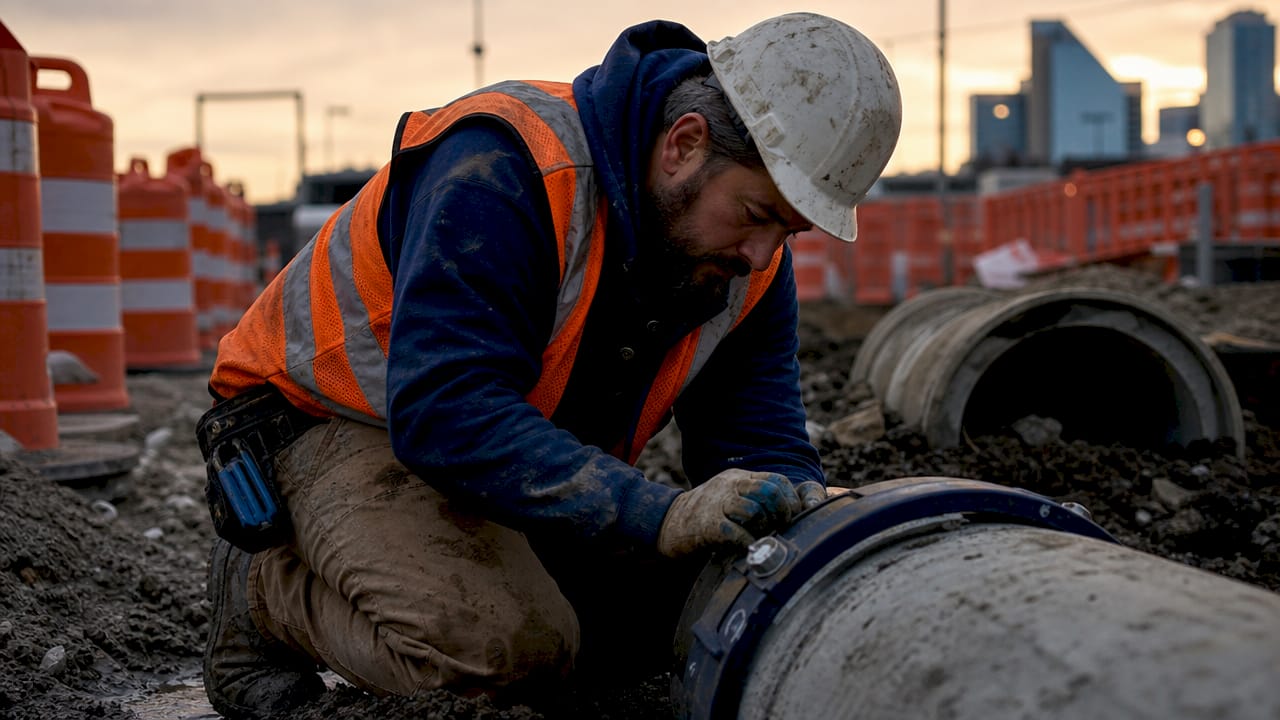
The project addressed a sewage problem that dated to the 1800s. That historical context matters because it shows how long communities can carry unresolved infrastructure debt before a coordinated effort finally closes the gap.
Pro Tip: When following sewer or water quality projects in your area, track the number of overflow events reported annually. That single figure tells you more about progress than any press release.
Key outcomes from the RiverRenew project include:
- Combined sewer overflow events reduced from 70 to fewer than 4 per year
- Wastewater volume cut from 140 million gallons to under 17 million gallons
- Park improvements completed alongside underground infrastructure work
- Community engagement built into the project planning process
2. Bridge replacement and traffic management in Chesapeake
Bridge replacement projects generate some of the most visible and immediate examples of city infrastructure work. The Deep Creek Bridge replacement in Chesapeake, Virginia, reached a major milestone in July 2026 when traffic was shifted onto the new span to allow demolition of the old structure.
The traffic shift happened overnight to reduce disruption to commuters. Speed in the construction zone was reduced to 25 mph, and a waterway closure for demolition was scheduled from july 6 to august 3. Project completion is expected by late 2027.
This project illustrates a standard approach in modern bridge construction: build the new span alongside the old one, then shift traffic before demolition begins. That sequence keeps roads open while the most disruptive work proceeds.
Pro Tip: When a bridge project in your area announces a traffic shift, that milestone signals the project is entering its final phase. Expect increased lane restrictions and temporary speed reductions for several months after the shift.
The Chesapeake project used several tactics to reduce community disruption:
- Overnight traffic shift to the new bridge span
- Posted speed limit of 25 mph through the active construction zone
- Scheduled waterway closure with specific start and end dates
- Public advisories issued before each major construction phase
3. Transit line launches and passenger projections
Transit infrastructure represents a different category of recent infrastructure projects. These are long-term capital investments that reshape how entire regions move.
The LRT3 Shah Alam Line in Malaysia launched in June 2026 after years of construction. The 37.8 km line cost RM16.63 billion and is projected to serve 67,000 daily passengers initially, growing to over 117,000 within five years. An additional RM4.7 billion was allocated to reinstate five stations that had been removed from earlier plans.
The line used precast U-trough girders manufactured off-site, which reduced on-site construction time and minimized disruption to surrounding neighborhoods. Noise barriers were installed along the route to limit operational sound for nearby residents. These construction choices reflect a broader principle: the method of building infrastructure matters as much as the infrastructure itself.
Transit projects of this scale also require balancing capital costs against other national priorities. Governments that commit to rail lines must weigh those investments against flood mitigation, housing, and public health spending. That tension appears in local budget debates everywhere, not just in Malaysia.
4. How local governments finance large infrastructure projects
Large infrastructure projects rarely rely on a single funding source. The financing structure behind the Alexandria RiverRenew project is a textbook example of how municipalities assemble the money needed for major public works.
The project combined a $321 million WIFIA federal loan with $186 million in low-interest loans from Virginia’s Clean Water Revolving Fund, plus additional grants. That layered approach reduced the direct burden on local taxpayers while still delivering a project that cost over $500 million in total.
“Success in large infrastructure milestones often relies on aggressive inter-agency collaboration to meet tight regulatory deadlines. When federal agencies, state environmental bodies, and local governments align on a shared timeline, projects that seemed impossible become achievable.”
The WIFIA program, administered by the EPA, provides low-interest federal loans specifically for water and wastewater infrastructure. State revolving funds operate similarly at the state level. When both are combined, municipalities can finance projects that would otherwise require large local tax increases.
Long-delayed projects like the 39-year I-49 connector effort in Lafayette, Louisiana, show what happens when that coordination fails to materialize for decades. Fragmented funding, competing approvals, and shifting political priorities can stall even well-supported projects for a generation.
Key financing tools used in recent infrastructure projects:
- EPA WIFIA federal loans for water and wastewater systems
- State Clean Water Revolving Fund low-interest loans
- Federal transportation grants for bridge and road projects
- Environmental compliance grants tied to regulatory deadlines
5. Engineering precision in long-term construction projects
Some infrastructure components are fabricated years before they are installed. The Chickamauga Lock Replacement Project on the Tennessee River demonstrates this approach clearly.
Massive concrete beams for the project were fabricated in 2010 and installed in 2026, a 16-year gap between manufacturing and use. Each beam measures 10×10 feet by 120 feet and weighs approximately 420 tons. Dual derrick crane barges were used to place them with precision. Rigorous quality assurance protocols were maintained throughout the storage period to confirm structural integrity before installation.
This example matters for community members following infrastructure news because it shows that delays in project timelines do not always indicate failure. Components can be ready and waiting while funding, approvals, or site conditions catch up. Understanding that distinction helps residents interpret project updates more accurately.
6. Traffic and roadway projects that minimize disruption
Road rehabilitation projects generate the most day-to-day friction for residents. Short-notice lane closures, detours, and speed reductions affect commute times directly. The best-managed projects plan for this friction and communicate it clearly.
| Project | Disruption tactic | Outcome |
|---|---|---|
| Deep Creek Bridge, Chesapeake | Overnight traffic shift to new span | Roads stayed open during demolition |
| Shah Alam LRT3, Malaysia | Off-site precast girder manufacturing | Reduced on-site construction time |
| Chickamauga Lock, Tennessee | Long-term component storage with QA | Installation completed without structural delays |
Effective disruption management in roadway projects typically includes:
- Overnight construction windows to avoid peak commute hours
- Dynamic speed limit signs that adjust to active work zones
- Public advisories issued at least 48 hours before lane closures
- Clearly marked detour routes with updated signage throughout the project
California’s infrastructure condition provides context for why these management tactics matter. The state faces an estimated $11.5 billion funding gap for roads, bridges, and water systems over the next five years, with only $3.5 billion committed. That shortfall means more deferred maintenance, which typically results in more disruptive emergency repairs rather than planned, well-managed construction.
Pro Tip: Sign up for your city’s public works email alerts. Most municipalities send advance notice of lane closures and project milestones. That information lets you adjust your route before the disruption, not after.
Key Takeaways
Local infrastructure news covers concrete, measurable projects that directly affect community health, safety, and mobility. Residents who track these projects are better equipped to hold local governments accountable and plan around construction impacts.
| Point | Details |
|---|---|
| Sewer upgrades deliver measurable results | Alexandria’s RiverRenew cut overflow events from 70 to fewer than 4 per year. |
| Layered financing reduces taxpayer burden | Federal WIFIA loans combined with state revolving funds large projects without large tax increases. |
| Bridge projects use phased traffic shifts | Overnight shifts to new spans keep roads open while old structures are demolished. |
| Long-delayed projects require persistent coordination | The I-49 connector in Lafayette took 39 years due to fragmented funding and approval challenges. |
| Funding gaps accelerate deferred maintenance | California’s $8 billion infrastructure shortfall leads to more emergency repairs and greater disruption. |
Why I pay close attention to infrastructure reporting
Infrastructure reporting is the category of local news that most directly connects to how a city actually functions. I have covered enough community stories to know that residents who follow bridge timelines, sewer project updates, and transit announcements are consistently better informed about where their tax dollars go and what their neighborhood will look like in five years.
The Alexandria RiverRenew project is a good example of why this matters. That project solved a problem that had existed since the 1800s. It took federal loans, state revolving funds, regulatory deadlines, and years of inter-agency coordination to close the gap. Residents who followed the project understood what was being built, why it cost what it did, and what the outcome would mean for local waterways. Residents who did not follow it were simply surprised when construction affected their parks and streets.
Infrastructure news is not technical reading reserved for engineers. It is civic reading. When you know that a bridge replacement is entering its demolition phase, you can plan your commute. When you know that a sewer project is funded through EPA loans rather than a local tax increase, you understand the budget picture more clearly. Thecentralgeorgian covers community development news precisely because that kind of informed readership leads to stronger civic engagement.
— Ernie
Thecentralgeorgian covers the local news that shapes your neighborhood
Thecentralgeorgian reports on the projects, events, and decisions that affect daily life in Central Georgia. Infrastructure updates are one part of that coverage. Community events, nonprofit activity, and public safety reporting round out the picture of what is happening in your area.

Readers who want to stay connected to local developments can find coverage of local nonprofits and events that shape community life beyond construction projects. For residents planning around the calendar, Thecentralgeorgian also covers holiday event schedules and community gatherings. Visit Thecentralgeorgian for ongoing local news coverage that keeps you informed about what is happening in your community.
FAQ
What counts as local infrastructure news?
Local infrastructure news covers reporting on public works projects such as road repairs, bridge replacements, sewer upgrades, water system improvements, and transit expansions. These projects are funded by local, state, or federal sources and directly affect how residents use their neighborhoods.
How are large local infrastructure projects typically funded?
Most large projects use layered financing, combining federal loans like EPA WIFIA funds with state revolving fund loans and grants. Alexandria’s RiverRenew project used a $321 million federal loan alongside $186 million in state financing to limit the local tax burden.
Why do some infrastructure projects take decades to complete?
Fragmented funding, competing regulatory approvals, and shifting political priorities cause long delays. The I-49 connector project in Lafayette, Louisiana, took 39 years to reach a key signing milestone because of persistent coordination and funding challenges across multiple agencies.
What is a WIFIA loan and why does it matter for local projects?
A WIFIA loan is a low-interest federal loan administered by the EPA for water and wastewater infrastructure. These loans allow municipalities to finance large projects at lower cost than traditional borrowing, reducing the impact on local utility rates and taxes.
How can residents stay informed about infrastructure projects in their area?
Residents can sign up for public works email alerts, attend city council meetings where project updates are presented, and follow local news platforms like Thecentralgeorgian that report on infrastructure improvements and how to submit tips about local developments.