How to Locate Local Holiday Event Schedules Fast

Local holiday event schedules are accessible through official municipal portals, Parks and Recreation department websites, and regional tourism calendars. These centralized digital sources publish the most accurate and up-to-date information for families planning to attend community holiday events. To locate local holiday event schedules, start with your city’s official .gov calendar before checking any other source. Thecentralgeorgian covers Central Georgia events and provides timely updates on community holiday activities, making it a reliable regional resource for families in the area.
How to locate local holiday event schedules from official sources
The most reliable way to find local holiday events is through official government and parks department websites. Municipal portals provide real-time updates on schedules, road closures, and parking status. No third-party listing matches that level of accuracy or timeliness.
Holiday event schedules are typically published 30–45 days in advance, with final road closure and parking maps updated 7–10 days before the event. That two-stage publication window means you should check official sources twice: once a month out to plan, and again a week before to confirm details.
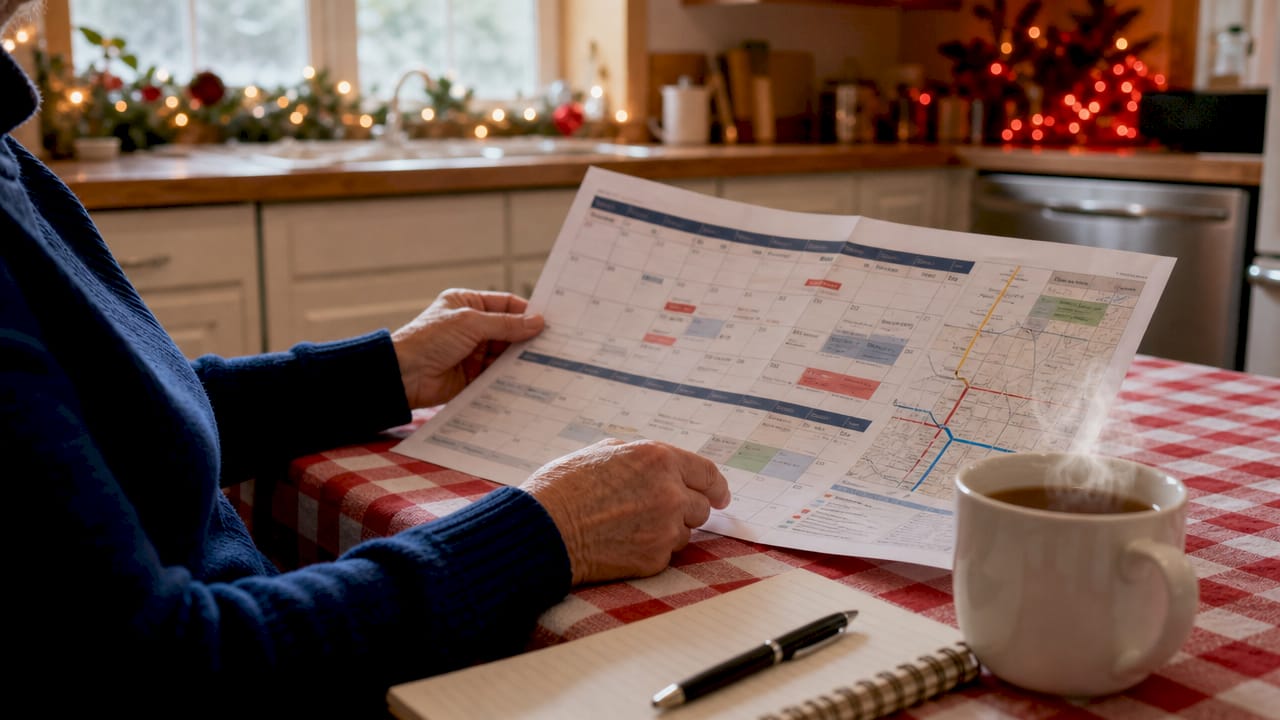
Regional tourism authority sites serve a different but equally important function. Regional sites are the best sources for lesser-known but quality local events that larger listings overlook. Many residents miss these platforms entirely and end up skipping family-friendly activities that would have been a good fit.
Here is what official sources typically provide for each listed event:
- Event name, date, and location with address and map links
- Road closure details including which streets close and when
- Parking lot status with opening times and overflow options
- Admission information, including free access zones and ticketed areas
- Accessibility details such as sensory-friendly zones or ADA parking
- Contact information for the organizing department or agency
To confirm a source is legitimate, check that the URL ends in .gov or belongs to a recognized regional tourism body. City Parks and Recreation departments, county government sites, and state tourism offices all qualify. Avoid relying on crowd-sourced listing sites as your only reference, since those entries are not always verified or updated.
What digital tools help you find holiday events near me
Digital tools extend your search beyond official websites and deliver real-time alerts when schedules change. Municipal mobile apps, where available, send push notifications about road closures, event cancellations, and timing shifts. City government social media accounts on platforms like Facebook and Instagram serve the same function for families who prefer social feeds over apps.
Municipalities centralize event information digitally to reduce confusion and provide real-time updates. That centralization means following your city’s official social media account is one of the fastest ways to catch last-minute changes to a holiday activities calendar.
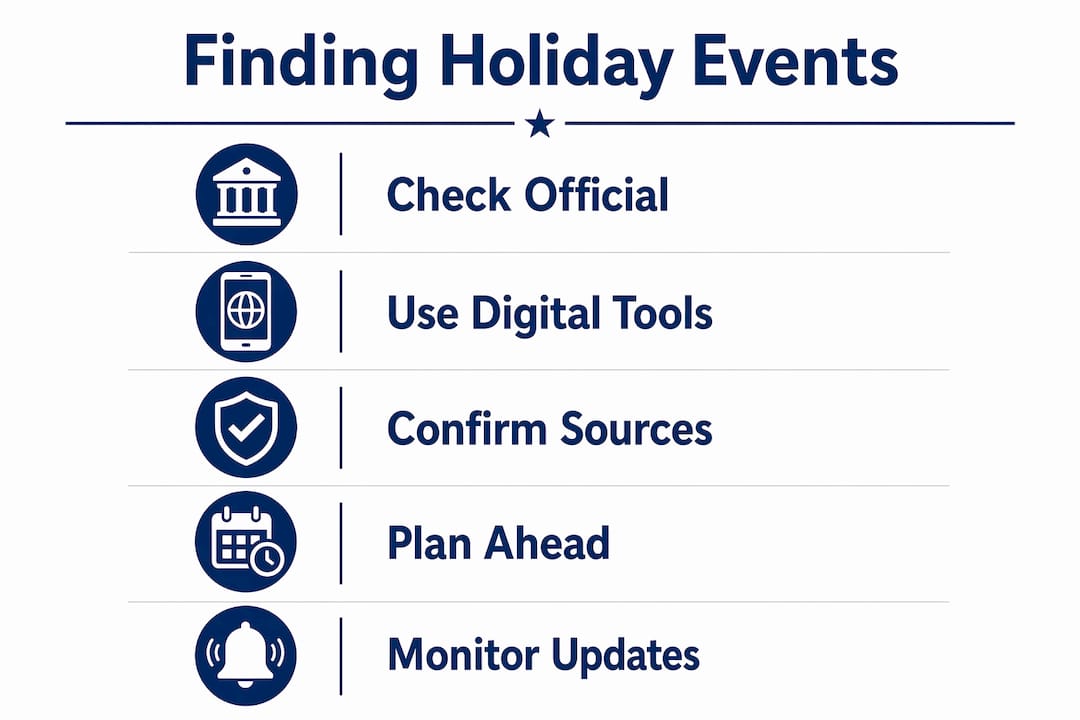
Specialized event platforms focused on family-friendly or community events aggregate listings from multiple sources. These platforms let you filter by date, location, age group, and event type. The filter function is particularly useful for families with young children who need to identify sensory-friendly or stroller-accessible options before committing to a plan.
Pro Tip: Subscribe to your city’s official email alert system at least three to four weeks before a major holiday. Most municipal websites offer a free notification signup that delivers schedule updates directly to your inbox, including last-minute road closure announcements.
Key ways to use digital tools for your holiday event search:
- Follow official city and parks social media accounts for real-time schedule updates
- Enable push notifications on municipal apps to receive alerts about changes
- Use event platform filters to narrow results by date, location, and family suitability
- Search the city’s official website using terms like “holiday events calendar” or “Parks and Recreation schedule”
- Check regional tourism websites for curated lists of community and neighborhood events
Step-by-step approach to planning upcoming holiday activities
A structured approach prevents missed events and last-minute surprises. The following process works for any major holiday, from the Fourth of July to winter festival season.
Start 4–6 weeks before the holiday. Check your city’s Parks and Recreation portal and official municipal calendar. Note event names, dates, locations, and any registration requirements. Starting event planning at least one month prior improves your ability to secure good viewing spots and avoid last-minute stress.
Check regional tourism sites for smaller events. Search your county or regional tourism authority’s website for community-run festivals and neighborhood celebrations. These listings often include events that do not appear on city calendars.
Register for limited-access events early. VIP access and sensory-friendly zones require booking 2–4 weeks in advance and are often not advertised widely. Check the “accessibility” or “what to expect” tab on official event pages to find these options before they sell out.
Verify all details 7–10 days before the event. Road closures are finalized in this window. Parking lots can close as early as 6 a.m. the day before a major event. Confirming logistics at this stage prevents the most common planning failures.
Plan arrival time based on event type. Arrive 2–3 hours early for prime parade viewing or to secure parking near popular venues. For fireworks events, check official maps for designated viewing zones, since unauthorized vehicles in restricted areas will be towed.
Download or print official event maps. Official sources publish venue maps showing parking areas, entry points, restroom locations, and accessibility routes. These maps are more accurate than general navigation apps for event-specific logistics.
The table below summarizes the recommended timeline for planning attendance at a major community holiday event.
| Weeks Before Event | Action |
|---|---|
| 4–6 weeks | Check official municipal and Parks and Recreation calendars |
| 3–4 weeks | Register for limited-access, VIP, or sensory-friendly options |
| 1–2 weeks | Confirm road closures, parking details, and final schedule |
| 2–3 days | Check official social media for last-minute updates |
| Day of event | Arrive 2–3 hours early for high-demand viewing areas |
How to handle last-minute changes in holiday celebration schedules
Event schedules change with little notice due to weather, safety concerns, or logistical issues. Updates to road closures, vendor availability, and fireworks launch times can shift on short notice. Families who rely on a single source checked days earlier are the most likely to arrive at the wrong location or miss a rescheduled start time.
The standard window for checking updates is 48–72 hours before the event. At that point, visit the official municipal website and check the city’s social media accounts. Most municipalities post schedule changes on both channels simultaneously.
Road closures for major events are announced 1–2 weeks prior and frequently involve closing major access roads and parking well before event start times. If you are driving, identify two or three parking options in advance and have a backup route ready.
Key fact: Prime visibility areas for fireworks and waterfront zones have strict access rules. Unauthorized vehicles in restricted zones will be towed, and public boat ramps may close for safety. Always rely on official event maps rather than general venue information.
Additional steps for managing last-minute changes:
- Check the official event page directly, not a third-party listing, for the most current information
- Look for a “day-of updates” or “alerts” section on the municipal website
- Have a backup plan if your primary parking area closes or the event moves to an alternate venue
- Understand event access tiers before you arrive. Admission for specialized experiences ranges from $15 for children to $30 for adults, while the majority of large public celebrations are free. Knowing what is ticketed in advance prevents confusion at the gate.
Key Takeaways
The most effective way to find community holiday events is to consult official municipal portals and regional tourism sites starting four to six weeks before the holiday, then verify details again one week out.
| Point | Details |
|---|---|
| Start with official sources | City Parks and Recreation portals and .gov calendars publish the most accurate event schedules. |
| Plan 4–6 weeks out | Early planning secures better viewing spots and access to limited-capacity events. |
| Verify details 7–10 days before | Road closures and parking maps are finalized in this window; confirm before traveling. |
| Book special access early | VIP and sensory-friendly options sell out 2–4 weeks in advance and are rarely advertised. |
| Monitor official channels for changes | Check municipal websites and city social media 48–72 hours before the event for updates. |
What I have learned from years of tracking local event schedules
Most families underestimate how fast limited-access options disappear. Sensory-friendly zones and reserved parade viewing areas are gone within days of going live, often because they are buried in the “accessibility” tab rather than promoted on the main event page. I check that tab first, not last.
The other mistake I see repeatedly is relying on a single check done weeks before the event. Road closures get finalized late, parking lots close earlier than expected, and fireworks times shift due to weather. The families who show up prepared are the ones who checked official sources again within 48 hours of the event, not just once a month out.
Regional tourism platforms deserve more attention than they get. Most residents go straight to the city calendar and stop there. The regional tourism site often lists a dozen neighborhood events, craft fairs, and community parades that never make it onto the main municipal calendar. Those are frequently the best options for families with young children because they are smaller, less crowded, and easier to navigate.
One practical habit that pays off: subscribe to your city’s official alert system and follow the Parks and Recreation social media account. Those two channels together cover the vast majority of schedule changes, road closure updates, and last-minute additions. You do not need a dozen apps. You need the two official sources that actually have the information.
— Ernie
Thecentralgeorgian keeps you current on Central Georgia events
Thecentralgeorgian is a trusted local news platform covering Macon, Middle Georgia, and surrounding communities. For families searching for nearby holiday festivities, the site provides timely coverage of community events, public safety updates, and local festival schedules in one place.
Readers who want to stay current on Central Georgia holiday events can access up-to-date reporting on community celebrations, road closure notices, and event schedule changes as they happen. The platform’s local event coverage includes practical details that help families plan attendance without having to search across multiple sources. Thecentralgeorgian publishes updates as new information becomes available, making it a reliable first stop for holiday event news in the region.
FAQ
How far in advance are local holiday event schedules published?
Most official holiday event schedules are published 30–45 days before the event, with final road closure and parking details updated 7–10 days out.
Where is the best place to find community holiday events near me?
City Parks and Recreation portals, official municipal .gov calendars, and regional tourism websites are the most reliable sources for accurate, up-to-date holiday event listings.
How do I find out about last-minute changes to a holiday event schedule?
Check the official municipal website and the city’s social media accounts 48–72 hours before the event. Municipalities post real-time updates on both channels when schedules change.
Are most local holiday events free to attend?
The majority of large public celebrations are free, though specialized experiences range from $15 to $30 per person. Check the official event page for a full breakdown of free and ticketed areas.
How early should I arrive at a popular holiday event?
Arrive 2–3 hours early for prime parade viewing spots or high-demand parking areas, especially at large waterfront or downtown events.