Community Safety Awareness Benefits for Residents
Community safety awareness reduces crime, lowers fear of crime, and strengthens trust between residents and law enforcement by building collective efficacy and improving information flows. Research from the National Institute of Justice, the Brookings Institution, and the U.S. Department of Justice consistently supports this conclusion. Thecentralgeorgian covers these dynamics directly in Central Georgia, where local reporting on crime patterns and public safety alerts gives residents the information they need to act.
The primary benefits of community safety awareness include:
- Reduced crime and disorder through increased reporting and informal social control
- Lower fear of crime linked to stronger social cohesion among neighbors
- Improved police-community trust and faster emergency response coordination
- Greater social cohesion and willingness to intervene in neighborhood problems
- Better access to services through referral networks and ambassador programs
Key Takeaways
Community safety awareness reduces crime and fear most effectively when residents, local organizations, and local journalism work together to build collective efficacy and sustain information flows.
| Point | Details |
|---|---|
| Collective efficacy is the core mechanism | Social cohesion reduces fear of crime and links to fewer neighborhood incivilities, per NIJ research. |
| Bibb County staffing gap is significant | With 83 active patrol officers against a budget of 162, community programs fill a real operational gap. |
| Ambassador programs complement police | They handle wellness checks, referrals, and escorts — freeing officers for emergency response. |
| Pilots need only 6–12 weeks to generate data | Track calls for service, a short resident survey, and foot traffic to build a credible case for funding. |
| Local reporting accelerates safety action | Thecentralgeorgian’s coverage of crime and public safety alerts gives residents the information needed to act. |
Table of Contents
- What can individuals do today to improve personal safety?
- How does community-level awareness help neighborhoods?
- Why does awareness actually reduce crime?
- What programs put safety awareness into practice?
- How do you start or join a community safety effort?
- What timeline and resources should organizers expect?
- Why local reporting is a practical safety tool
- Sources
What can individuals do today to improve personal safety?
Daily habits make a measurable difference. Situational awareness, which means staying attentive to your surroundings and noting anything out of place, is the baseline behavior that supports both personal safety and neighborhood-level reporting.
Practical steps residents can take:
- Walk in groups after dark and vary your routes when possible
- Keep porch lights on and maintain clear sightlines around your home’s entry points
- Report non-emergency concerns (graffiti, suspicious activity, broken street lights) to your city’s 311 line rather than calling 911
- File municipal reports for hazards, abandoned vehicles, or property damage through your city or county’s online portal
- Attend neighborhood association meetings to stay current on local safety patterns
Knowing when to call 911 versus a non-emergency line matters. Call 911 for crimes in progress, medical emergencies, or any situation requiring an immediate response. Use the non-emergency line or 311 for issues that need attention but do not pose an immediate threat.
Safety promotion research confirms that multi-channel communication and trained community members acting as safety ambassadors help sustain safer behaviors across a population.

Pro Tip: When composing a neighborhood alert or social media post about a safety concern, include the location (street intersection or block), time of the incident, a factual description of what was observed, and whether it has been reported to authorities. Avoid speculation about identity or motive. Factual, specific posts are more useful to neighbors and law enforcement alike.
How does community-level awareness help neighborhoods?
The payoffs of organized safety awareness extend well beyond individual precaution. Neighborhoods with active safety programs report measurable improvements across several dimensions:
- Lower rates of crime and visible disorder
- Reduced fear of crime among residents, particularly among older adults and those living alone
- Stronger relationships between residents and local police
- Denser social networks that make it easier to organize responses to problems
- Improved access to social services through referral pathways embedded in ambassador programs
The NIJ’s research on collective efficacy finds that higher perceived social cohesion is associated with lower fear of crime and that collective efficacy relates to fewer neighborhood incivilities and greater satisfaction with police performance. That connection between social cohesion and reduced fear is one of the most consistent findings in community safety research.
Local context matters here. Middle Georgia crime stats and police activity in Bibb County illustrate why community-based programs are not optional supplements but practical necessities. Bibb County (Macon-Bibb, Georgia) currently has a significant patrol staffing gap, with many fewer active officers than the budgeted number of patrol deputies. That staffing gap means residents and community organizations carry a larger share of the informal safety work. Ambassador programs, neighborhood watch networks, and active reporting channels are not backup plans in this environment. They are primary tools.
Why does awareness actually reduce crime?
Community awareness reduces crime by improving collective efficacy, increasing informal social control, and guiding place-based interventions toward the conditions that generate disorder.
The mechanism works in three connected steps. First, social cohesion increases residents’ willingness to intervene when they observe problems, whether that means confronting a neighbor about a noise complaint or calling in a suspicious vehicle. Second, better information flows mean faster reporting to police and shorter response windows. Third, place-based investments, including improved lighting, rehabilitated vacant lots, and maintained public spaces, reduce the physical opportunities for crime to occur.
Brookings Institution case studies from multiple U.S. cities show that community-centered investments in built environments and local organizations produce measurable improvements in safety, trust, and resident well-being. The evidence is not limited to one city or one program type.
A review published in the Annual Review of Criminology highlights theoretical and empirical evidence that community-oriented nonprofits and local organizations are linked to reductions in violence and increased neighborhood resilience.
Structural-equation research on safety behavior adds a behavioral layer: safety communication and regulation improve safety commitment and compliance, and safety awareness partially mediates the relationship between commitment and actual compliance behavior.
| Evidence type | Source | Key finding |
|---|---|---|
| Survey research | Collective efficacy research | Social cohesion reduces fear of crime; collective efficacy linked to fewer incivilities |
| Place-based case studies | Brookings Institution | Built-environment investments improve safety and trust in multiple U.S. cities |
| Organizational research | Annual Review of Criminology | Local nonprofits and street outreach linked to violence reduction |
| Behavioral modeling | PLOS ONE | Safety awareness mediates the path from commitment to compliance behavior |
What programs put safety awareness into practice?
Three program models offer practical templates that communities can adapt or request from local officials.
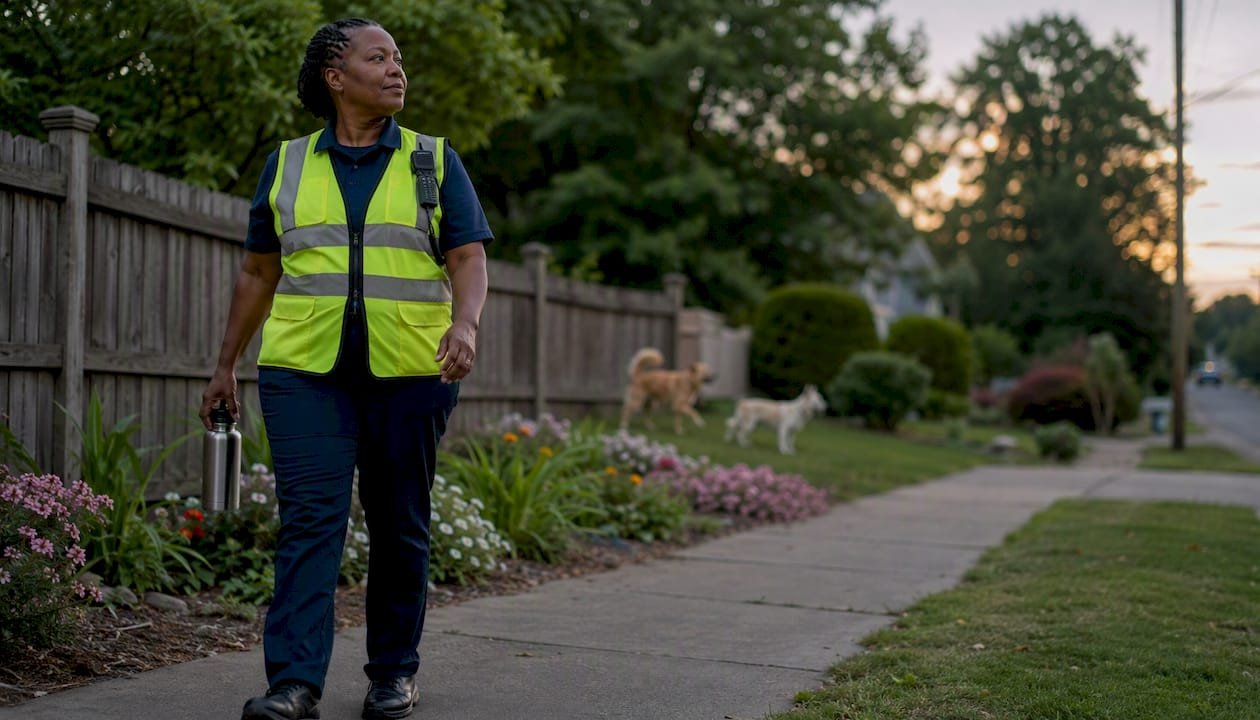
San Francisco Community Ambassadors Program trains ambassadors in trauma-informed de-escalation, harm reduction (including NARCAN administration), CPR and first aid, and referral practices. Ambassadors operate as a visible, non-law-enforcement presence in public spaces, providing safety escorts, wellness checks, and connections to services. The SF Community Ambassadors Program is one of the more developed examples of this model in the United States.
Minneapolis Community Safety Ambassadors function similarly: a friendly, uniformed presence that reports hazards, offers wellness checks and safety escorts, and coordinates with dispatch, while explicitly not performing law-enforcement functions. The Minneapolis program description notes that ambassadors operate during daytime hours and are designed to complement, not replace, police response.
Virginia’s Certified Crime Prevention Community Program, administered by the Department of Criminal Justice Services, certifies localities that implement a defined set of core and optional safety strategies. As the DCJS program page explains, certification can give localities preference in state grant processes and serves as a community-marketing advantage.
Community ambassadors are not a substitute for law enforcement. Their value lies in the referrals they make, the wellness checks they conduct, and the trust they build with residents who might not otherwise engage with official systems. That trust is what makes information flow back to the people who can act on it.
When evaluating an ambassador or volunteer model, communities should assess:
- Training requirements (de-escalation, first aid, referral protocols)
- Supervision structure and accountability chain
- Dispatch coordination and communication protocols
- Geographic scope and hours of operation
- Defined boundaries between ambassador duties and law-enforcement functions
- Evaluation metrics and reporting requirements
How do you start or join a community safety effort?
Getting involved does not require a formal program already in place. The following steps apply whether you are joining an existing effort or building one from scratch.
- Map stakeholders and existing resources. Identify neighborhood associations, local nonprofits, faith organizations, and any existing watch groups. Municipal advisory boards often have lists of active civic organizations.
- Meet your neighborhood’s police community liaison. Most departments assign a community liaison officer. That contact is the starting point for coordinating reporting channels and understanding local priorities.
- Pick a pilot project. A single-block cleanup, a six-week safety escort trial, or a lighting improvement campaign is more manageable than a full program launch. Start narrow.
- Set measurable goals. Track calls for service in the pilot area, conduct a short resident-perception survey before and after, and monitor foot traffic if relevant. Simple metrics are sufficient for a first evaluation.
- Scale and seek certification or grants. Once a pilot shows results, use those findings to apply for municipal funding or state grants. Certification programs like Virginia’s model can strengthen grant applications.
Questions worth asking city officials: Who supervises ambassadors and what is the liability structure? What training is funded? How does dispatch coordinate with non-law-enforcement volunteers? Is there a dedicated budget line for community safety programs?
Thecentralgeorgian’s local news alert checklist is a practical starting point for residents who want to stay informed while building their own reporting habits.
Pro Tip: Run your pilot for 6–12 weeks before drawing conclusions. Measure three things: calls for service in the target area, a brief resident survey (five questions or fewer), and any observable change in foot traffic or visible disorder. Those three data points are enough to make a credible case to local officials for continued funding.
What timeline and resources should organizers expect?
Community safety initiatives follow a predictable progression, and setting realistic expectations early prevents programs from stalling.
- Pilot phase (6–12 weeks): A small geographic focus, volunteer or part-time staff, minimal equipment. Goal is proof of concept and baseline data collection.
- Initial rollout (6–12 months): Expanded geography, part-time coordinator, defined training curriculum, basic uniforms or identification for volunteers.
- Sustained program (multi-year): Dedicated funding, formal evaluation cycles, possible certification, integration with municipal planning.
Cost categories to budget for, in rough order of priority:
- Coordination (staff time or stipends for a part-time program coordinator)
- Training (de-escalation, first aid, referral protocols, communications)
- Communications (alert systems, printed materials, social media management)
- Equipment and uniforms (visibility vests, radios, first-aid kits)
- Evaluation (surveys, data analysis, reporting)
Sustainable funding sources include municipal budget allocations, state and federal grants, local nonprofit partnerships, and business sponsorships. The Virginia Certified Crime Prevention Community Program demonstrates how certification can unlock grant preference, a model other states and localities are beginning to replicate.
Why local reporting is a practical safety tool
Local journalism is a direct input to community safety, not a secondary commentary on it. When Thecentralgeorgian publishes a crime investigation, a public safety alert, or a report on police activity in Bibb County, that information reaches residents before they would otherwise encounter it through official channels. That timing matters. Residents who know about a pattern of vehicle break-ins on a specific corridor can adjust their behavior, report additional incidents, and push for a targeted response.
The benefits of following local news extend beyond awareness. Consistent local coverage holds institutions accountable, surfaces resource gaps like the Bibb County patrol staffing shortfall, and gives community organizers the documented evidence they need to make a case for funding or program changes. The relationship between community trust and local journalism is not incidental. It is the mechanism by which reporting translates into civic action.
Thecentralgeorgian covers breaking news, crime investigations, and public safety alerts across Central Georgia. Readers who follow The Central Georgian stay current on the developments that affect their neighborhoods directly.

Sources
- Safety starts at the community level: Actionable lessons from three US cities | Brookings
- Collective Efficacy: Taking Action to Improve Neighborhoods (National Institute of Justice)
- Community Ambassadors Program (City & County of San Francisco)
- Community Safety Ambassadors – City of Minneapolis
- Certified Crime Prevention Community Program – DCJS
- Re-centering the community in violence prevention: reclaiming legacies of street outreach in the provision of public safety | Annual Review of Criminology
- Study on workplace safety climate and behavior (PLOS ONE)
- Safety Promotion and Communication – Health and Safety Authority