Cercospora Needle Blight: Identification and Control Guide
Cercospora needle blight is a fungal disease caused by Cercospora sequoiae var. juniperi that kills needles from the interior and lower branches outward, and untreated trees can die within 5 to 7 years. Three actions to take now:
- Inspect lower interior foliage for brown needles with green tips still intact at branch ends — that pattern is the clearest early indicator.
- Stop overhead irrigation immediately; wet foliage is the primary driver of spore spread and new infections.
- Thin crowded plantings or flag severely affected trees for follow-up assessment before the next growing season.
Fungicides protect new growth but do not restore dead needles. Cultural corrections must come first for any treatment program to hold.
Key Takeaways
Cercospora needle blight requires an integrated, multi-year program combining cultural site corrections and preventive fungicide applications — cultural fixes must come before chemical controls for any program to hold.
| Point | Details |
|---|---|
| Identify by origin | Browning starts on interior, lower-branch needles and moves outward — not at tips. |
| Cultural controls first | Fix spacing, irrigation, and sanitation before applying fungicides for durable results. |
| Fungicide timing | Begin protectant sprays at needle emergence (mid-May to mid-June) and reapply every 10–14 days during wet weather. |
| Removal threshold | Remove trees at or above 50% defoliation; they become inoculum sources for surrounding plantings. |
| Plan for multiple seasons | Severe infestations typically require a multi-year integrated program, not a one-season fix. |
Table of Contents
- How do you identify cercospora needle blight on your trees?
- Which conifers are most vulnerable to this disease?
- What conditions allow the fungus to spread and cause outbreaks?
- How do you tell cercospora needle blight apart from similar needle diseases?
- Cultural controls that form the foundation of long-term management
- What fungicide strategy actually protects new foliage?
- When should you remove a tree rather than treat it?
- How to choose trees and planting designs that reduce future risk
- How to monitor your trees and know when to call a professional
- A note from Thecentralgeorgian
- Sources
How do you identify cercospora needle blight on your trees?
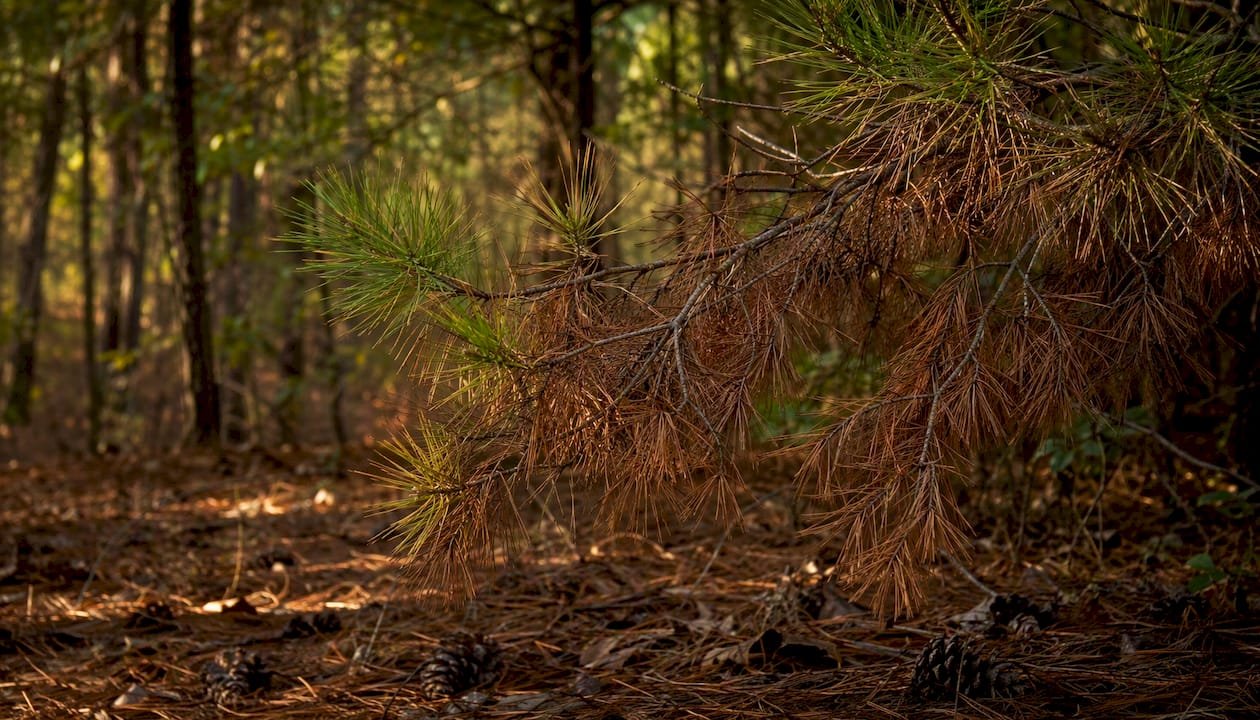
The disease starts on the oldest needles inside the canopy and on the lowest branches, then moves outward and upward. Branch tips often stay green while the interior turns brown or tan, which is the single most reliable field indicator distinguishing this disease from tip-originating blights.
Needle color shifts from green to yellow-brown, then to a dull gray-brown as needles die. With a 10x to 15x hand lens, small dark fungal structures called stromata are visible on the surface of dead needles. These stromata are produced by the fungus as it overwinters on infected tissue, and their presence confirms the diagnosis.
Symptoms typically become visible in late summer and fall, often August through October. The timing matters because it means the infection cycle was already underway during the warm, wet weeks of early summer — well before browning appears. Acting on symptoms in September means planning cultural and chemical responses for the following spring.
For diagnostic documentation, photograph the lower interior canopy from a distance to show the browning pattern, then take a close-up of dead needles showing the dark stromata. Label each image with the date, tree species, and location. These photos are exactly what cooperative extension offices and diagnostic labs need to confirm the disease remotely.
Which conifers are most vulnerable to this disease?
Cercospora needle blight affects a range of conifers commonly planted across the United States. The most frequently affected hosts include:
- Eastern redcedar (Juniperus virginiana) and Rocky Mountain juniper (Juniperus scopulorum) — among the most susceptible species in the genus
- Leyland cypress (× Cupressocyparis leylandii) — widely planted in the Southeast and frequently affected in dense hedgerows
- Arborvitae (Thuja spp.) — susceptible, particularly when planted in tight rows
- Cryptomeria (Cryptomeria japonica) — reported as a host in some regions
Rocky Mountain juniper is particularly prone to severe infection, especially in windbreak plantings where trees are spaced closely and air circulation is poor. Eastern redcedar planted in monoculture rows across the central and southeastern United States represents a high-risk scenario.
Susceptibility also varies within species. Some juniper cultivars show greater tolerance than others, though cultivar-level resistance data for homeowners is limited. Local cooperative extension offices maintain the most current cultivar guidance for specific regions. Trees in dense windbreaks, near other infected specimens, or in low-lying areas with poor drainage warrant the closest monitoring.
What conditions allow the fungus to spread and cause outbreaks?
The fungus overwinters on infected needles still attached to the tree or fallen on the ground beneath it. In spring and early summer, it produces spores called conidia that spread by wind and rain splash to healthy foliage. Warm, humid conditions accelerate spore release and dispersal, and infection requires extended periods of leaf wetness for spores to germinate and penetrate needle tissue.
Site and management conditions that increase outbreak risk:
- High summer humidity combined with frequent rainfall — the primary weather driver
- Overhead irrigation that wets foliage in the evening, extending leaf wetness into the night
- Dense plantings with poor air circulation that slow foliage drying after rain or irrigation
- Proximity to infected trees — nearby windbreaks or nursery stock are common inoculum sources
- Low-lying or poorly drained sites where humidity remains elevated
The infection timeline runs roughly as follows: inoculum builds on overwintered needles through late winter and early spring; conidia become active and infect new foliage during warm, wet periods from late spring through midsummer; visible browning then appears in late summer and fall as infected needles die. That lag between infection and symptom expression is why homeowners often underestimate how far the disease has progressed before they notice it.
How do you tell cercospora needle blight apart from similar needle diseases?
The key distinguishing feature is where symptoms originate. Cercospora starts on interior, lower-branch needles and moves outward. Phomopsis tip blight starts at branch tips and moves inward. Dothistroma (red-band) needle blight produces distinctive dark green bands on needles that later turn reddish-brown. Abiotic winter injury typically affects the entire exposed side of a tree uniformly, with no fruiting bodies present.
| Feature | Cercospora | Phomopsis tip blight | Dothistroma (red-band) | Winter/desiccation injury |
|---|---|---|---|---|
| Origin | Interior, lower branches | Branch tips and new shoots | Mid-needle, any branch position | Exposed outer canopy |
| Progression | Outward and upward | Inward toward trunk | Needle tip dies beyond the band | Uniform on windward/exposed side |
| Fruiting bodies | Dark stromata on dead needles (hand lens) | Small black pycnidia at tip | Black pycnidia within reddish bands | None |
| Needle markings | Uniform brown/tan | Tip dieback, no banding | Dark green then reddish-brown band | Uniform tan or reddish-brown |
| Typical timing | Late summer to fall | Spring, on new growth | Late summer to fall | Late winter to early spring |
A common misdiagnosis is confusing Cercospora with Phomopsis tip blight. Correctly identifying whether symptoms begin on interior needles versus tips changes the recommended response entirely — Phomopsis management focuses on new shoot protection in spring, while Cercospora management targets the overwintering inoculum and foliage wetness.
Practical diagnostic steps:
- Use a 10x to 15x hand lens to look for stromata or pycnidia on dead needles.
- Collect a sample of affected needles in a paper bag (not plastic, which promotes decay) and submit to your state’s cooperative extension diagnostic lab.
- Contact your county extension office with dated photos before purchasing any fungicide — misidentification leads to wasted applications.
Cultural controls that form the foundation of long-term management
Cultural fixes are primary. Addressing site conditions before relying on fungicides is the only path to durable control, because needle blights are favored by poor air circulation and close spacing — conditions that no spray program can compensate for indefinitely.
Sanitation and thinning checklist:
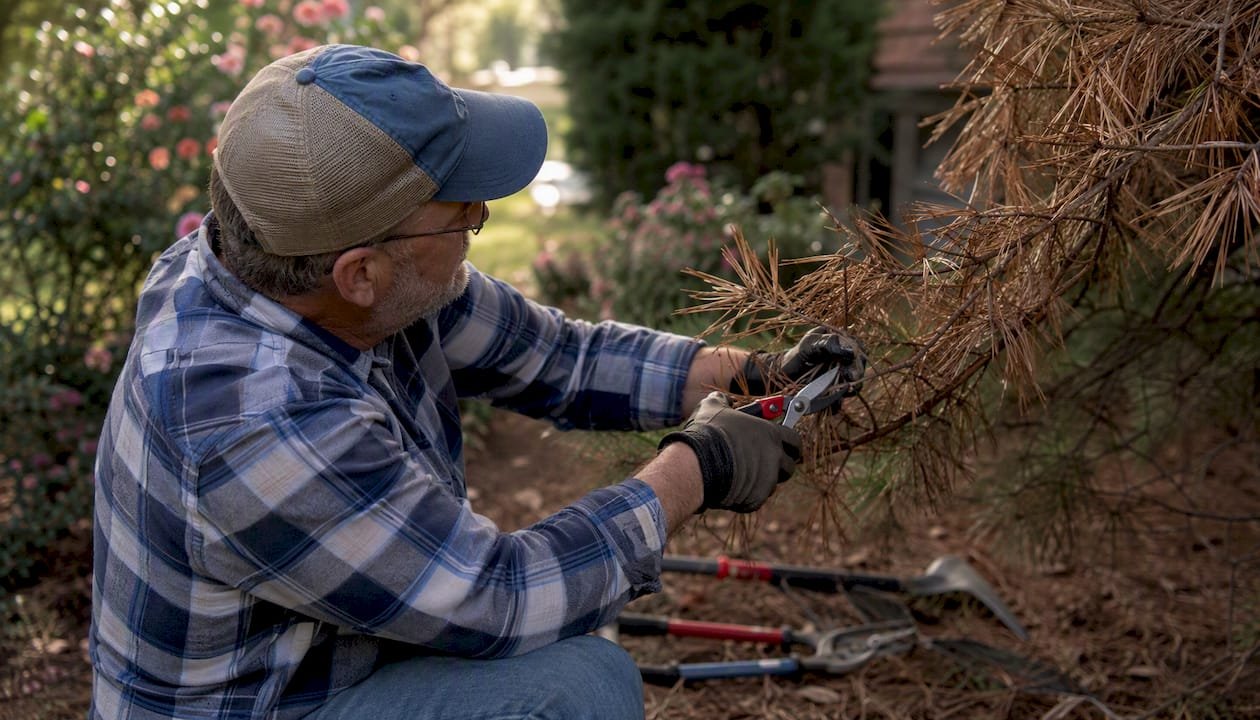
- Remove dead interior branches during dry weather. Pruning wet foliage spreads spores. Schedule pruning for dry, low-humidity days.
- Collect and dispose of fallen needles beneath affected trees. Do not compost infected material — bag it for municipal waste or burn where permitted.
- Thin crowded plantings by removing the most severely affected trees in a windbreak row first. This reduces the inoculum load for neighboring trees.
- Disinfect pruning tools between trees using a 10% bleach solution or 70% isopropyl alcohol to avoid transferring spores.
- For single landscape specimens, remove all dead interior branches back to live wood and dispose of cuttings off-site.
Irrigation and site management:
Switch from overhead sprinklers to drip irrigation or soaker hoses. If overhead irrigation cannot be avoided, water in the early morning so foliage dries completely before evening. Mulching the root zone with 2 to 4 inches of wood chips helps maintain soil moisture without wetting foliage and supports overall tree vigor.
Avoid high-nitrogen fertilization on stressed trees. Excessive nitrogen pushes soft new growth that is more susceptible to infection.
Pro Tip: Expect a 2 to 3 year program for severe infestations, not a one-season fix. In multi-row windbreaks, prioritize removing the most heavily infected trees first — they are the primary inoculum source for the rest of the planting. Realistic expectations prevent homeowners from abandoning a program that is actually working.
What fungicide strategy actually protects new foliage?
Fungicides are protectants, not cures. They must be applied to healthy new foliage before infection occurs. Dead needles will not recover regardless of the product used.
Timing is the critical variable. Extension recommendations call for an initial preventive spray around mid-May to mid-June, timed to coincide with new needle emergence. A second application follows when new needles are fully expanded. Wet years require additional applications through the summer.
Key guidance for an effective spray program:
- Reapply every 10 to 14 days during wet weather — the interval recommended by university extension sources for sustained protection during high-risk periods.
- Begin sprays at needle emergence, not after browning appears. Waiting until symptoms are visible means the current season’s infection cycle is already underway.
- Copper-based fungicides (including Bordeaux mixture and commercially formulated liquid coppers) have a long track record as protectants. Nursery guidance historically recommends Bordeaux mixture applied at 7 to 10 day intervals through summer, though commercially formulated liquid coppers are more practical for landscape-scale applications.
- Rotate fungicide modes of action across seasons to reduce the risk of resistance developing in the fungal population.
- Read and follow label instructions for every product. Wear appropriate PPE including gloves, eye protection, and a respirator when mixing and applying.
- Hire a licensed arborist or pesticide applicator for large trees where canopy coverage cannot be achieved safely with homeowner equipment.
An integrated approach combining cultural methods with protective fungicide applications is required for effective cercospora disease management. Multiple seasons of careful application alongside cultural change are typically necessary before a significant reduction in disease pressure is observed.
When should you remove a tree rather than treat it?
At that threshold, the tree is a net inoculum source for surrounding plantings, and continued treatment costs outweigh the benefit. Cultural controls are most effective before a tree reaches that 50% defoliation point.
Sanitation checklist for removal:
- Remove the entire tree, including the stump if possible, to eliminate overwintering fungal tissue.
- Chip or bag all material and remove it from the site. Do not leave brush piles near remaining healthy trees.
- Rake and bag all fallen needles from beneath the removed tree and from the surrounding area.
- Clean all tools used during removal with a disinfectant solution before using them on healthy trees.
- Avoid replanting a susceptible species in the same location without first addressing the site conditions (drainage, spacing, irrigation) that contributed to the original infection.
After removal, allow the site to dry and improve air circulation before replanting. If the tree was part of a windbreak, consider whether the gap can be filled with a less susceptible species rather than the same host.
How to choose trees and planting designs that reduce future risk
Site selection and species choice are the most effective long-term prevention tools. No fungicide program compensates for a planting design that guarantees recurring infection.
Practical planting guidance:
- Space trees for mature canopy size, not nursery size. Crowded canopies trap humidity and prevent foliage from drying after rain.
- Avoid monoculture rows of susceptible junipers or Leyland cypress. Mixed-species windbreaks that include pines, spruces, firs, or non-susceptible broadleaf evergreens reduce the risk of disease spreading through an entire planting.
- Select tolerant or resistant cultivars where available. Consult your local cooperative extension office for cultivar-level recommendations specific to your region — cultivar performance varies by climate and local disease pressure.
- Avoid low-lying, poorly drained sites for susceptible species. Elevated, well-drained locations with good air movement reduce leaf wetness duration.
- Consider alternative species for high-risk sites: native pines, spruces, and firs generally show lower susceptibility to Cercospora, and non-susceptible broadleaf evergreens can provide screening without the disease risk.
Extension specialists often recommend replacing chronically affected plantings with diverse, non-susceptible species rather than relying on repeated fungicide applications season after season.
How to monitor your trees and know when to call a professional
Monitor lower interior foliage in late summer, specifically from August through October, and log severity annually. Consistent documentation is the only way to judge whether a management program is working or whether conditions are worsening.
Monitoring checklist:
- Establish fixed photo points — stand in the same location each year and photograph the same trees from the same angle. Date every image.
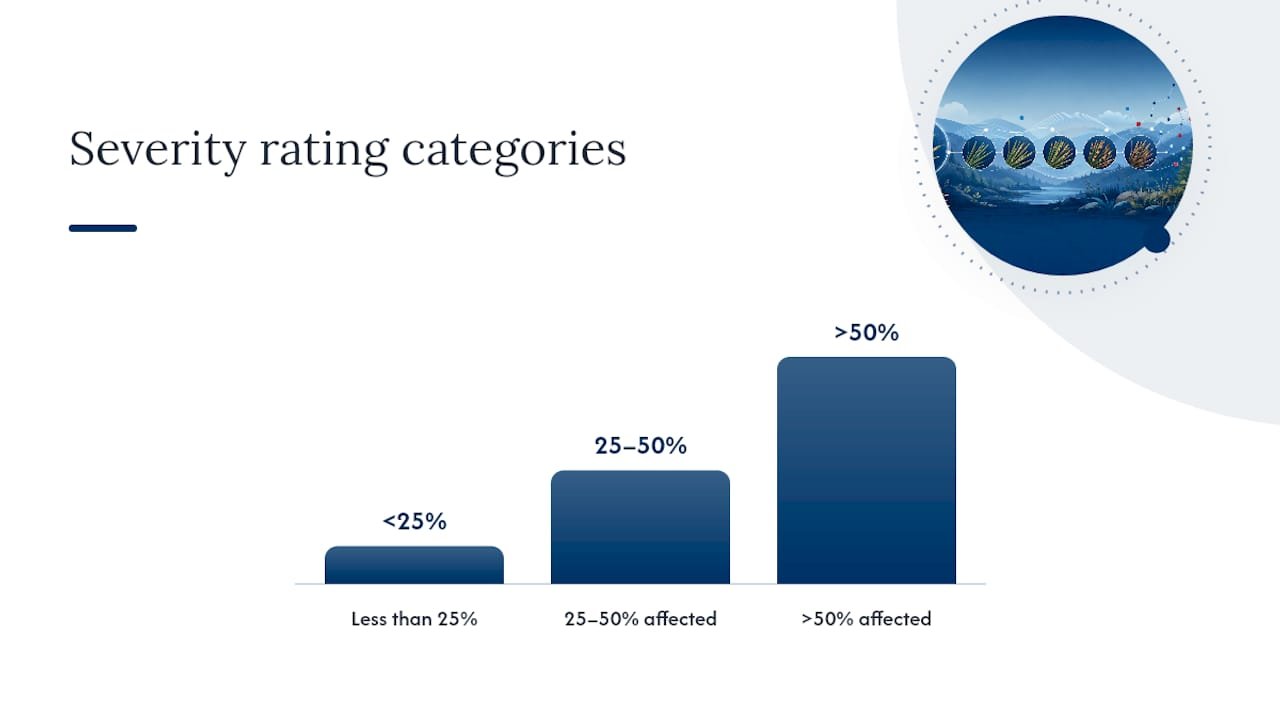
- Rate each tree on a simple scale: less than 25% affected, 25 to 50% affected, or greater than 50% affected. Record this annually.
- Check for new stromata on fallen needles each spring using a hand lens to gauge overwintering inoculum levels.
- Note weather conditions during the monitoring period — wet summers correlate with higher disease pressure the following fall.
When to contact a professional:
- The tree is large enough that safe canopy coverage with a homeowner sprayer is not achievable.
- More than one full season of cultural and chemical management has produced no measurable improvement.
- You are uncertain about the diagnosis — submit photos or samples to your state’s cooperative extension diagnostic lab before committing to a treatment program.
- Multiple trees in a windbreak are declining simultaneously, which may indicate a systemic site problem beyond what homeowner-level intervention can address.
Staying informed about local plant health alerts is part of effective monitoring. Thecentralgeorgian covers local community news and public health updates that can include regional extension advisories relevant to Central Georgia residents.
A note from Thecentralgeorgian
Cercospora needle blight is manageable when identified early and addressed with the right combination of cultural corrections and timed fungicide protection. The most important step is accurate diagnosis — if you are uncertain whether what you are seeing is Cercospora or a look-alike disease, photograph the lower interior canopy, collect a needle sample, and contact your county extension office before spending money on treatments.
Thecentralgeorgian covers public health and community resource stories affecting Central Georgia residents, including local extension advisories and environmental alerts. Readers can find local news and community updates at the publication’s homepage. For plant disease questions specific to Central Georgia, the University of Georgia Cooperative Extension is the primary local resource for diagnostic support and cultivar guidance. Thecentralgeorgian’s approach to longform local journalism means that when regional plant disease outbreaks become a community concern, this publication reports on them.
Submit dated photos of affected trees to your county extension agent or the UGA Plant Disease Diagnostic Clinic for confirmation before committing to a multi-season treatment program.
Sources
The following extension and government resources provide additional depth on identification, spray schedules, species selection, and sample submission:
- NF99-396 Prevention and Control of Cercospora Needle Blight Disease in Junipers and Cedars
- Cercospora Blight of Juniper – Forest Nursery Pests
- Needle blight and cast — UC IPM
- Dothistroma / Needle blight — University of Illinois Extension (HortAnswers)
For sample submission and local cultivar recommendations, contact your county cooperative extension office directly. Most state land-grant universities operate plant diagnostic labs that accept mailed samples with a submission form.