Best Seafood Restaurants in Georgia: 2026 Guide
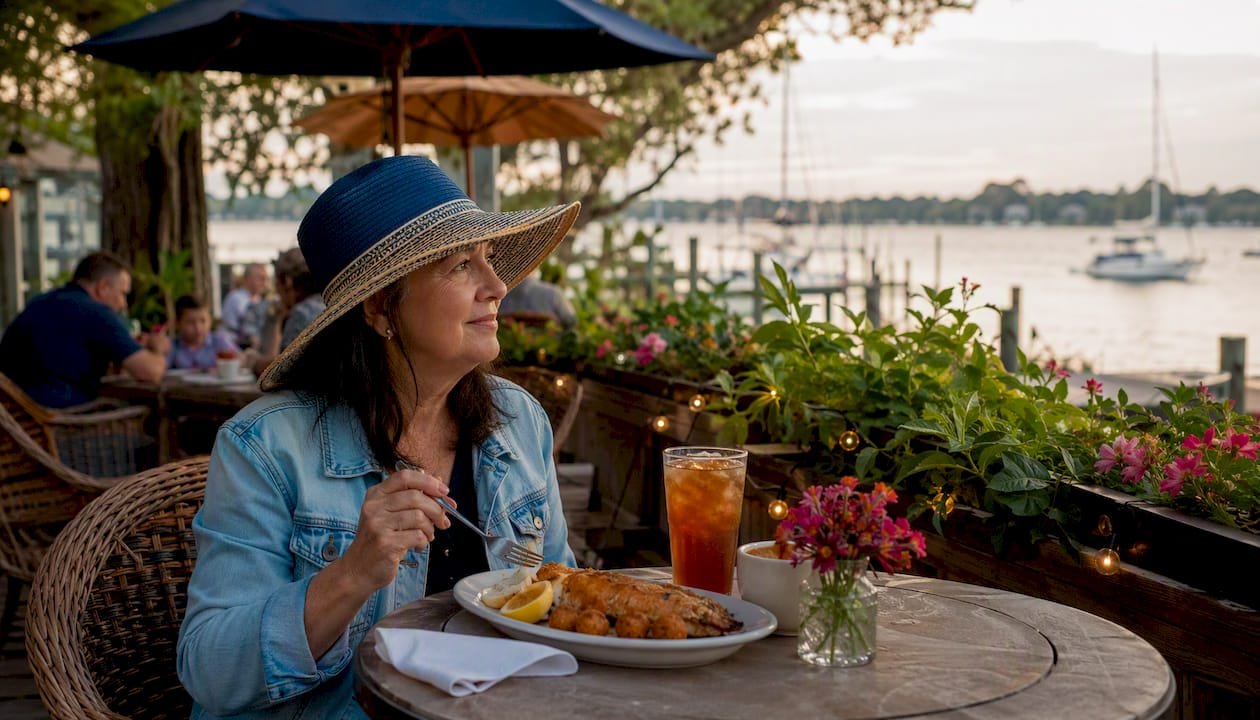
Georgia’s top seafood restaurants span the state from Savannah’s historic waterfront to the Blue Ridge mountains: Fiddler’s Crab House, Shabazz Seafood, Georgia Sea Grill, Whiskey & Water, Atlanta Fish Market, Kathleen’s Catch, and the Live Oak Restaurant Group’s coastal venues represent the strongest options across the state’s major regions. Coastal spots deliver Lowcountry authenticity tied directly to local shrimping fleets. Atlanta’s best venues match that quality through logistics-controlled freshness and high-turnover markets.
- Coastal pick: Choose Savannah or St. Simons venues for dock-to-table Georgia white shrimp, oysters, and blue crab at peak freshness.
- Inland pick: Atlanta Fish Market and Kathleen’s Catch maintain quality through fast distribution windows and controlled fisheries.
| Restaurant | Best For | Signature Dish | City / Region |
|---|---|---|---|
| Fiddler’s Crab House | Waterfront historic dining | Local shrimp platter | Savannah / River Street |
| Shabazz Seafood | Authentic Lowcountry flavors | Traditional coastal plates | Savannah |
| Georgia Sea Grill | Upscale coastal / Golden Isles | Crab-stuffed hush puppies | St. Simons Island |
| Whiskey & Water | North Georgia scenic dining | Wood-fired seafood | Blue Ridge |
| Atlanta Fish Market | Inland freshness and variety | Rotating fresh catch | Atlanta |
| Kathleen’s Catch | Market-to-table shoppers | Chemical-free daily catch | Metro Atlanta |
| Live Oak Restaurant Group | Multiple coastal venues | Grilled / fried local catch | Coastal Georgia |
Thecentralgeorgian covers food and dining news across Central Georgia, providing local context for readers choosing where to eat.
Table of Contents
- How do Georgia’s best seafood restaurants compare across regions?
- How this list was compiled
- Practical tips for dining on seafood across Georgia
- Key Takeaways
- A local reporter’s perspective on Georgia seafood coverage
- Sources and further reading
- Thecentralgeorgian covers the dining stories behind the headlines
How do Georgia’s best seafood restaurants compare across regions?
Each region in Georgia offers a distinct seafood experience. The entries below are organized by geography, from the coast inland.
Fiddler’s Crab House sits on Savannah’s River Street with direct ties to nearby shrimping fleets. The waterfront setting and local shrimp platters make it the clearest example of Savannah’s historic dock-to-table tradition. Reservations are recommended on weekends; walk-ins are possible on weekday afternoons.
Shabazz Seafood serves traditional coastal preparations in a Savannah neighborhood setting. The focus is on local favorites prepared in straightforward coastal style. It draws a loyal local crowd and is less tourist-oriented than River Street venues.
Georgia Sea Grill on St. Simons Island is the standout for the Golden Isles. The menu rotates with seasonal coastal availability, and the crab-stuffed hush puppies are the signature item most cited by diners. Reservations are advised, particularly during summer and holiday weekends.
- Peak times to avoid: Friday and Saturday evenings from June through August.
- Dietary accommodations: gluten-free options available; confirm with staff on arrival.
- Parking: limited street parking near the village; a public lot is nearby.
Whiskey & Water in Blue Ridge brings upscale seafood to North Georgia’s mountain corridor. The restaurant has been cited as a notable seafood establishment in local coverage, and its wood-fired preparations distinguish it from coastal counterparts. The menu draws on regional sourcing alongside coastal imports.
Atlanta Fish Market is the primary inland option for variety and volume. The restaurant claims fish can arrive in Atlanta within 18–36 hours of the catch, a supply-chain claim that places it among the more transparent inland operators. The selection is broad, and turnover is high.
Kathleen’s Catch operates as a specialty seafood market in Metro Atlanta. The emphasis is on all-natural, chemical-free seafood delivered fresh daily from controlled fisheries. Staff can advise on preparation and sourcing. It suits buyers who want to cook at home rather than dine in.
- Peak times: Saturday mornings see the heaviest market traffic.
- Dietary accommodations: the market model allows buyers to select specific species and preparation styles.
- Accessibility: standard retail accessibility; confirm specific needs by phone.
Live Oak Restaurant Group operates multiple coastal venues, including Tubby’s Tankhouse in Thunderbolt, which prepares fresh local seafood grilled, fried, blackened, broiled, or steamed. The group’s operator-level consistency means sourcing standards and menu rotation are applied across venues rather than venue by venue.
| Restaurant | Price Range (per person) | Reservation Policy | Seasonality / Local Sourcing |
|---|---|---|---|
| Fiddler’s Crab House | moderate | Recommended weekends | Local shrimping fleets; seasonal menu |
| Shabazz Seafood | moderate | Walk-in friendly | Traditional coastal; local focus |
| Georgia Sea Grill | higher | Reservations advised | Seasonal rotation; locally caught |
| Whiskey & Water | higher | Recommended | Regional sourcing; wood-fired menu |
| Atlanta Fish Market | higher | Walk-in and reservations | 18–36 hr distribution; rotating catch |
| Kathleen’s Catch | Market pricing | No reservation needed | Daily delivery; chemical-free fisheries |
| Live Oak Restaurant Group | moderate | Varies by venue | Coastal sourcing; multi-style prep |
Pro Tip: For a romantic waterfront evening, book Georgia Sea Grill or Fiddler’s Crab House at least a week ahead in summer. For a family-casual outing, Shabazz Seafood or Tubby’s Tankhouse offer relaxed settings without the reservation pressure. For market-to-table cooking, Kathleen’s Catch is the Metro Atlanta option with the most sourcing transparency.
How this list was compiled
Restaurants were selected based on documented sourcing practices, signature Lowcountry menu items, regional recognition, and supply-chain evidence. No entry appears solely on the basis of review volume.
Selection criteria applied to each entry:
- Regional recognition: — Citations in local coverage or tourism guides, including Explore Georgia recommendations.
The rating scale used here is use-case based: “Best for waterfront dining” reflects setting, fleet proximity, and atmosphere. “Best for inland freshness logistics” reflects documented distribution speed and market turnover. Local reporting and operator sourcing statements were weighted alongside tourism authority recommendations.
Trust signals consulted include Explore Georgia’s coastal dining itinerary, individual restaurant sites with explicit sourcing claims, and Live Oak Restaurant Group’s operator-level sourcing documentation.
Practical tips for dining on seafood across Georgia
Reserve waterfront spots early. Georgia Sea Grill and Fiddler’s Crab House fill quickly on summer weekends, and same-day walk-ins at peak hours often face long waits.
Practical checklist before you go:
- Price ranges: — Budget a moderate amount per person for casual Savannah spots and a higher amount for upscale coastal dining at Georgia Sea Grill or Whiskey & Water.
- Dietary accommodations: — Most coastal restaurants offer grilled preparations for gluten-sensitive diners. Vegan options are limited at traditional Lowcountry spots; Kathleen’s Catch allows buyers to select species and preparation independently.
- Coastal weather: Check conditions before driving to dockside venues. Coastal Georgia weather can affect both road access and catch availability. Thecentralgeorgian’s weather emergency guide covers how to track alerts before a coastal trip.
Pro Tip: Genuine local sourcing language includes “local fleet,” “dock-to-table,” and “caught today.” Generic terms like “fresh seafood” or “ocean-fresh” carry no sourcing commitment. If a menu does not specify origin, ask the server directly before ordering.
Coastal piers and River Street venues have limited parking, and local cultural programs like Friday Night Fish Fry: Southern Soul Live with DJ King Weezy celebrate the community spirit around seafood dining. Arrive early or use public lots. City restaurants in Atlanta and Metro Atlanta generally offer garage parking or validated lots.
Key Takeaways
Georgia’s best seafood restaurants divide clearly between coastal Lowcountry authenticity and logistics-driven inland freshness, and the right choice depends on your region, occasion, and sourcing priorities.
| Point | Details |
|---|---|
| Coast vs. inland | Coastal venues offer dock-to-table Georgia white shrimp and oysters; Atlanta venues match quality through fast distribution. |
| Supply chain matters | Atlanta Fish Market’s short delivery window is a concrete freshness benchmark for inland dining. |
| Reserve early | Waterfront spots like Georgia Sea Grill and Fiddler’s Crab House fill 5–7 days ahead in peak summer months. |
| Check seasonal menus | Georgia white shrimp, oysters, blue crab, and fried mullet are the regional staples to look for on any rotating menu. |
| Thecentralgeorgian | Covers Central Georgia dining and food news; a local reporting resource for readers choosing where to eat in the region. |
A local reporter’s perspective on Georgia seafood coverage
Local reporting changes a restaurant recommendation in one specific way: it surfaces the sourcing claims that marketing copy obscures. A coastal restaurant can state “fresh local seafood” on a sign and source from a national distributor. A reporter who calls the docks, reads the menus against the season, and checks operator statements against fleet schedules produces a different kind of list than one assembled from review aggregators alone.
The venues on this list were evaluated against documented sourcing language, operator-level consistency, and regional recognition. Readers who spot errors, have updated menu information, or want to suggest a correction can submit a news tip to Thecentralgeorgian’s editorial team directly.
Thecentralgeorgian reports on food, business, and community events across Central Georgia. Readers can follow coverage and send corrections or tips through the site’s standard news tip process.
Sources and further reading
The core evidence for this guide comes from Explore Georgia’s coastal dining itinerary, individual restaurant and market sites, and Live Oak Restaurant Group’s operator documentation. Readers should check restaurant sites directly or call ahead for same-day catch availability, as menus rotate with seasonal supply.
- Explore Georgia: Dine Along Georgia’s Coastline — Tourism authority itinerary covering Lowcountry staples and recommended coastal restaurants.
- Atlanta Fish Market — Restaurant site with sourcing and distribution claims, including the 18–36 hour delivery window.
- Kathleen’s Catch — Specialty market site listing store locations, hours, and sourcing standards.
- Georgia Sea Grill — St. Simons Island restaurant site with seasonal menu and signature dish information.
- Fiddler’s Crab House — Savannah River Street site covering local shrimp platters and waterfront dining details.
- Shabazz Seafood — Savannah neighborhood seafood spot; useful for confirming current hours and menu.
- Whiskey & Water — Blue Ridge restaurant site with menu and regional recognition details.
- Tubby’s Tankhouse / Live Oak Restaurant Group — Coastal operator site covering preparation styles and sourcing practices.
Call the restaurant directly to confirm same-day catch availability before making a reservation, particularly for oysters and Georgia white shrimp during off-peak months.
Thecentralgeorgian covers the dining stories behind the headlines
There are other routes to finding where to eat in Georgia: tourism boards, review aggregators, and food blogs all publish lists. Thecentralgeorgian takes a different approach. As a local news platform covering Central Georgia, it reports on the businesses, operators, and sourcing practices that shape what ends up on your plate, not just which plates look good in photos.
For readers in Macon, Middle Georgia, and the surrounding region, Thecentralgeorgian provides the local reporting context that a national food publication cannot. Coverage includes restaurant openings, food safety alerts, local business news, and community dining events. That reporting is available now at Thecentralgeorgian. Readers planning a coastal trip can also check the site’s local holiday event schedules guide for seafood festivals and community dining events across the region. Visit the site and sign up for local news alerts to stay current on Central Georgia’s food and business scene.