Valdosta Newspaper: Where to Read It and Find Archives

The Valdosta newspaper most residents mean is the Valdosta Daily Times, published online at valdostadailytimes.com, with archives split between two main sources: Valdosta State University’s VDT Index for indexed announcements and Georgia Historic Newspapers (GALILEO) for scanned historic runs. Current stories sit behind a partial paywall, with select headlines free and full digital or print access requiring a subscription. For immediate access, start here:
- Current edition: Valdosta Daily Times website (valdostadailytimes.com)
- Indexed vital records: Valdosta State University’s VDT Index
- Digitized historic pages: Georgia Historic Newspapers on GALILEO
Key Takeaways
The Valdosta Daily Times is the Valdosta newspaper of record, with current news online, obituary and vital-record indexing through Valdosta State University, and historic pages digitized on GALILEO.
| Point | Details |
|---|---|
| Current edition access | Read today’s stories at valdostadailytimes.com; expect a partial paywall on longer articles. |
| Historic archives | Search digitized runs of The Valdosta Times from 1874 onward through Georgia Historic Newspapers on GALILEO. |
| Obituaries and announcements | Use the VSU VDT Index to find births, deaths, weddings, and engagement notices by name. |
| Legal and public notices | Search georgiapublicnotice.com by county and date for foreclosure, estate, and government notices. |
| Ownership and operations | Carpenter Media Group publishes the paper; a 2024 office sale reflects a shift toward digital-first workflows. |
| Real-time regional coverage | Thecentralgeorgian complements archival research with live Central Georgia news and public safety updates. |
Table of Contents
- Where to Read Today’s Valdosta Daily Times Online
- Where Are the Historic Valdosta Newspaper Archives?
- How Do You Find a Valdosta Obituary or Birth Announcement?
- Where to Find Valdosta Public and Legal Notices
- Who Owns the Valdosta Daily Times Now?
- How to Request Back Issues or Cite an Old Article
- How to Stay Current With Valdosta News Updates
- Follow The Central Georgian for Real-Time Central Georgia Coverage
- Sources
Where to Read Today’s Valdosta Daily Times Online
Getting today’s stories takes one step: open valdostadailytimes.com and browse the front page. Breaking news and short items are usually visible without an account, but longer features, sports recaps, and investigative pieces often sit behind a metered paywall that asks for registration or a paid subscription after a few free reads.
Subscription options typically break into three shapes: digital-only access for reading on a phone or computer, print delivery for the physical paper, and combined print-plus-digital packages. Pricing and promotional rates change periodically, so the subscribe page on the site is the only reliable place to confirm current rates before committing.
For anything the website can’t answer, direct contact works faster than searching:
- Newsroom tips and story submissions: use the contact or “submit a tip” page
- Letters to the editor: submitted through the site’s opinion section
- Classifieds and advertising: routed through the advertising contact form
- Obituary submissions: typically handled through a dedicated obituary submission link
Pro Tip: If a story is paywalled and you need it quickly, check whether your local library card grants free digital access through a library database, look for the same headline summarized on the paper’s social media accounts, or call the newsroom directly. Papers will often clarify basic facts over the phone even when the full article requires payment.
Where Are the Historic Valdosta Newspaper Archives?
Two institutions cover almost everything a researcher needs, and they serve different purposes. Georgia Historic Newspapers, hosted on the University of Georgia’s GALILEO platform, holds digitized pages of The Valdosta Times, the paper’s historic run dating back to 1874 and continuing into the 1940s. Every page is scanned and searchable by keyword, which makes it the go-to source for reading full articles exactly as they appeared.

Valdosta State University takes a different approach. Its Archives & Special Collections department maintains the VDT Index, a structured index of birth announcements, death notices, obituaries, engagement notices, and wedding announcements pulled from the Valdosta Daily Times. This index exists because full-text OCR search on old newsprint often misses these short, formulaic notices, so a librarian-built index catches what a keyword search alone would miss.
| Archive | Best For | Time Range | Search Method |
|---|---|---|---|
| Georgia Historic Newspapers (GALILEO) | Full digitized pages, general articles | 1874 through the 1940s | Keyword and date-range OCR search |
| VSU VDT Index | Obituaries, births, weddings, engagements | Indexed spans compiled by archivists | Name and record-type lookup |
Start broad on GALILEO with a surname and a date range, then narrow using exact phrases if you know a headline. Check the paper’s Library of Congress control number when cross-referencing catalog listings, since it confirms you’re viewing the correct historic title rather than a similarly named publication from another town.
Pro Tip: Combine a person’s name with a neighborhood or street name when searching digitized pages. Old OCR scans frequently mangle names, but a place name paired with an approximate date often surfaces the article a plain name search misses.
How Do You Find a Valdosta Obituary or Birth Announcement?
The VDT Index is built specifically for these record types, and it’s usually faster than digging through scanned pages one issue at a time. Search it directly by name when you’re after an obituary, birth notice, wedding announcement, or engagement notice from the Valdosta Daily Times.
Use the index first when you know a name but not a date. Switch to the full digitized pages on GALILEO once you have a specific date, since that’s where you’ll read the entire notice rather than just a record confirming it existed.
A few common snags slow this research down:
- Name variations (maiden names, nicknames, misspellings) can hide a match in either the index or OCR text
- Indexing lags mean very recent announcements may not appear yet
- OCR errors on aging newsprint sometimes make a full-text search miss a notice that’s plainly visible on the page itself
When one method fails, try the other. An index miss doesn’t mean the record doesn’t exist.
Where to Find Valdosta Public and Legal Notices
Legal notices, including foreclosure filings, estate notices, and government advertisements, are centralized on georgiapublicnotice.com)/default.aspx), the state’s official public-notice portal. It’s searchable by county and keyword, which makes it faster than scanning printed classified pages one edition at a time.
Local papers, including the Valdosta Daily Times, still publish many of these same notices in print, so cross-checking both sources confirms a notice actually ran and on what date, which matters for legal proof of publication.
A quick search takes three steps:
- Filter results by Lowndes County or the relevant Georgia county
- Narrow by a date range matching when the notice would have run
- Add a keyword, such as a name or case type, to isolate the specific notice
Who Owns the Valdosta Daily Times Now?
The paper is published under Carpenter Media Group, a media company that operates multiple local newspapers across several states. Corporate ownership matters to researchers because it determines who controls archive access, subscription terms, and how records get preserved or migrated when systems change.
A notable operational shift came in 2024, when the newspaper’s physical office building was sold, a move that reflects a broader industry pattern toward digital-first, decentralized newsroom operations rather than a single fixed location housing staff and printing equipment.
For citation purposes, researchers should note:
- Corporate policy details, including subscriber terms, are published on Carpenter Media Group’s terms of service page
- Reader privacy expectations are outlined in the company’s privacy policy
- The 2024 office sale is best understood as part of a wider trend documented in coverage of digital transitions at rural and local publications
How to Request Back Issues or Cite an Old Article
Ordering a specific back issue or citing an archived article properly takes a few concrete steps, whether you’re working with the newspaper directly or a library’s microfilm collection.
- Identify the exact date, and if possible, the headline or section, before contacting anyone
- Contact the newspaper’s circulation or archives department for recent issues, or Valdosta State University’s Archives & Special Collections for historic runs
- For microfilm, ask a librarian to locate the correct reel and request either in-person viewing or a scanned copy
- If your local library doesn’t hold the reel, request it through interlibrary loan
Details to gather before requesting a copy:
- Publication date
- Page number, if known
- Headline or subject
- Author or byline, if listed
A basic citation format looks like this: Valdosta Daily Times, “Headline Here,” [Date], page [number].
How to Stay Current With Valdosta News Updates
Beyond checking the site manually, most readers rely on a mix of channels depending on how fast they need the news. Email newsletters work well for a curated daily roundup. Site-based push alerts and the paper’s social media accounts on Facebook and X tend to be faster for breaking news, since those posts often go up before a full article is finished.
- Email newsletter signup (usually found in the site footer or account settings)
- Facebook and X accounts for real-time posts
- Browser or app push notifications, where offered
- RSS feeds, when available, for readers who prefer a feed reader over social media
Pro Tip: Follow the newsroom’s account directly rather than a general aggregator page. Original posts from the reporting team almost always land before a shared or reposted version does.
A Local Reporter’s View on What Coverage Looks Like Now
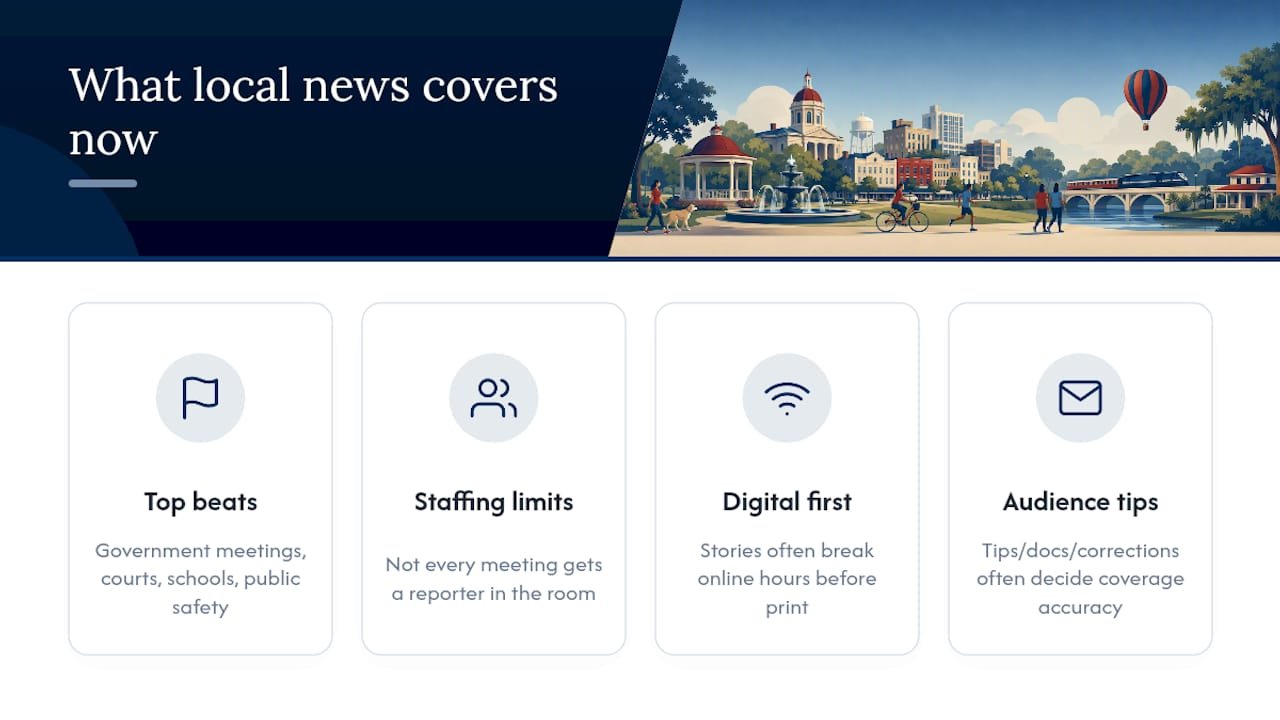
Local newsrooms, including this one, prioritize government meetings, court proceedings, schools, and public safety first, because those beats affect daily life the most and often go uncovered by anyone else. Staffing constraints mean not every meeting gets a reporter in the room, and digital-first workflows sometimes mean a story breaks online hours before it ever appears in print.
Readers fill real gaps. A tip, a document, or a correction sent directly to a newsroom often becomes the difference between a story getting covered accurately and not getting covered at all.
Follow The Central Georgian for Real-Time Central Georgia Coverage
If you’re tracking news across Central Georgia rather than just Valdosta, Thecentralgeorgian gives you real-time reporting on breaking news, crime, and public safety without waiting on a print cycle or digging through a paywall for basic updates.
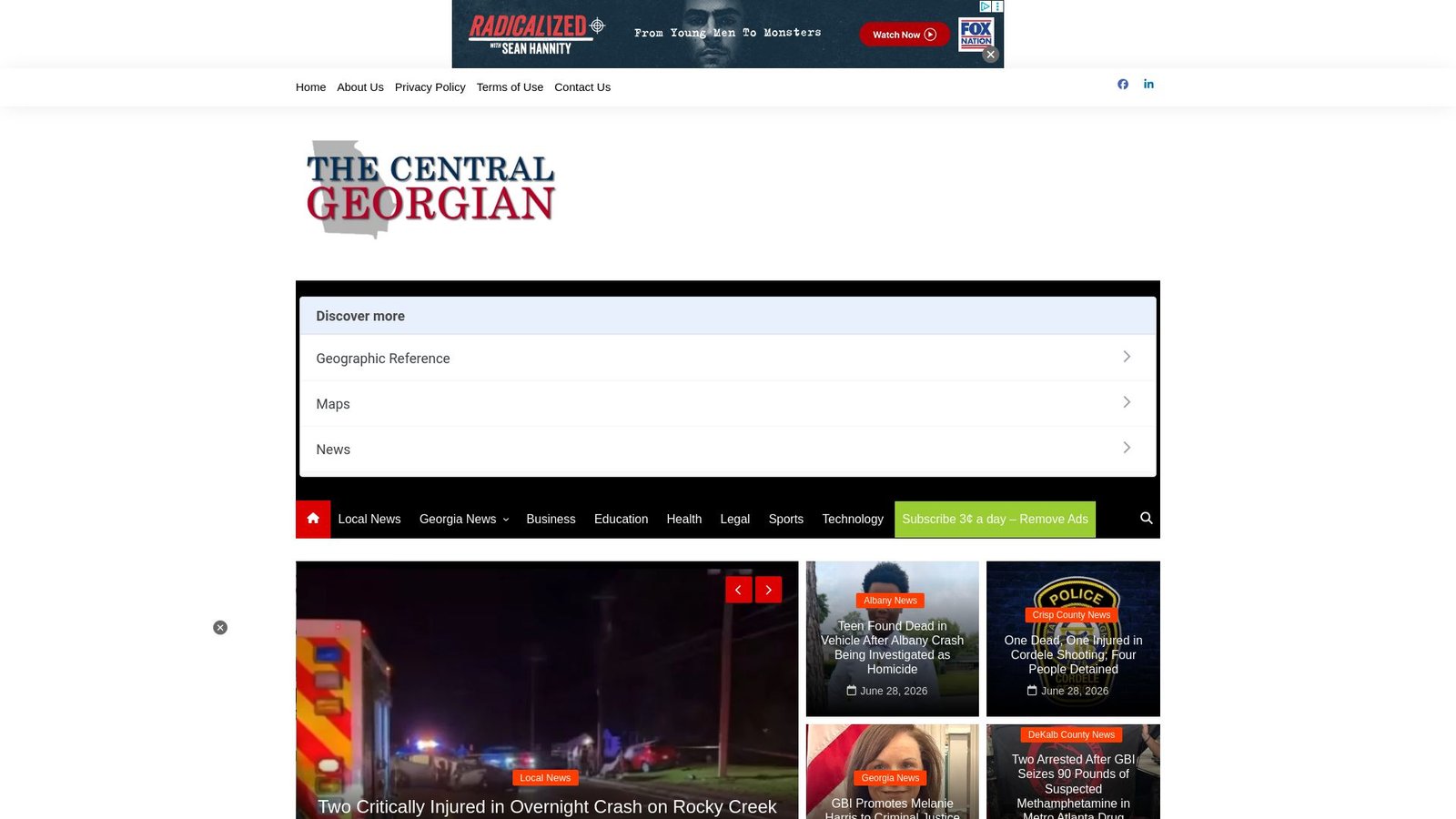
Government announcements, zoning changes, and public meeting outcomes can be hard to track down after the fact, which is exactly the gap Thecentralgeorgian’s guide to navigating local government announcements is built to close. Where a historic archive like GALILEO or the VDT Index helps you look backward, Thecentralgeorgian focuses on what’s happening right now in the region, with coverage built around the human stories behind local headlines. Start by reading that government-announcements guide, then bookmark the homepage to check back for daily updates on the issues shaping Central Georgia.