
How Community Trust Built the Modern Newsroom
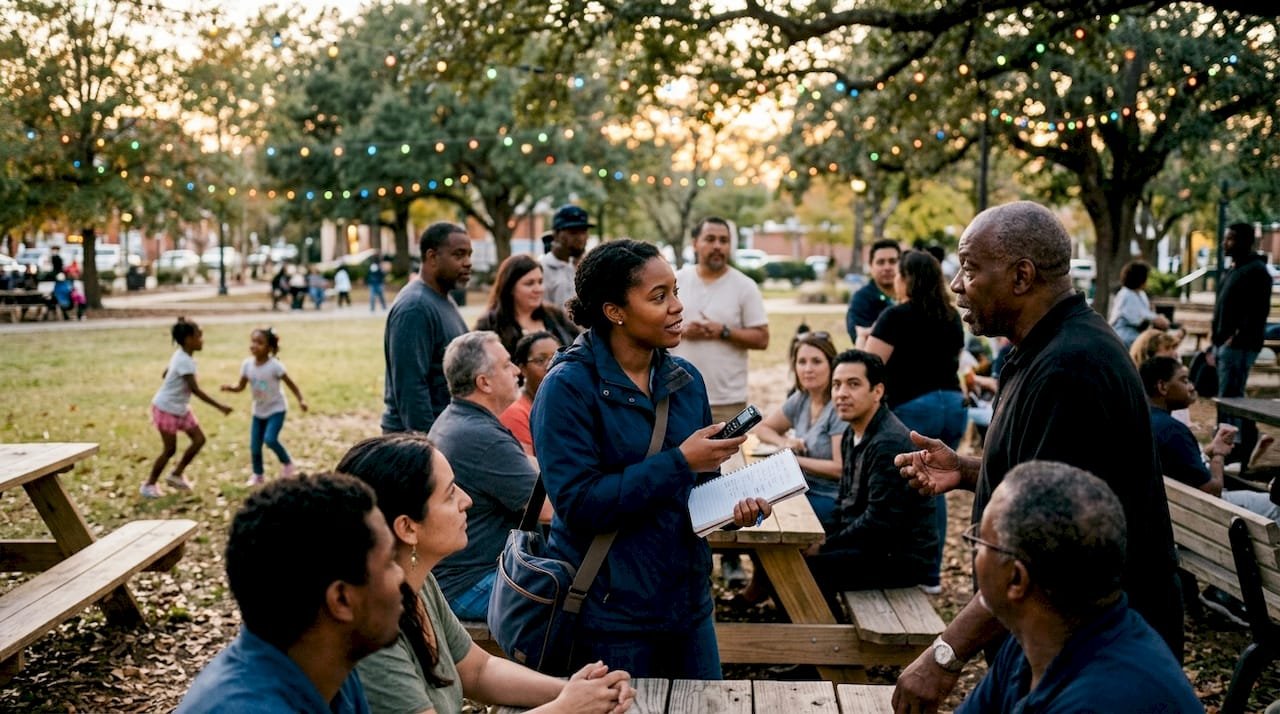
Community trust in journalism is the single most important factor that determines whether a local newsroom survives or disappears. Research from the Lenfest Institute shows that 75% or more readers of independent statewide news outlets view them as trustworthy. That figure is not an accident. It reflects years of deliberate relationship-building, transparent reporting, and consistent community presence. Understanding how community trust built newsroom credibility across the country gives journalists and media professionals a clear model to follow.
What evidence shows that community trust impacts newsroom credibility?
The data connecting trust to newsroom performance is direct and measurable. The Lenfest Institute found that half of readers who trusted their local outlet recalled specific stories that prompted civic action in their lives. That is not passive readership. That is a community responding to journalism it believes in.
“Trust is not a byproduct of good journalism. It is the precondition for journalism to matter at all. When readers trust a newsroom, they act on what they read. When they do not, even accurate reporting goes ignored.”
The Milwaukee Neighborhood News Service offers one of the clearest case studies in building newsroom trust. Readers repeatedly cited NNS as trusted and useful, not because of its brand size, but because reporters showed up in neighborhoods consistently. This proximity model proves that trust stems from community embedding, not from institutional reputation alone.
The American Press Institute adds another layer to this picture. Research shows that 51% of audiences find transparency about sponsored content crucial for credibility, and 39% value knowing a newsroom’s mission when evaluating trust. These numbers tell journalists exactly what readers are looking for. Credibility is not assumed. It is demonstrated through specific, visible actions.

Younger readers make this point even sharper. The American Press Institute confirms that younger audiences do not grant automatic trust based on a legacy brand. Newsrooms must prove credibility actively, every day, through every story they publish.
How do newsrooms actively build and maintain trust with diverse communities?
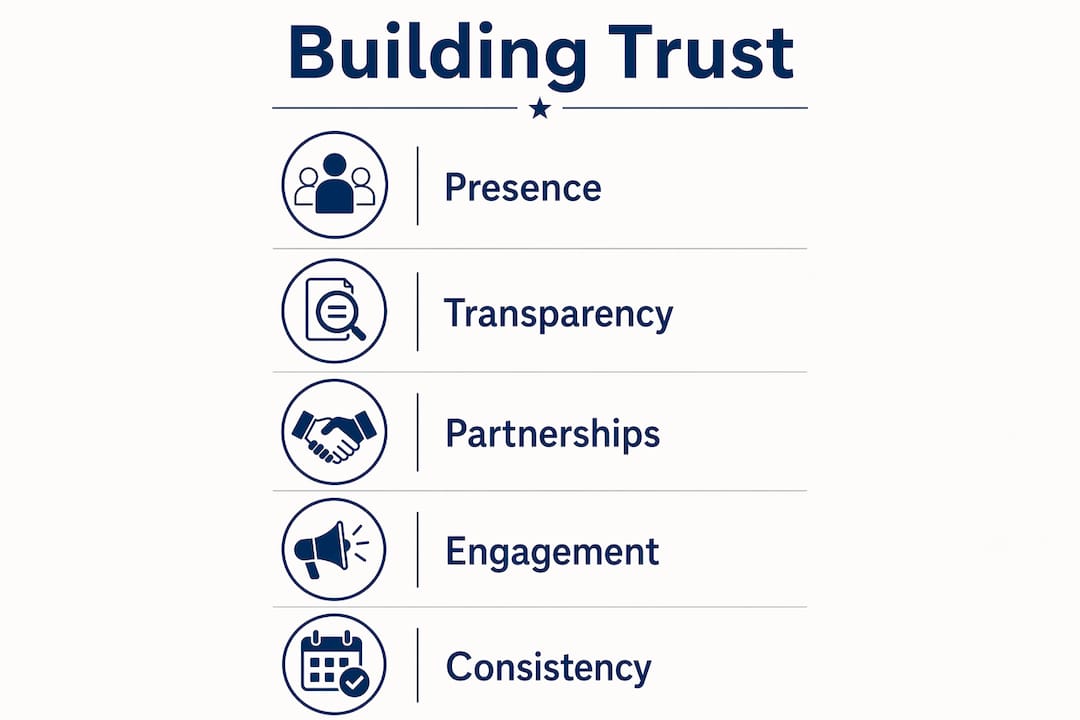
Building newsroom trust requires a shift from a publishing-first mindset to a listening-first approach. The most effective newsrooms treat community engagement as a core editorial function, not a marketing add-on. This shift changes how reporters spend their time, how editors set priorities, and how the newsroom measures success.
Practical trust-building strategies include:
- Attend neighborhood events. Physical presence signals that a newsroom is part of the community, not just observing it from a distance. Reporters who attend school board meetings, block association gatherings, and local festivals build relationships that produce better sources and more relevant stories.
- Ask non-readers why they do not trust you. WAN-IFRA research recommends that journalists ask non-users directly why they distrust journalism. The answers create precise counter-narratives that address real grievances rather than assumed ones.
- Tailor coverage to identified community needs. Trust grows when readers see their actual concerns reflected in reporting. Newsrooms that survey their communities and adjust coverage accordingly earn loyalty that generic reporting cannot produce.
- Build reciprocal relationships with marginalized groups. Academic research published in 2026 confirms that building trust with marginalized groups demands an ethic of care and respect, creating reciprocal, restorative community relationships. This is not soft advice. It is a documented requirement for credibility with underserved audiences.
- Maintain a consistent digital presence. Community trust in journalism extends beyond print and broadcast. Newsrooms that respond to reader comments, correct errors publicly, and explain editorial decisions online build trust across every platform where readers find them.
Pro Tip: Create a standing community advisory panel with rotating members from different neighborhoods. Meet quarterly. Ask what stories matter and which ones missed the mark. The feedback will improve coverage and signal that the newsroom listens.
The Pivot Fund’s research on embedded journalism reinforces all of these points. Community trust is a multi-year investment requiring a shift from publishing-first to listening-first approaches with physical community presence. Newsrooms that treat trust as a long-term commitment, rather than a campaign, consistently outperform those that treat it as a short-term goal.
What role do civic partnerships play in trust-building?
Civic partnerships are formal agreements between newsrooms and public agencies, nonprofits, or community organizations to deliver trusted information to specific audiences. These partnerships serve two functions simultaneously: they generate revenue and they extend a newsroom’s reach into communities that traditional media has historically underserved.
El Tímpano, a bilingual news outlet serving Latino communities in the San Francisco Bay Area, provides the most documented example of this model in action. The organization grew civic partnership revenue from $6,000 to $350,000, evolving from small census grants into a major revenue stream. That growth was not purely financial. Each partnership expanded El Tímpano’s ability to deliver trusted information to communities that larger outlets had ignored.
The structure of these partnerships matters as much as their existence. Poynter’s reporting confirms that civic partnerships require strict firewalls to guard editorial independence and avoid conflicts of interest. Newsrooms negotiate contracts that define what partners can and cannot influence. Without those safeguards, a partnership that builds revenue can simultaneously destroy the credibility it was meant to support.
A practical framework for evaluating civic partnerships:
- Define editorial boundaries in writing. Every partnership agreement should specify that the partner has no influence over story selection, sourcing, or framing.
- Disclose partnerships to readers. Transparency about funding sources is a direct trust signal. Readers who know how a newsroom is funded are better positioned to evaluate its coverage.
- Measure community reach, not just revenue. Track whether partnerships are actually connecting the newsroom to new audience segments. Revenue without reach does not build trust.
- Review partnerships annually. Community needs change. A partnership that served readers well in year one may create conflicts by year three.
| Partnership type | Trust benefit | Key risk |
|---|---|---|
| Nonprofit information delivery | Reaches underserved audiences | Mission drift if editorial lines blur |
| Public agency collaboration | Increases civic information access | Perceived loss of independence |
| Community foundation funding | Provides stable revenue base | Donor influence on coverage priorities |
How do transparency practices enhance trust in daily newsroom operations?
Transparency in routine reporting is more impactful than transparency reserved for major investigations or corrections. Trusting News research confirms that routine transparency in everyday editorial decisions builds more durable audience trust than occasional large disclosures. This finding runs counter to how many newsrooms currently operate.
Specific transparency practices that build credibility include:
- In-story explainers. A brief sentence explaining why a source was chosen, or why certain information was withheld, gives readers insight into editorial judgment. The Delaware Source demonstrated this when reporters explained why a juvenile’s name was omitted from a crime story. That single explanation increased audience trust and generated positive reader responses.
- Published editorial policies. Readers who can access a newsroom’s standards for sourcing, corrections, and conflict-of-interest disclosures have a reference point for evaluating coverage. This reduces suspicion and increases confidence.
- Visible correction processes. Correcting errors quickly and prominently signals that accuracy matters more than appearance. Readers notice when corrections are buried or absent.
- Mission statements in plain language. The American Press Institute found that 39% of readers value knowing a newsroom’s mission when deciding whether to trust it. A clear, accessible mission statement is a low-cost, high-impact trust signal.
Pro Tip: Add a one-sentence “Why we reported this” note to the bottom of any story that covers a sensitive topic, a community conflict, or an investigation. Readers who understand editorial reasoning are significantly less likely to question the newsroom’s motives.
Thecentralgeorgian applies this principle directly in its coverage of Central Georgia. By explaining the context behind public safety alerts and crime investigations, the platform gives readers the information they need to evaluate both the news and the reporting behind it. That practice reflects what local news matters most for community engagement.
Key Takeaways
Community trust is built through consistent presence, transparent practices, and reciprocal relationships, not through brand reputation or publishing volume alone.
| Point | Details |
|---|---|
| Trust drives civic action | Readers who trust their newsroom are more likely to recall stories and act on them in their communities. |
| Proximity builds credibility | Physical presence in neighborhoods, not just digital publishing, is a documented driver of audience trust. |
| Transparency must be routine | Explaining everyday editorial decisions builds more durable trust than reserving transparency for major disclosures. |
| Civic partnerships require safeguards | Revenue-generating partnerships only strengthen trust when editorial independence is protected by written agreements. |
| Non-readers hold the key | Asking why people distrust a newsroom produces the most precise information for improving credibility. |
Why trust-building is the work, not the outcome
I have spent years watching newsrooms treat trust as something that happens after good journalism. They publish strong stories, win awards, and then wonder why their community still does not feel connected to them. The research is clear on this point: trust is not a reward for good work. It is the condition that makes good work possible.
The newsrooms that get this right share one habit. They show up before they need anything. They attend the neighborhood meeting when there is no story to file. They call community members to ask what they are worried about, not just to confirm a quote. That kind of presence is not glamorous, and it does not produce immediate results. But it is the only thing that produces lasting credibility.
I am also cautious about the civic partnership model, despite its documented success. The El Tímpano example is genuinely impressive. But the risk of mission drift is real, and it compounds quietly. A newsroom that depends on a single large partner for a significant share of its revenue has already compromised its independence in practice, even if the contract says otherwise. The safeguard is diversification, not just firewalls.
The most underrated trust-building tool I have seen is the simple act of publishing corrections prominently and without defensiveness. Readers do not expect perfection. They expect honesty. A newsroom that corrects errors openly and explains what went wrong earns more trust from that single act than from a year of flawless reporting. That is the uncomfortable truth about credibility: it is built faster through failure handled well than through success handled quietly.
— Ernie
Thecentralgeorgian and trusted local news coverage
Thecentralgeorgian covers Central Georgia with the same principles that research identifies as the foundation of community trust: consistent presence, transparent reporting, and direct engagement with the issues that affect readers’ daily lives.
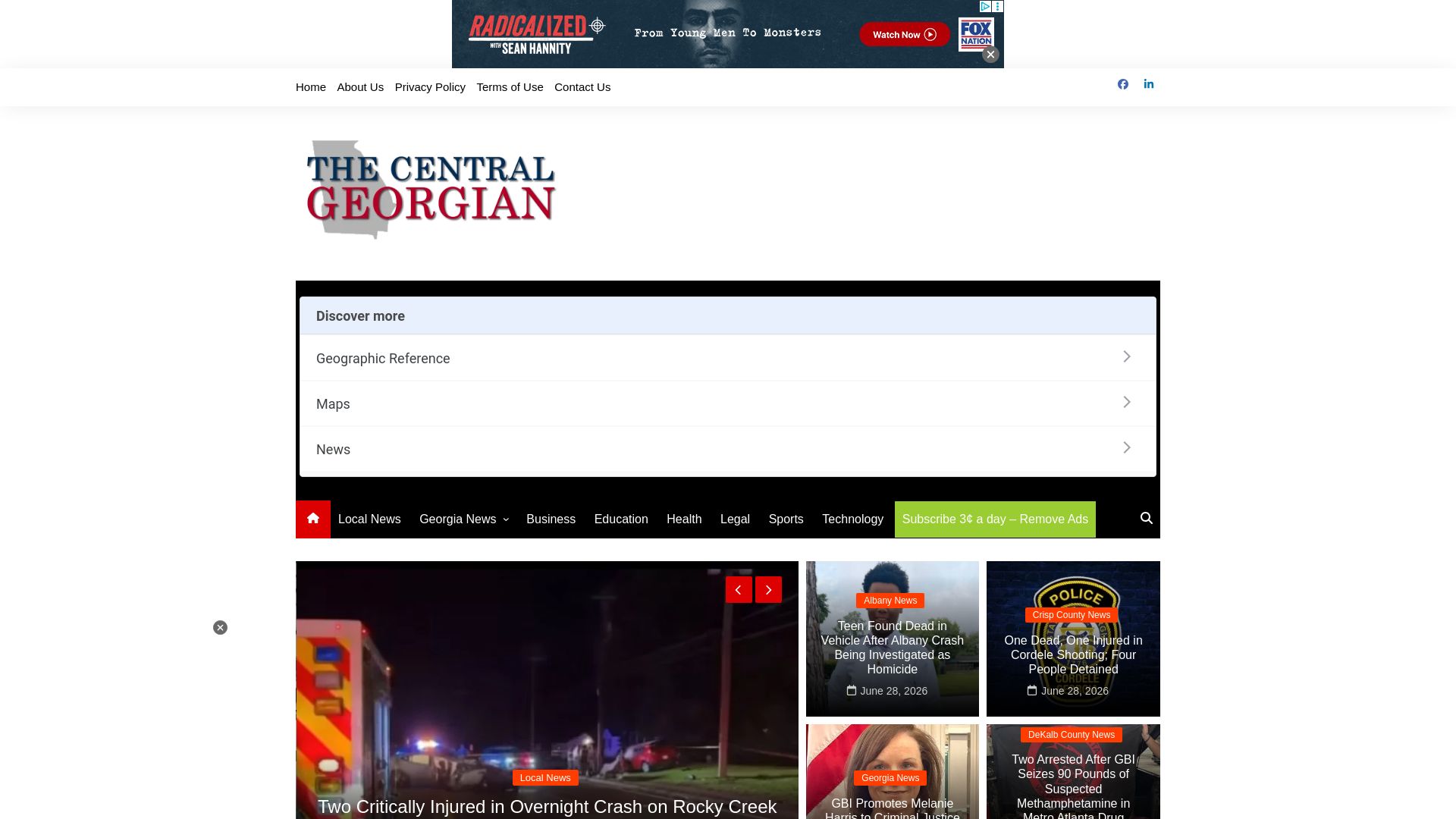
Readers who want to see how trustworthy local journalism covers civic issues can start with Thecentralgeorgian’s guide to local election coverage, which explains how reporters approach one of the most consequential topics in any community. For a broader view of how local journalism serves Central Georgia, the Thecentralgeorgian homepage provides ongoing coverage of breaking news, public safety, and community events. Readers who want to contribute to that coverage can learn how to submit a news tip and become part of the reporting process directly.
FAQ
What is the most effective way to build newsroom trust?
The most effective approach combines physical community presence with routine editorial transparency. Research from the Pivot Fund shows that newsrooms embedded in neighborhoods consistently earn higher trust than those that publish remotely without community engagement.
How does transparency affect community trust in journalism?
Transparency in everyday editorial decisions, such as explaining source selection or why certain details are withheld, builds more durable trust than major disclosures alone. The American Press Institute found that 51% of readers consider transparency about content funding crucial for credibility.
What are civic partnerships in local news?
Civic partnerships are formal agreements between newsrooms and public agencies or nonprofits to deliver trusted information to specific communities. El Tímpano’s model grew this revenue stream from $6,000 to $350,000 while expanding its reach to underserved Latino communities.
Why do younger readers trust local news less?
Younger audiences do not grant automatic trust based on a legacy brand or institutional reputation. The American Press Institute confirms that newsrooms must actively demonstrate credibility through consistent, transparent reporting rather than relying on historical recognition.
How should newsrooms address readers who distrust them?
Newsrooms should ask non-readers directly why they distrust journalism, then build targeted counter-narratives that address those specific concerns. WAN-IFRA research confirms this direct approach produces more precise and effective trust-building responses than general credibility campaigns.