
Gwinnett Daily News: Reading the Post Across Platforms

The Gwinnett Daily Post is Gwinnett County’s primary daily newspaper and its officially designated legal organ, and you can read it at gwinnettdailypost.com, through its mobile apps, or on its social media accounts. The paper is owned by Times-Journal Inc., a Georgia media company that acquired it in 2022, and its offices sit in Lawrenceville, the county seat. Its publication record runs from 1995 to the present, according to the Library of Congress, which maintains an archival listing of the paper for researchers and historians.
A few facts anchor everything that follows:
- Owner: Times-Journal Inc.
- Headquarters: Lawrenceville, Georgia
- Official website: gwinnettdailypost.com
- Civic role: designated legal organ of Gwinnett County
- Archival record: cataloged by the Library of Congress under continuous publication since 1995
Table of Contents
- How Do You Read Gwinnett Daily News Right Now?
- What Does It Mean to Be Gwinnett County’s Legal Organ?
- How Did the Gwinnett Daily Post Become a Daily Paper?
- Where Do You Submit News Tips, Obituaries, or Ads?
- Where Can You Find Past Issues and Archival Records?
- Where’s the Newsroom, and How Do You Reach It?
- Key Takeaways for Gwinnett County Readers
- Where These Facts Come From
- Reading Local News Right Actually Takes Discipline
- Sources
How Do You Read Gwinnett Daily News Right Now?
Most readers get their Gwinnett daily news fix from one of four channels: the website, a mobile app, social media, or the print edition. Each serves a slightly different purpose, and knowing the difference saves you from missing something important.
The website carries full articles, an e-edition replica of the print paper, and searchable archives. The iOS app and the Android app on Google Play both push local news, weather, and sports directly to your phone, and both store listings describe breaking alerts as a core feature. Social accounts on Facebook, Instagram, and X surface headlines fast, but they’re curated snapshots, not the full report.
Here’s how the options stack up:
| Access method | Best use | How to subscribe |
|---|---|---|
| Website (gwinnettdailypost.com) | Full articles, e-edition, archives | Free browsing; digital subscription for full access |
| iOS app | Breaking alerts, mobile reading | Download from the App Store, enable notifications |
| Android app | Breaking alerts, mobile reading | Download from Google Play, enable notifications |
| Social media (Facebook, Instagram, X) | Quick headline scanning | Follow the official accounts |
Pro Tip: Push notifications from the official app tend to beat social feeds for speed and accuracy during breaking events, since app metadata from both major stores points to real-time alerts as a built-in function, while social platforms often filter or delay posts based on engagement algorithms.
If you’re building a broader alert routine that covers more than one outlet, a local news alert checklist can help you decide which channels are worth keeping active.
What Does It Mean to Be Gwinnett County’s Legal Organ?
A legal organ is the newspaper a county government designates by law to publish official public notices, and Gwinnett County has designated the Gwinnett Daily Post for that role, according to Wikipedia’s summary of the paper’s history. That designation means zoning changes, probate filings, foreclosure notices, and public hearing announcements all run in its pages before they become legally binding.
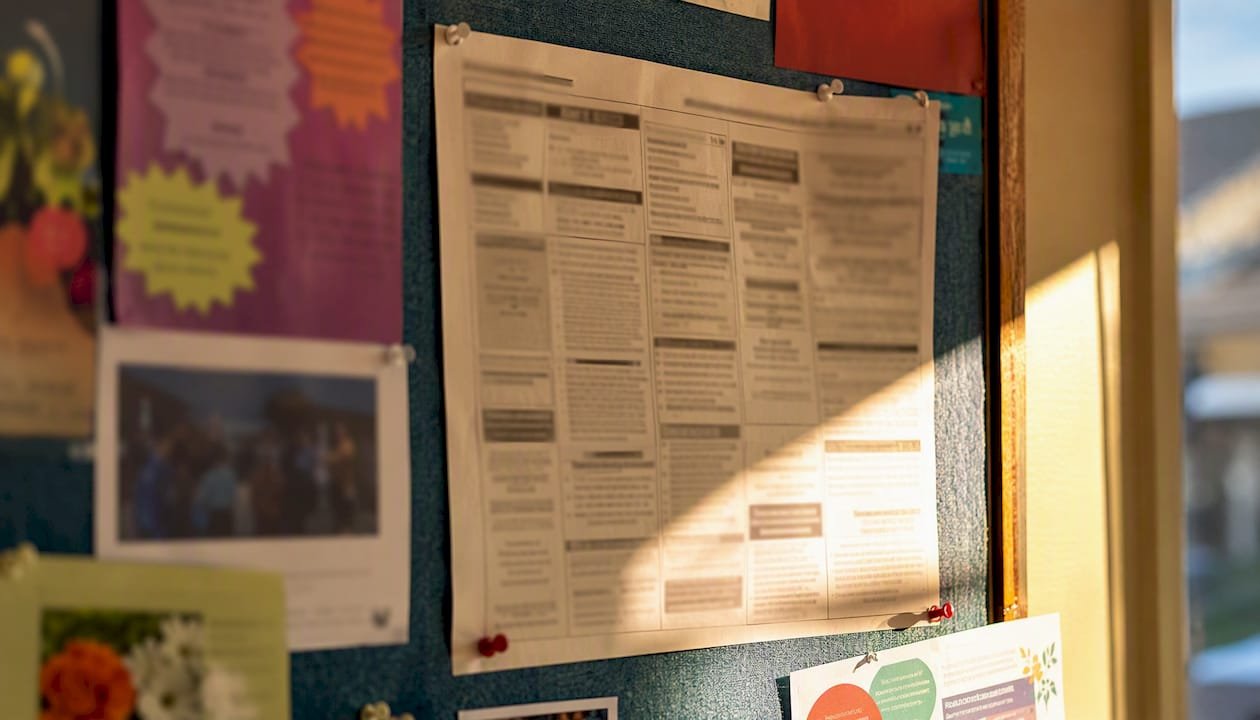
For residents tracking a rezoning fight near their neighborhood, or a business owner watching for competitor bankruptcy filings, this isn’t background noise. Public notices published in the designated legal organ function as the primary record for these civic events, and courts and county offices treat that publication as the official notification.
To use this effectively:
- Check the notices section of the paper or its website regularly, not just when you expect something.
- Cross-reference any notice’s date and location against county records before acting on it.
- Save or screenshot notices tied to property near you, since online archives aren’t always permanent.
Pro Tip: If you’re a real estate investor or small business owner, set a recurring weekly reminder to scan the legal notices. Foreclosure and probate listings often appear with narrow response windows, and missing one by a few days can cost you the opportunity entirely.
Readers curious about how other civic processes get covered can look at how local government announcements work more broadly across Georgia counties.
How Did the Gwinnett Daily Post Become a Daily Paper?
The Gwinnett Daily Post traces its roots to local weekly papers before relaunching as a daily publication in 1995, a shift that coincided with Gwinnett County’s rapid suburban growth outside Atlanta. That 1995 relaunch is also the starting point the Library of Congress uses in its archival catalog, which lists continuous publication from that year to the present.
The major milestones, in order:
- Pre-1995: Operated as smaller local weekly newspapers serving parts of Gwinnett County.
- 1995: Relaunched as a daily newspaper, beginning the publication run now archived by the Library of Congress.
- Sometime after 1995: Designated as Gwinnett County’s legal organ for official public notices.
- 2022: Acquired by Times-Journal Inc., the paper’s current owner, according to Wikipedia’s ownership record.
The paper’s circulation and reach have shifted over the decades as print newspapers nationwide moved toward digital-first models, and Gwinnett Daily Post followed that pattern with its website and apps now carrying much of the daily readership. Anyone verifying these dates independently can cross-check the Library of Congress catalog entry directly, since it lists exact publication date ranges and cataloging metadata.
Where Do You Submit News Tips, Obituaries, or Ads?
The Gwinnett Daily Post accepts submissions through category-specific channels: news tips and press releases go to the newsroom, obituaries go through the obituary desk, and advertising or classifieds route through the sales department. Sending a news tip to the wrong inbox is the most common reason submissions get delayed, so matching the item to the right contact matters.
For the most common tasks:
- Reporting a news tip: Contact the newsroom directly through the official contact page, including who, what, when, and where in your first message.
- Submitting an obituary: Reach out to the obituary or classifieds desk, and have the funeral home or family confirm the final wording before submission.
- Placing a classified or display ad: Contact the advertising department with your desired run dates and ad size in hand.
What to have ready before you reach out:
- Your full name and a callback number.
- Photos in high-resolution JPEG format if the story or obituary calls for them.
- A clear headline or one-sentence summary of what you’re submitting.
Pro Tip: Obituaries and classifieds typically run faster when submitted at least one business day ahead of your target publication date, and attaching a photo as a separate JPEG file (not embedded in a Word document) avoids the most common formatting delay.
Where Can You Find Past Issues and Archival Records?
The Library of Congress holds the most authoritative archival record of the Gwinnett Daily Post, cataloging its publication history from 1995 forward under a searchable catalog entry. Beyond that, Chronicling America’s LCCN records and WorldCat’s library holdings search both index related regional newspaper archives that can help you track down physical copies or microfilm.
If you’re doing genealogical research, verifying a historical notice, or writing a local history piece, here’s where to look:
| Archive source | What you’ll find | Identifier to search |
|---|---|---|
| Library of Congress | Publication dates, catalog metadata | Search “Gwinnett Daily Post” |
| Chronicling America | Historical newspaper cataloging | LCCN sn96069004 |
| WorldCat | Library holdings nationwide | ISSN 1086-0096 |
Before requesting scans or visiting a library in person:
- Note the exact publication date range you need.
- Search by ISSN (1086-0096) rather than title alone, since titles can shift slightly across catalog systems.
- Call ahead to confirm whether microfilm or digital scans are available for your requested dates.
For a broader sense of how local outlets compare in reach and coverage, Semrush’s competitor snapshot offers useful context, though it’s a secondary tool, not a substitute for primary archival records when you’re verifying facts.
Where’s the Newsroom, and How Do You Reach It?
The Gwinnett Daily Post’s newsroom operates out of Lawrenceville, Georgia, and the fastest way to reach any department is through the official contact page linked from gwinnettdailypost.com. Different departments handle different requests, so knowing who to contact saves time on both ends.
- News tips and editorial desk: for breaking news, story ideas, and corrections.
- Advertising department: for display ads, sponsored content, and business promotions.
- Obituaries and classifieds: for family notices and personal ads.
- General inquiries: for anything that doesn’t clearly fit the categories above.
Response times vary by department and by how busy the news cycle is that day, but most straightforward requests, like confirming an obituary run date, get answered within a business day. Calling during regular business hours on weekdays gets you the fastest response, since weekend staffing is typically limited to breaking news coverage only.
Key Takeaways for Gwinnett County Readers
The Gwinnett Daily Post serves Gwinnett County as both its daily news source and its legally designated organ for public notices, and reading it well means combining the app, the website, and the print notices section.
| Point | Details |
|---|---|
| Multiple access points | Read via gwinnettdailypost.com, the iOS or Android app, or official social accounts. |
| Legal organ role | Public notices for zoning, probate, and foreclosures publish there before taking legal effect. |
| Ownership | Times-Journal Inc. has owned the paper since acquiring it in 2022. |
| Submission channels | Route news tips, obituaries, and ads to the correct department for faster processing. |
| Archival access | Library of Congress and Chronicling America hold the paper’s publication history from 1995 forward. |
If you only do one thing after reading this, download the official app and turn on push notifications. It’s the single fastest way to catch breaking Gwinnett County news the moment it publishes.
Where These Facts Come From
Every factual claim in this piece traces back to a public, checkable record. The Library of Congress catalog entry confirms the paper’s publication dates and archival status. Wikipedia’s article on the Gwinnett Daily Post documents ownership history, including the 2022 sale to Times-Journal Inc., and the legal organ designation.
For app and platform verification, the Apple App Store listing and the Google Play listing both describe the mobile apps’ features directly from the developer. Chronicling America’s LCCN record and WorldCat’s holdings search round out the archival trail for anyone doing deeper research. Readers who want a wider view of the local news ecosystem can also check Semrush’s competitor data for context on traffic and reach.
Reading Local News Right Actually Takes Discipline
The conventional advice about local news consumption treats every channel as roughly equivalent: follow the Facebook page, check the app sometimes, read the paper when you remember. That advice undersells how differently these channels behave. Social platforms optimize for engagement, not completeness, which means a zoning notice that affects your street can vanish from your feed while a viral crime story stays pinned for days.
What gets overlooked most is the legal organ function. Most residents treat the newspaper as entertainment or general information, and miss that it’s also a legal record. If you own property, run a business, or sit on a homeowners association board in Gwinnett County, the notices section isn’t optional reading. It’s the closest thing to a legal early-warning system the county provides, and skipping it means finding out about a rezoning fight or foreclosure sale after the window to respond has closed.
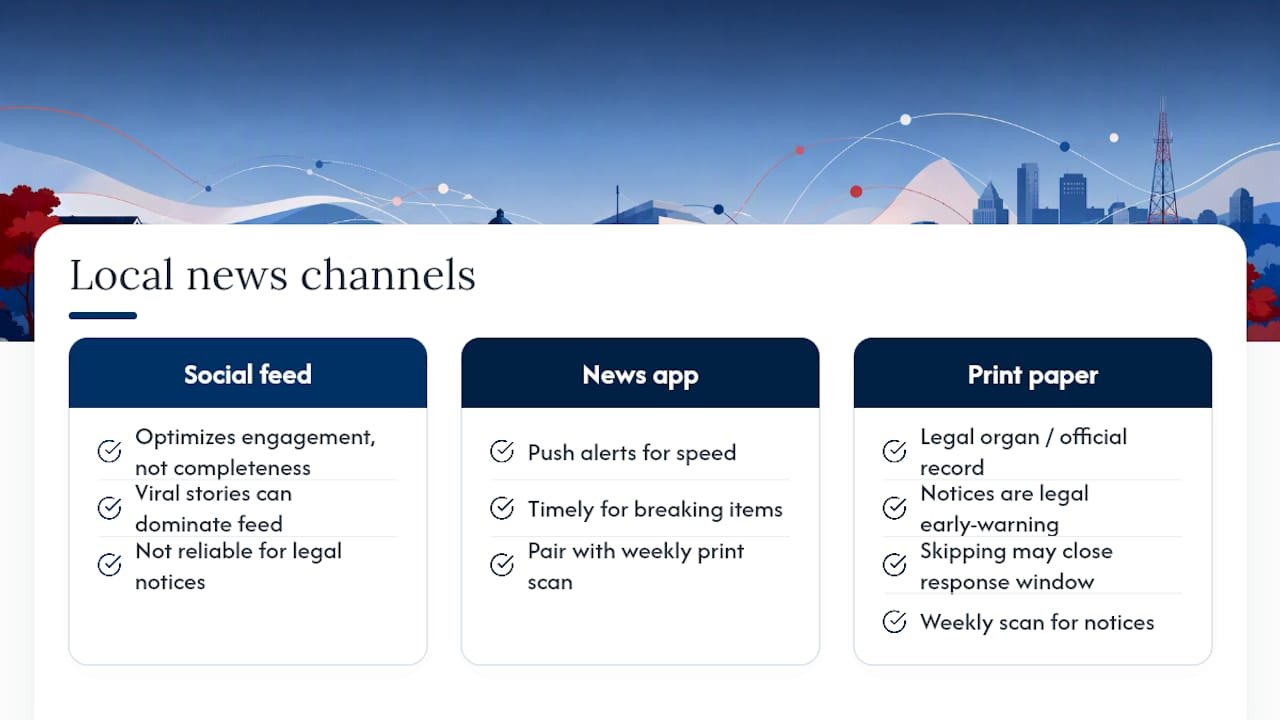
The practical fix is simple, even if it’s unglamorous: pair the app’s push notifications for speed with a weekly habit of scanning the print notices for anything that touches your interests. Speed and thoroughness solve different problems, and readers who rely on only one end up missing the other.
Sources
- Gwinnett Daily Post (Lawrenceville, Ga.) 1995-Current | Library of Congress
- Gwinnett Daily Post – Wikipedia
- Gwinnett Daily Post – App Store – Apple
- Top 1 gwinnettdailypost.com Alternatives & Competitors