What to Do When an Air Quality Alert Is Issued in Georgia
Check the Georgia Environmental Protection Division, AirNow’s Georgia page, and the National Weather Service for live, official readings before trusting any other app or map. If an air quality alert is active in your county, the immediate action is simple: sensitive groups, including children, older adults, and people with heart or lung conditions should limit prolonged outdoor exertion and move activities indoors until the alert clears.
Here’s how to confirm what’s happening right now:
- Check the Georgia EPD’s alert page for the state’s official advisory text.
- Pull up AirNow’s Georgia map for county-level AQI numbers and short-term forecasts.
- Search for an active NWS Air Quality Alert bulletin for your forecast zone.
Key Takeaways
Georgia residents protect their health fastest by checking EPD, AirNow, and NWS directly and acting on Code Orange advisories before symptoms appear.
| Point | Details |
|---|---|
| Check three official sources | Georgia EPD, AirNow, and NWS each serve a different purpose; cross-check them rather than relying on one app. |
| Code Orange means act now | AQI 101 to 150 signals sensitive groups should limit outdoor exertion immediately, not wait for symptoms. |
| Smoke and heat drive alerts | Wildfire smoke and stagnant summer weather, not just traffic, are Georgia’s leading alert triggers. |
| Home fixes matter | Closing HVAC fresh-air intake and running a properly sized HEPA purifier meaningfully cuts indoor exposure. |
| Live readings can shift | Real-time AQI numbers are preliminary until quality-assurance checks validate them, so treat early spikes as indicators. |
This article is general information, not a substitute for advice from a qualified doctor. Consult a qualified healthcare professional about your own circumstances before acting on anything here.
Table of Contents
- Where to Check Live Air Quality Alerts in Georgia
- What Does Code Orange Mean for Georgia’s Air Quality?
- Who Faces the Greatest Risk From Poor Air Quality?
- How Are Air Quality Alerts Issued and Why Do Readings Shift?
- How to Reduce Air Pollution Exposure at Home and Outdoors
- How Can You Get Fast Alerts on Your Phone?
- How The Central Georgian Covers Air Quality Events Locally
- Historical Trends in Georgia’s Air Quality
- Which Parts of Georgia See the Most Air Quality Alerts?
- What Should Schools and Employers Do During an Alert?
- How Do Weather Patterns Drive Georgia’s Air Quality Swings?
- An Editorial Take on Georgia’s Air Quality Alert System
- Ready to Stay Ahead of Georgia’s Next Air Quality Alert?
- Sources
Where to Check Live Air Quality Alerts in Georgia
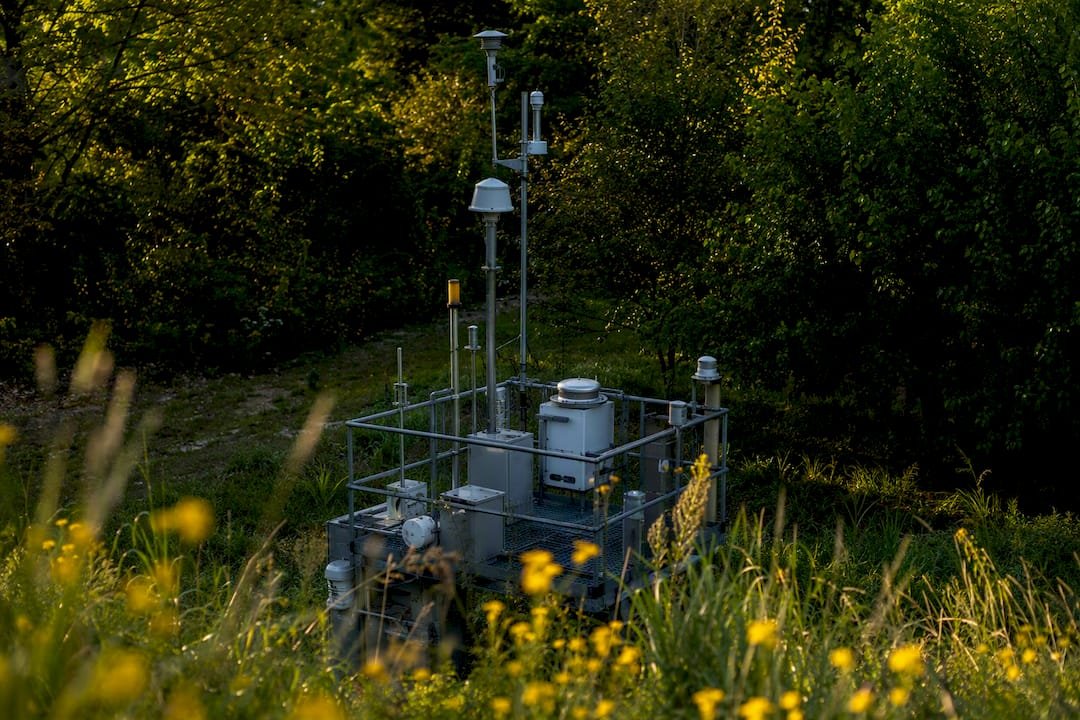
Three sources carry real weight, and each does something the others don’t. Georgia EPD runs the ambient monitoring network that generates the state’s official air quality alert warnings, and it’s the source to trust when you need the actual state advisory language, not a secondhand summary.
AirNow turns EPD’s raw monitoring data into a usable map. Its Georgia state page shows current AQI by county, plus a short-term forecast, which makes it the fastest way to check your specific area before heading outside.
The National Weather Service relays EPD’s alerts through its Watch/Warning/Advisory system, publishing formal Air Quality Alert bulletins that spell out affected counties and recommended actions. IQAir and similar visual map services can be useful for a quick glance, but they often pull from third-party sensor networks rather than EPD’s regulatory-grade monitors, so treat them as a supplement, not a replacement.
Quick reference for choosing a source:
- Official advisory wording: Georgia EPD’s alert page.
- Fast, county-level AQI check: AirNow.
- Formal bulletin with affected zones: NWS.
- Secondary visual reference: IQAir or similar map apps, cross-checked against EPD or AirNow.
What Does Code Orange Mean for Georgia’s Air Quality?
Code Orange means the air is unhealthy for sensitive groups, not the general public, and it sits at an AQI reading of 101 to 150. It’s the alert level Georgia issues most often during smoke events, ozone spikes in summer heat, or stagnant air patterns that trap pollution near the ground.
| AQI Range | Category | What It Means |
|---|---|---|
| — | Good | Air poses little or no risk. |
| — | Moderate | Acceptable, but sensitive individuals may notice mild effects. |
| 101 to 150 | Unhealthy for Sensitive Groups (Code Orange) | Children, older adults, and people with heart or lung conditions should limit outdoor exertion. |
| — | Unhealthy | Everyone may begin to experience health effects. |
| — | Very Unhealthy | Health alert; everyone may experience more serious effects. |
| — | Hazardous | Health warning of emergency conditions for the entire population. |
Ozone and fine particulate matter, PM2.5, drive most Georgia alerts, with wildfire smoke a common PM2.5 source. If you can smell smoke or see haze settling over the tree line, that’s often a reliable early warning sign that shows up before the official alert does.
Who Faces the Greatest Risk From Poor Air Quality?
Some Georgians need to act faster than others when an alert goes out. Children’s lungs are still developing, older adults often have reduced respiratory reserve, pregnant people face added cardiovascular strain, and anyone with asthma, COPD, or heart disease can see symptoms worsen within hours of exposure.
If an alert is active and you fall into one of these groups, follow this sequence:
- Move outdoor plans indoors, especially between late afternoon and evening, when pollutant levels typically peak.
- Keep children indoors during recess or outdoor practice windows.
- Follow any medication plan your doctor has given you for asthma or COPD flare-ups.
- Call your health provider if you notice unusual shortness of breath, chest tightness, or a persistent cough.
- Call 911 for severe breathing difficulty, chest pain, or symptoms that don’t improve with prescribed medication.
Pro Tip: Keep a rescue inhaler or prescribed medication somewhere you’ll actually remember during an alert, like your car or bag, not just a medicine cabinet you won’t see until evening.
How Are Air Quality Alerts Issued and Why Do Readings Shift?
Georgia’s alert system runs on a chain: EPD’s monitoring stations collect readings, that data feeds into AirNow’s public displays, and the National Weather Service relays the state’s alert language through its own bulletin system. Each link matters.
A few things explain why the number on your phone might not match what you see an hour later:
- Real-time readings are preliminary. The EPA notes that near-real-time AQI values go through quality-assurance checks after the fact, so early numbers can shift as validated data comes in.
- Wind direction and speed can push a smoke plume over one county and spare the next, which is why alerts sometimes apply unevenly across a metro area.
- Monitor placement matters. A station downtown may read differently than a rural monitor 40 miles away, even under the same regional alert.
How to Reduce Air Pollution Exposure at Home and Outdoors
Your home can work for you or against you during an alert, depending on a few settings. Start with your HVAC system: close the fresh-air intake if it has one, since otherwise the system can pull smoky outdoor air straight into your living room even while it’s running.
From there:
- Run your HVAC on recirculate instead of drawing outside air.
- Use a portable HEPA air purifier sized for the room, running continuously during the alert.
- Change or clean HVAC filters more often during smoke-heavy stretches.
- If you must go outside, an N95 mask fitted snugly against your face filters fine particulates far better than a cloth mask or bandana.
- Reschedule outdoor exercise, youth sports, or yard work, and keep a close eye on kids who don’t always notice when they’re overexerting.
Pro Tip: A HEPA purifier only helps if it’s actually sized for the room. A unit rated for a 200-square-foot bedroom won’t do much in an open-concept living area, so check the clean air delivery rate against your square footage before buying.
How Can You Get Fast Alerts on Your Phone?
Waiting to check a website manually means you’re always a step behind. Set up push notifications instead, and you’ll know within minutes of an alert going active.
- Enable Wireless Emergency Alerts on your phone and confirm your county’s NWS watch and warning notifications are turned on.
- Download the AirNow app or add its widget to your home screen for automatic AQI updates without opening a browser.
- Follow Georgia EPD’s alert subscription list for state-level advisory notices sent directly to your inbox.
- Turn on push alerts from local news, including Thecentralgeorgian, and your county’s emergency management system for coverage that adds local context to the raw numbers.
How The Central Georgian Covers Air Quality Events Locally
Thecentralgeorgian tracks air quality alerts as they unfold across Central Georgia, translating EPD advisories and NWS bulletins into plain, county-specific updates that explain what’s happening and what to do about it.
During an active alert, that coverage typically includes:
- Real-time updates on which counties fall under an active advisory.
- Local impact reporting, including school and workplace guidance where relevant.
- Practical, do-this-now steps drawn from official DPH and EPD guidance.
For readers who want a deeper setup on catching these alerts before they spread, Thecentralgeorgian’s guide to monitoring local emergency updates and its checklist for cross-checking local alert sources both walk through the setup step by step.
Historical Trends in Georgia’s Air Quality
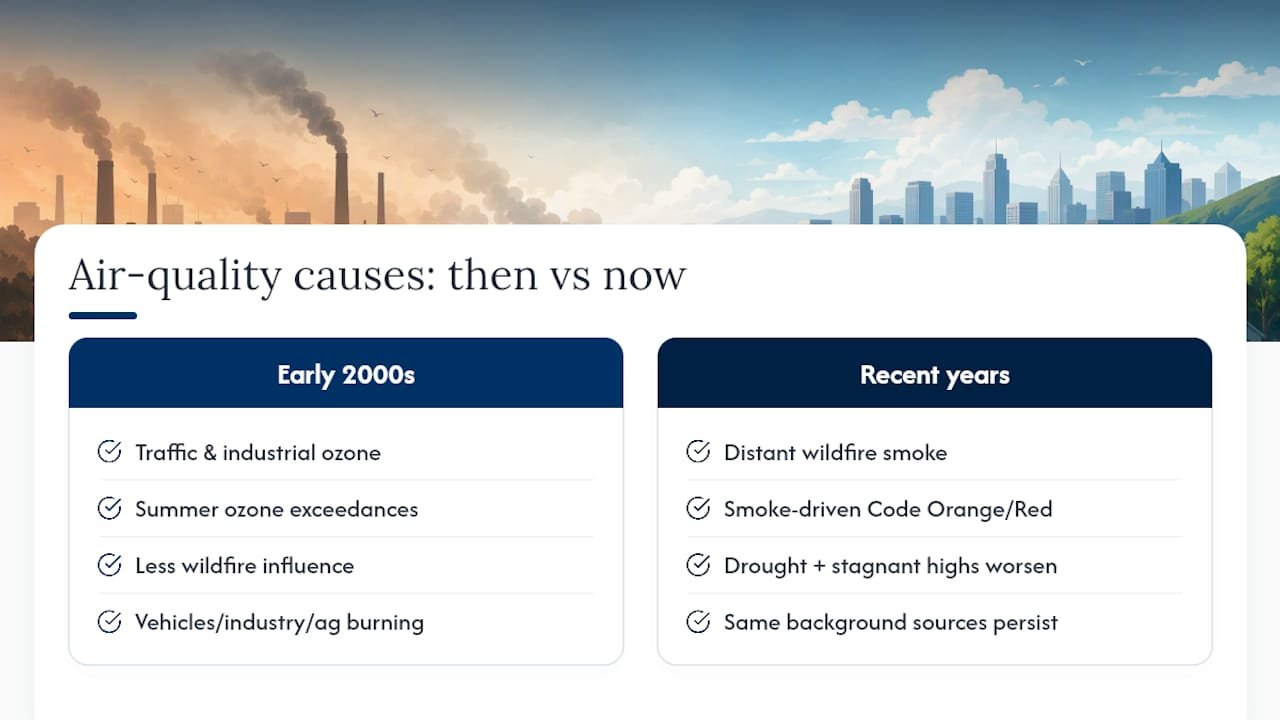
Georgia’s air has improved substantially since the early 2000s, when metro Atlanta regularly logged dozens of ozone exceedance days each summer. Tighter vehicle emissions standards, cleaner power generation, and stricter industrial permitting under EPD oversight brought long-term ozone and particulate levels down across most of the state.
That progress hasn’t erased the alerts, though. It’s shifted their cause. A decade ago, ground-level ozone from traffic and industrial emissions drove most summer advisories in Atlanta, Macon, and Augusta. Today, wildfire smoke, often drifting in from fires burning hundreds of miles away in the Southeast or even farther, has become a recurring trigger for Code Orange days, sometimes stacking on top of ordinary summer ozone buildup.
Drought years compound the problem. Dry conditions increase wildfire risk regionally and reduce the rain that would otherwise wash particulates out of the air. Combine a dry summer with a stagnant high-pressure system, and Georgia can see multi-day stretches of elevated AQI readings even without a single local fire burning.
Industrial sources, agricultural burning, and vehicle traffic still contribute year-round background pollution, particularly in and around Atlanta’s dense highway corridors. But the pattern of the last several years points toward smoke transported from distant wildfires as the fastest-growing driver of Georgia’s Code Orange and Code Red days, a shift that’s changed how EPD and NWS frame their advisory language.
Which Parts of Georgia See the Most Air Quality Alerts?
Metro Atlanta accounts for the largest share of Georgia’s air quality alerts, and the reasons are structural. Dense highway traffic, a large industrial and commercial base, and a metro area that traps heat and pollutants under summer inversion layers all combine to push ozone and particulate readings higher than in most of the state. Fulton, DeKalb, Cobb, and Gwinnett counties see advisories most consistently.
Macon and Middle Georgia typically post lower baseline pollution than Atlanta, but they’re not immune. When wildfire smoke drifts in from the south or west, rural and suburban Middle Georgia counties can see AQI spikes just as sharp as anything in Atlanta, sometimes worse, since smaller communities have fewer monitoring stations to catch localized conditions early.
Augusta, Columbus, and Savannah fall somewhere in between: less chronic traffic pollution than Atlanta, but enough industrial activity and regional smoke exposure to see occasional Code Orange days, particularly in late summer and early fall.
Rural counties across South Georgia face a different pattern tied to agricultural burning and their proximity to Florida and Alabama wildfire activity. These areas often have sparser monitoring coverage, which means a countywide alert may be based on data from a station many miles away. That’s one more reason to check AirNow’s map view directly rather than relying on a single number for an entire region.
What Should Schools and Employers Do During an Alert?
Schools face the sharpest decision point during a Code Orange day, since recess, PE classes, and after-school sports all involve sustained outdoor exertion for children, one of the most sensitive groups. Moving activities indoors or shortening outdoor time during peak afternoon hours is the most direct step a school can take, and many Georgia districts already have protocols tied to EPD and NWS advisory levels.

Workplaces with outdoor labor, construction crews, landscaping teams, delivery drivers, should treat an active alert as a signal to build in more indoor breaks and reduce the pace of physically demanding outdoor tasks, particularly for employees with known respiratory conditions.
Event organizers carry a different kind of responsibility. A youth soccer tournament or outdoor festival scheduled during a Code Orange advisory doesn’t necessarily need to be canceled, but it should be adjusted: shorter outdoor windows, accessible indoor or shaded rest areas, and clear communication to attendees about the active alert. Rescheduling to morning hours, before ozone and heat typically peak in the afternoon, is often the simplest fix. Any organizer running an event during an alert should also have a plan for the sensitive attendees, older adults, young children, anyone visibly struggling, who may need to step away from outdoor exposure without missing the event entirely.
How Do Weather Patterns Drive Georgia’s Air Quality Swings?
Weather is the single biggest variable behind whether a given day turns into a Code Orange alert or passes without incident. Hot, sunny, stagnant conditions are the classic recipe for ground-level ozone formation, since sunlight drives the chemical reaction that turns vehicle and industrial emissions into ozone at the surface. Georgia’s summer heat, combined with light winds, creates exactly those conditions across metro Atlanta and other urban corridors on a regular basis.
Wind, or the lack of it, matters just as much for particulate pollution. Stagnant high-pressure systems trap smoke and PM2.5 close to the ground instead of dispersing it, which is why a wildfire burning several states away can still push Georgia’s AQI into unhealthy territory if the wind pattern lines up right.
Fall and winter bring a different set of triggers. Temperature inversions, where a layer of warm air traps cooler, pollutant-laden air near the ground, are more common in cooler months and can concentrate vehicle emissions and wood smoke from home heating in valleys and low-lying areas. Rain, by contrast, is one of the most effective natural resets: a good soaking rain washes particulates out of the air and typically brings AQI readings down within a day.
An Editorial Take on Georgia’s Air Quality Alert System
The conventional advice on air quality alerts treats every source as roughly equal, check an app, see a color, act accordingly. That undersells how different EPD, AirNow, and NWS actually are in what they’re built to do. EPD is the regulatory backbone, AirNow is the fast public-facing dashboard, and NWS is the formal broadcast mechanism that turns a state advisory into a bulletin your phone can push to you. Treating them as interchangeable means missing which one actually answers your specific question.
What’s underrated is how much weather, not pollution sources, drives the day-to-day swings Georgians see. A stagnant, hot afternoon can turn a normal traffic day into a Code Orange advisory without a single new pollution source appearing. That’s worth knowing because it means checking the forecast isn’t optional, it’s often a better early warning than yesterday’s AQI reading.
Prioritize this: know your specific source for your specific need, treat any single live number as provisional, and build the habit of checking before symptoms show up, not after.
— Ernie
Ready to Stay Ahead of Georgia’s Next Air Quality Alert?
Waiting until a smoky haze settles over your neighborhood is the wrong time to figure out where to check for alerts. Thecentralgeorgian covers air quality advisories as they develop across Central Georgia, pairing official EPD and NWS bulletins with the county-level context that a national app can’t provide. For a deeper look at how community safety reporting protects residents during environmental events, see how local safety awareness helps Central Georgia families stay informed before conditions turn serious.
Sources
- Monitoring and keeping your air clean — Georgia EPD
- AirNow — Georgia state page
- Air Quality Alert example — NWS (BMX)
- Smoke from wildfires spreads in Georgia — Georgia DPH
- AirNow technical / data notes — EPA