
How Local Workforce Issues Are Covered in Central Georgia
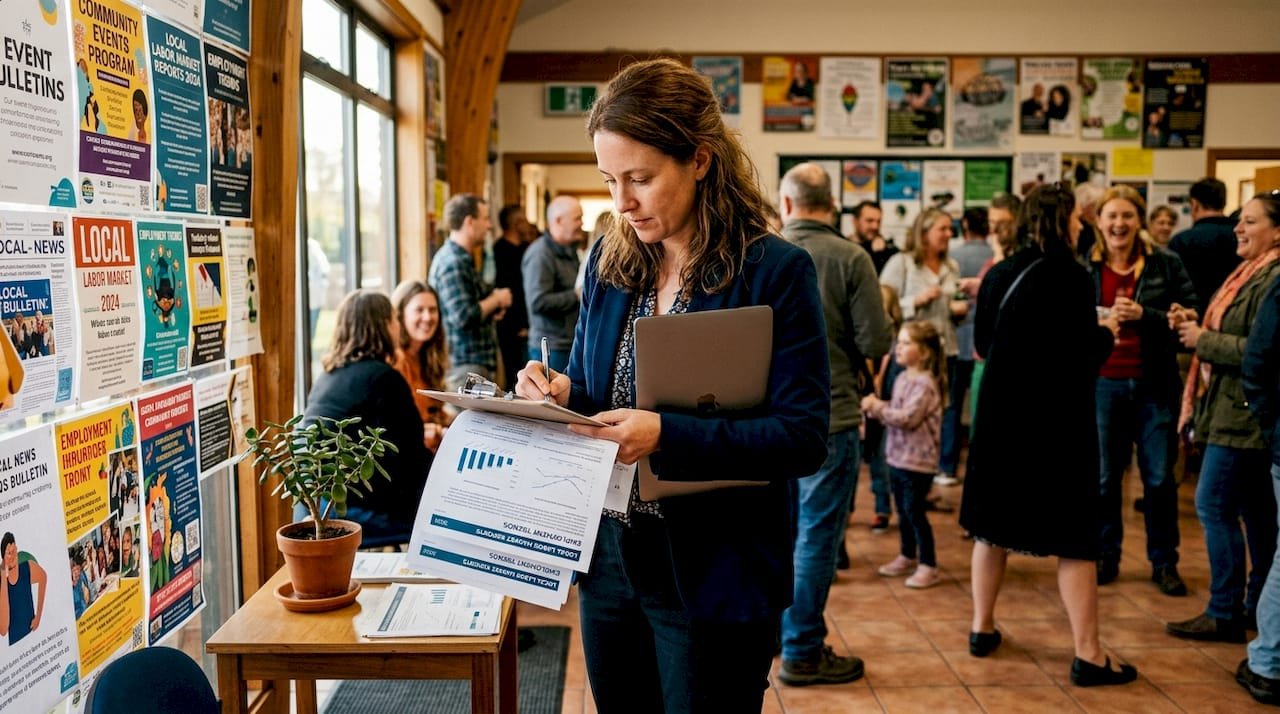
Coverage of local workforce issues is defined as the systematic reporting on labor market conditions, employer challenges, worker experiences, and the structural barriers that shape employment in a specific region. For Central Georgia residents and stakeholders, understanding how workforce problems are reported gives you the tools to interpret what you read, ask better questions, and push for real solutions. Thecentralgeorgian tracks these stories because workforce health affects every corner of community life, from public services to neighborhood stability. This article explains the methods, data, and perspectives that define quality workforce coverage.
How local workforce issues are covered in the media
Local workforce coverage draws on multiple reporting methods to give residents a full picture of employment conditions. Journalists combine labor market statistics, employer interviews, worker testimonials, and policy analysis to explain why jobs go unfilled or why workers struggle to find stable employment. The goal is not just to report numbers but to explain what those numbers mean for real people in Central Georgia.
Thecentralgeorgian approaches this coverage by connecting data points to community outcomes. A rise in job postings means little if workers cannot afford to live near those jobs or cannot find childcare. Quality reporting makes those connections visible.

Pro Tip: When reading workforce coverage, look for stories that pair statistics with direct quotes from workers or employers. That combination signals depth, not just surface reporting.
Local workforce coverage also draws on local economic news to frame labor trends within the broader regional economy. Understanding the economic context helps residents interpret whether a workforce challenge is temporary or structural.
What workforce challenges are commonly highlighted in local coverage?
Local media coverage of workforce challenges typically focuses on four recurring problem areas.
- Labor shortages in specific sectors. Healthcare and construction illustrate the mismatch clearly. Sector-specific mismatches show that one region can have 17.6 unemployment claimants per construction job posting but only 0.1 claimants per healthcare practitioner posting. That gap means construction workers are plentiful while healthcare employers cannot fill seats, regardless of wages offered.
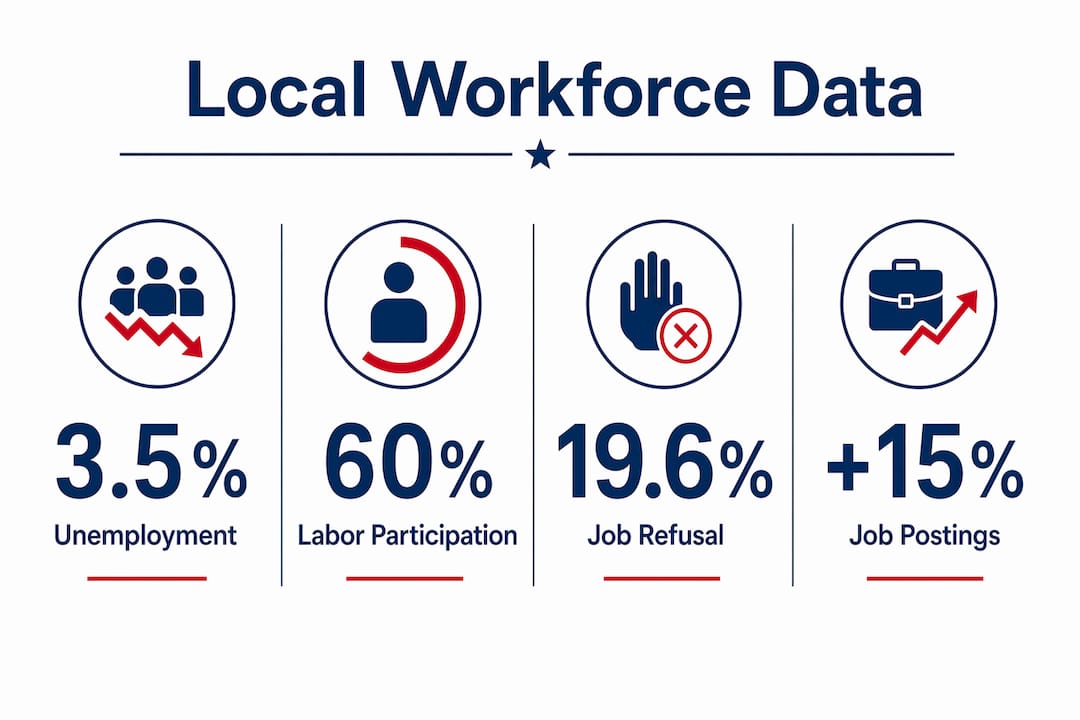
- Unemployment rate versus labor force participation. The national unemployment rate sits at 4.2% nationally, but that figure masks a labor force participation rate at a five-year low. Discouraged workers who stop searching do not count as unemployed, so the headline number looks healthier than the reality.
- Employer recruitment and retention difficulties. Employers report that finding qualified candidates takes longer and costs more than it did five years ago. Retention is equally difficult when workers accept offers out of necessity rather than fit.
- Structural barriers. Housing shortages, childcare waitlists, and transportation gaps prevent willing workers from taking available jobs. These barriers receive less coverage than unemployment rates but cause more lasting damage to workforce health.
Pro Tip: When a local story cites only the unemployment rate, ask what the labor force participation rate shows. The two numbers together tell a far more complete story.
How do local outlets use labor market data to inform residents?
Local news outlets use several data types to explain workforce conditions, and each metric tells a different part of the story.
| Data type | What it measures | What it misses |
|---|---|---|
| Unemployment rate | Share of active job seekers without work | Discouraged workers who stopped searching |
| Labor force participation rate | Share of working-age adults in the labor market | Reasons for non-participation (disability, caregiving) |
| Job postings per claimant | Ratio of openings to active job seekers by sector | Skill and geographic mismatches within sectors |
| Wage growth data | Change in average pay over time | Purchasing power relative to local housing costs |
A shrinking labor pool behind a low unemployment rate signals less economic capacity, not strength. That distinction matters for Central Georgia residents evaluating whether the local economy is genuinely growing or simply contracting.
Job seeker behavior also signals market conditions. The rate at which candidates decline job offers dropped to 19.6% as of mid-2026, down more than five percentage points since early 2025. That decline means workers are accepting offers they might have turned down in a stronger market, which points to growing economic pressure on job seekers.
Pro Tip: Cross-reference local job posting data with wage trends. A surge in postings without wage growth often means employers are struggling to attract candidates, not that the market is thriving.
What structural issues are often covered as underlying causes?
Workforce problems rarely start at the hiring stage. Structural and systemic factors create barriers long before a job seeker submits an application. Local coverage that addresses these factors gives residents a more accurate picture of why labor shortages persist even when wages rise.
- Housing affordability. Workers cannot accept jobs in areas where they cannot afford to live. When housing costs outpace wage growth, employers lose candidates who would otherwise qualify and accept offers.
- Childcare access. Childcare waitlists force parents, particularly mothers, out of the labor market entirely. Structural bottlenecks like childcare shortages undermine recruitment even when wages are competitive.
- Transportation gaps. Rural areas in Central Georgia face particular challenges when public transit does not connect workers to job centers. A job that requires a car is inaccessible to workers who do not own one.
- Policy and enforcement shifts. Federal policy changes affect local hiring fairness. The EEOC’s abandonment of disparate impact enforcement allows some employers to maintain hiring criteria that may exclude qualified candidates without legal challenge.
- Demographic shifts. Retirements among older workers and out-migration of younger residents reduce the available labor pool in ways that take years to reverse.
Workforce health requires aligning housing, transit, and childcare with workforce strategies. Employers cannot fix these barriers alone, and coverage that frames them as employer problems misses the point entirely.
How does workforce coverage reflect both worker and employer experiences?
Quality workforce reporting presents the labor market from multiple viewpoints. A story that only quotes employers misses the worker experience. A story that only features job seekers misses the operational pressure on businesses. The most useful coverage includes both.
- Job seeker struggles. Workers describe longer searches, more rejections, and pressure to accept roles below their skill level. The drop in job offer refusals to 19.6% reflects this pressure in measurable terms.
- Employer recruitment hurdles. Businesses report that qualified applicants are scarce in technical and healthcare fields. Posting a job and receiving no viable applications is now a common experience for mid-size employers in Central Georgia.
- Underemployment and gig work. Many workers hold part-time or gig positions not by choice but because full-time roles are unavailable or inaccessible. Underemployment does not appear in unemployment statistics, which makes it easy to overlook.
- Pay transparency conflicts. Emerging pay transparency regulations aim to promote equity but HR experts warn they are generating internal conflicts as employees compare compensation more openly. Local employers face new communication challenges as a result.
- Community service impacts. Workforce shortages in healthcare, education, and public safety directly reduce the quality of services that Central Georgia residents depend on daily. Coverage that connects staffing gaps to service quality helps residents understand the stakes.
Local news for market research can help residents and business owners track these trends over time and identify patterns before they become crises.
Key Takeaways
Effective coverage of local workforce issues requires combining labor market data, structural context, and direct perspectives from workers and employers to give residents an accurate and complete picture.
| Point | Details |
|---|---|
| Data requires context | Unemployment rates alone mislead; pair them with labor force participation and job posting ratios. |
| Structural barriers drive shortages | Housing, childcare, and transit gaps prevent hiring even when wages rise. |
| Worker and employer voices both matter | Complete coverage includes job seeker experiences alongside employer recruitment challenges. |
| Policy shifts affect local hiring | Federal enforcement changes, like EEOC policy reversals, shape who gets hired and on what terms. |
| Economic projects need long-term scrutiny | Short-term labor booms rarely build durable career pathways for local residents. |
Why workforce coverage matters more than most residents realize
Workforce reporting is the category of local journalism I find most consistently underdeveloped. Most outlets cover the unemployment rate when it moves and then move on. That approach misses the story almost every time.
The unemployment rate is a lagging indicator. By the time it rises noticeably, the structural problems that caused it have been building for years. Housing costs climbed, childcare slots disappeared, and transit routes were cut long before employers started posting “help wanted” signs. Coverage that waits for the rate to move is coverage that arrives too late to be useful.
What I find more telling is the labor force participation rate and the job offer refusal rate together. When participation drops and refusals also drop, as they have in mid-2026, that combination tells you workers are leaving the market and those who remain are taking whatever they can get. That is a sign of genuine economic stress, not a tight labor market.
For Central Georgia specifically, the structural barriers matter more than the headline numbers. Rural transportation gaps and childcare shortages are not abstract policy problems. They are the reason a qualified worker in a rural county cannot take a job in Macon. Reporting that names those barriers and connects them to specific hiring failures gives residents something they can actually use when talking to local officials or school boards.
Why local news matters is not a rhetorical question. For workforce issues, the answer is concrete: informed residents ask better questions, support better policies, and hold employers and officials accountable in ways that produce real change.
— Ernie
Thecentralgeorgian covers the workforce stories Central Georgia needs
Thecentralgeorgian reports on the labor market conditions, employer challenges, and community impacts that shape daily life across Central Georgia, including Macon, Middle Georgia, and surrounding areas.
The platform’s local news coverage tracks workforce developments alongside public safety, economic development, and civic affairs, giving residents a single reliable source for the issues that affect their neighborhoods and livelihoods. Readers who want to understand how local elections and policy decisions connect to workforce outcomes will find that context in Thecentralgeorgian’s reporting on how local elections are covered. Staying informed is the first step toward meaningful community engagement on workforce issues.
FAQ
What does “coverage of workforce issues” mean?
Coverage of workforce issues refers to journalism that reports on labor market conditions, employment barriers, employer challenges, and the structural factors affecting who works and under what conditions in a specific region.
Why does the unemployment rate not tell the full story?
The unemployment rate excludes discouraged workers who have stopped searching for jobs. A low rate can reflect a shrinking labor pool rather than genuine economic strength, which is why labor force participation data is equally important.
What structural barriers most commonly affect local workforce health?
Housing affordability, childcare access, and transportation gaps are the three most frequently cited structural barriers. These factors prevent qualified workers from accepting available jobs even when wages are competitive.
How can Central Georgia residents use local workforce reporting?
Residents can use local workforce reporting to identify hiring trends, understand policy changes affecting employment, and engage with local officials on issues like transit funding, childcare investment, and housing development.
What is the difference between unemployment and underemployment?
Unemployment counts workers actively seeking jobs they do not have. Underemployment counts workers in part-time or low-skill roles who want full-time or higher-skill positions. Underemployment does not appear in standard unemployment statistics, making it easy to miss in surface-level coverage.