
What Is a Criminal Indictment: Explained
A criminal indictment is a formal written accusation, issued by a grand jury, that charges a person with committing a crime and authorizes prosecution to proceed. According to the Legal Information Institute at Cornell, an indictment formally charges a person with a crime, establishes jurisdiction, provides notice of the charges, and enables the case to move forward in court. As defined in Black’s Law Dictionary, it is a written accusation affirmed by a grand jury and presented to a court for trial.
Two points to understand immediately:
- An indictment is a charge, not a conviction. The accused remains presumed innocent.
- In federal practice, a grand jury, not a prosecutor alone, issues the indictment after finding probable cause.
Key Takeaways
A criminal indictment is a grand jury’s formal written accusation that charges a person with a felony and authorizes prosecution to proceed, but it is not a conviction and does not alter the presumption of innocence.
| Point | Details |
|---|---|
| Definition | An indictment is a formal written accusation issued by a grand jury, not a finding of guilt. |
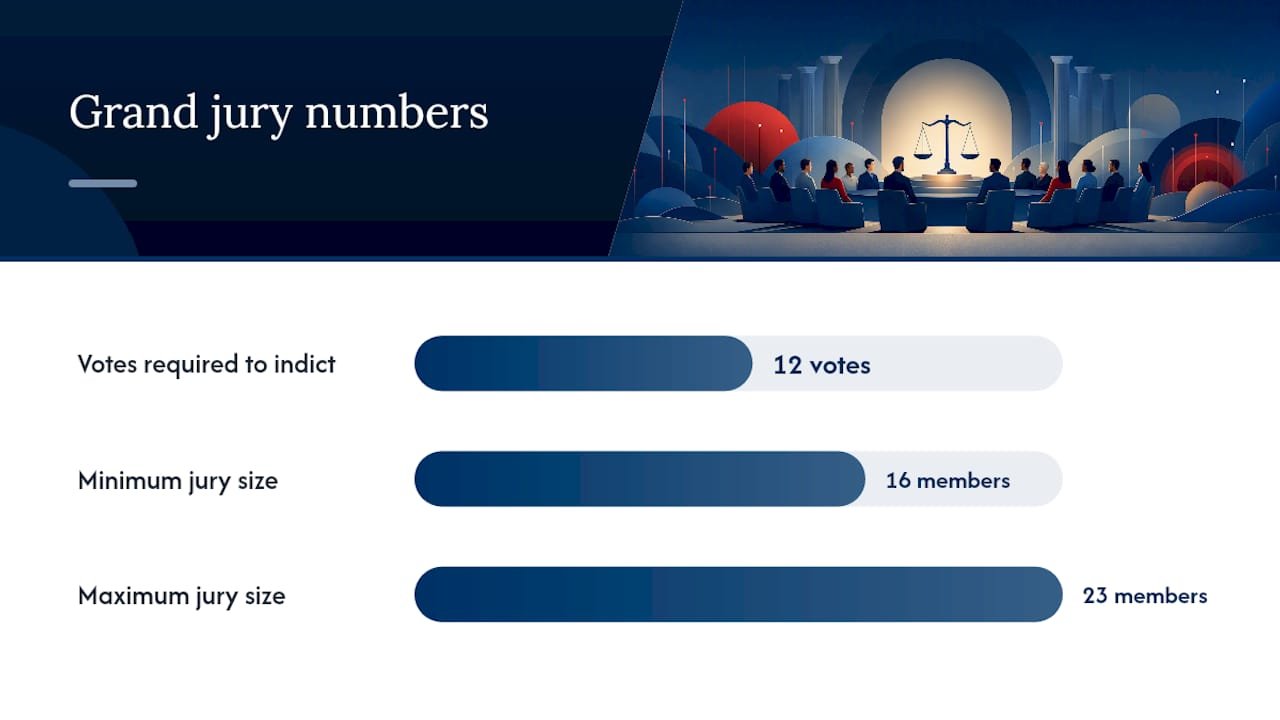
| Grand jury composition | Federal grand juries have 16–23 members; at least 12 must vote to indict. |
| Constitutional basis | The Fifth Amendment requires a grand jury indictment for federal felonies; states may differ. |
| After indictment | Arraignment, plea, pretrial motions, and trial scheduling follow in sequence. |
| Charges can be dropped | Prosecutors may dismiss charges; courts may also dismiss on procedural or constitutional grounds. |
For ongoing coverage of indictments and criminal proceedings in Central Georgia, visit Thecentralgeorgian.
Table of Contents
- What is a criminal indictment under U.S. law?
- How does the grand jury process work?
- How does an indictment differ from an information or complaint?
- What happens after an indictment is returned?
- Federal requirement versus state practice
- Can charges be dropped after an indictment?
- What does an indictment document actually contain?
- Why indictments matter to Central Georgia communities
- Sources
What is a criminal indictment under U.S. law?
The Fifth Amendment to the U.S. Constitution establishes the constitutional basis for indictments in federal court. It states, in part:
In plain terms, the federal government cannot prosecute a person for a serious crime without first obtaining a grand jury indictment. The DOJ Criminal Resource Manual distinguishes between an indictment, which requires grand jury approval, and an information, which a prosecutor files directly. States are not bound by this federal requirement and may use alternative charging instruments.
Key legal functions of an indictment, per Britannica:
- Identifies the court’s jurisdiction over the case
- Notifies the defendant of the specific charges
- Prevents double jeopardy by establishing a formal record of the charges
How does the grand jury process work?
When federal prosecutors believe a person has committed a felony, they present evidence to a grand jury. The U.S. Department of Justice describes this process: the prosecutor presents evidence, calls witnesses, and asks the grand jury to decide whether probable cause exists to charge the person. Probable cause, in this context, means a reasonable basis to believe the person committed the crime alleged.
Grand jury proceedings are secret. Defense attorneys are not present, and the accused typically does not present evidence. As the New York Times has reported, grand juries hear only the prosecutor’s evidence, which gives prosecutors considerable influence over what the panel sees.
Grand jury size: A federal grand jury typically has 16–23 members, and at least 12 jurors must vote in favor to return an indictment.
The steps in the grand jury process:
- Prosecutor presents evidence and calls witnesses
- Grand jurors deliberate in private
- A minimum of 12 jurors vote to indict (or decline, returning a “no bill”)
- If the vote passes, the indictment is returned to the court
Pro Tip: If you receive a grand jury subpoena, consult a criminal defense attorney before appearing. Witnesses have rights, including the Fifth Amendment right against self-incrimination, and an attorney can advise you on how to respond.
How does an indictment differ from an information or complaint?
Three charging instruments are common in U.S. criminal practice. Each serves a different function.
| Instrument | Who Issues It | Grand Jury Required | Typical Use |
|---|---|---|---|
| Indictment | Grand jury | Yes | Federal felonies; some state felonies |
| Information | Prosecutor directly | No | Misdemeanors; state felonies in many states |
| Complaint | Magistrate/judge | No | Initial arrest; preliminary proceedings |
The DOJ Criminal Resource Manual explains that federal felony charges generally require an indictment unless the defendant waives that right. A prosecutor may then proceed by information with the defendant’s written consent.
Two brief scenarios illustrate the difference:
- Scenario A: A federal agent investigates a drug trafficking operation. The prosecutor presents evidence to a grand jury, which votes to indict. The indictment is the charging instrument.
- Scenario B: A person is charged with a state misdemeanor. The prosecutor files an information directly with the court. No grand jury is involved.
States vary widely. Some states use grand juries for felonies; others rely primarily on informations or preliminary hearings before a judge.
What happens after an indictment is returned?
The criminal indictment process does not end when the grand jury votes. A defined sequence of procedural steps follows, as outlined by the U.S. District Court:
- Indictment returned to the court by the grand jury foreperson.
- Arrest or summons issued if the defendant is not already in custody.
- Arraignment held, typically within days in federal court, where the defendant hears the charges and enters a plea.
- Plea entered: guilty, not guilty, or no contest.
- Pretrial motions and discovery proceed, including requests for evidence and challenges to the charges.
- Trial scheduled according to the court’s docket and applicable speedy-trial rules.
Bail and pretrial detention decisions are made at or shortly after arraignment. A judge weighs factors including flight risk and public safety. An indictment alone does not determine custody status.
Rights at each stage:
- Right to counsel (Sixth Amendment), beginning at arraignment
- Presumption of innocence throughout all proceedings
- Right to a speedy trial under the Speedy Trial Act in federal cases
Federal requirement versus state practice
The Fifth Amendment’s grand jury requirement applies to federal felony prosecutions. The DOJ confirms that federal prosecutors must present felony cases to a grand jury unless the defendant waives that right in writing.
States operate under their own constitutions and statutes. The U.S. Supreme Court has held that the Fifth Amendment’s grand jury clause does not apply to state prosecutions through the Fourteenth Amendment. As a result:
- Some states, including Texas and California, use grand juries for felony indictments in many cases.
- Other states rely primarily on preliminary hearings before a judge, where a prosecutor must show probable cause without a grand jury.
- A defendant in state court may waive the grand jury and proceed by information.
Federal rule: A federal grand jury of 16–23 members must reach a concurrence of at least 12 votes to return an indictment. State rules vary by statute.
Can charges be dropped after an indictment?
An indictment does not guarantee prosecution to a verdict. Prosecutors retain discretion to dismiss charges at any point. A formal dismissal entered by the court is called a nolle prosequi, a Latin term meaning the prosecutor declines to pursue the case further. Courts may also dismiss on their own motion.
Common grounds for post-indictment dismissal or challenge:
- Motion to dismiss: Defense argues the indictment is legally defective, lacks specificity, or fails to state an offense.
- Insufficient evidence: A court may dismiss if the evidence presented to the grand jury was legally inadequate.
- Fourth Amendment violations: Evidence obtained through an unlawful search may be suppressed, weakening the prosecution’s case.
- Brady disclosures: Prosecutors must disclose exculpatory evidence; failure to do so can result in dismissal.
- Speedy-trial violations: Unreasonable delay can result in dismissal under the Sixth Amendment or the Speedy Trial Act.
- Double jeopardy: Once acquitted or convicted, a defendant cannot be tried again for the same offense.
As FindLaw notes, an indictment is a formal accusation, not a finding of guilt. The prosecution still bears the burden of proving guilt beyond a reasonable doubt at trial.
What does an indictment document actually contain?
A typical federal indictment follows a standard structure. Per Britannica, the document formally identifies the court, the defendant, and the charges with enough specificity to provide notice and prevent double jeopardy.
Standard sections of an indictment:
- Caption: Court name, case number, and the defendant’s name.
- Count headings: Each separate charge is labeled as a distinct count (e.g., “Count One,” “Count Two”).
- Statutory citations: The specific federal or state statute the defendant allegedly violated.
- Essential elements: A statement of the facts that satisfy each legal element of the offense.
- Factual summary: A narrative of the alleged conduct, dates, locations, and co-conspirators if applicable.
- Signature and date: The foreperson’s signature and the date the grand jury returned the indictment.
Sealed vs. unsealed indictments: A court may seal an indictment after it is issued but before an arrest is made. Sealing prevents the target from learning of the charges and potentially fleeing. Once the defendant is in custody, the indictment is typically unsealed and becomes a public record.
Why indictments matter to Central Georgia communities
When a grand jury returns an indictment in Central Georgia, it is a matter of public record and public interest. Reporting on indictments serves transparency, public safety, and accountability. Residents have a legitimate interest in knowing when serious criminal charges have been filed against individuals in their community.

Thecentralgeorgian covers indictments and criminal proceedings as part of its commitment to factual, timely local reporting. Readers tracking local crime coverage should understand that an indictment reported in the news is a charging decision, not a verdict. Ethical local reporting presents the charge accurately, notes the defendant’s presumption of innocence, and links to official court records where available. For guidance on reading local legal updates responsibly, best practices for local news consumption offers practical context.
If you see a breaking alert about an indictment, the charge reflects a grand jury’s probable cause finding. It does not reflect a court’s determination of guilt.
Sources
The following sources provide primary legal authority or reliable explanatory reference on criminal indictments in the United States:
- indictment | Wex | US Law | LII / Legal Information Institute
- 201. Indictment And Informations
- What is an indictment? – FindLaw
- What Is an Indictment? Here’s How They Work in the U.S. Legal System – The New York Times
- Indictment | Definition, Procedures, & Facts | Britannica
This article is general information, not a substitute for advice from a qualified lawyer. Consult a qualified legal professional about your own circumstances before acting on anything here.