What Is Live News Coverage and Why It Matters

Live news coverage is defined as the real-time reporting and broadcasting of events as they unfold, delivered through television, radio, internet streams, and live digital updates. Families and individuals rely on this format to receive verified information during breaking situations, from severe weather to public safety alerts. Understanding what live news coverage is, how it reaches your screen, and why it matters for your community gives you a clearer picture of how to use it well. Thecentralgeorgian provides this kind of real-time local reporting for Central Georgia residents every day.
What is live news coverage and how is it delivered?
Live news coverage is the continuous, unedited reporting of events as they happen, with no delay between the event and the audience receiving information. Three main formats carry this content: live television and radio, live digital blogging, and live streaming over the internet. Each format serves the same core purpose but reaches readers through different devices and habits.

Live television has been the dominant format since the earliest days of broadcast journalism. Live TV newscasts include local news programs, breaking news interruptions, and 24-hour cable channels that maintain continuous coverage. Radio performs a similar function, particularly for drivers and people without screen access.
Live digital blogging is a constantly updated text feed published directly to a news website. Journalists post short entries every few minutes, each timestamped, so readers can scroll through the timeline of an event. This format became standard practice during major political events, natural disasters, and international conflicts.
Live streaming delivers video and audio over the internet in real time. Readers can watch a press conference, a storm approaching their county, or a city council vote from any device. The combination of all three formats creates a connected coverage system that reaches the widest possible audience.
- Live TV and radio: Broad reach, especially for older audiences and those without reliable internet
- Live digital blogs: Ideal for readers who want to scan updates quickly without watching video
- Live streaming: Provides visual context that text alone cannot deliver
- Social media integration: Amplifies reach and allows real-time audience questions
Pro Tip: Bookmark your local news outlet’s live blog page before a storm season starts. When power is stable but cell service is slow, a text-based live blog loads faster than a video stream.
How does live coverage work behind the scenes?
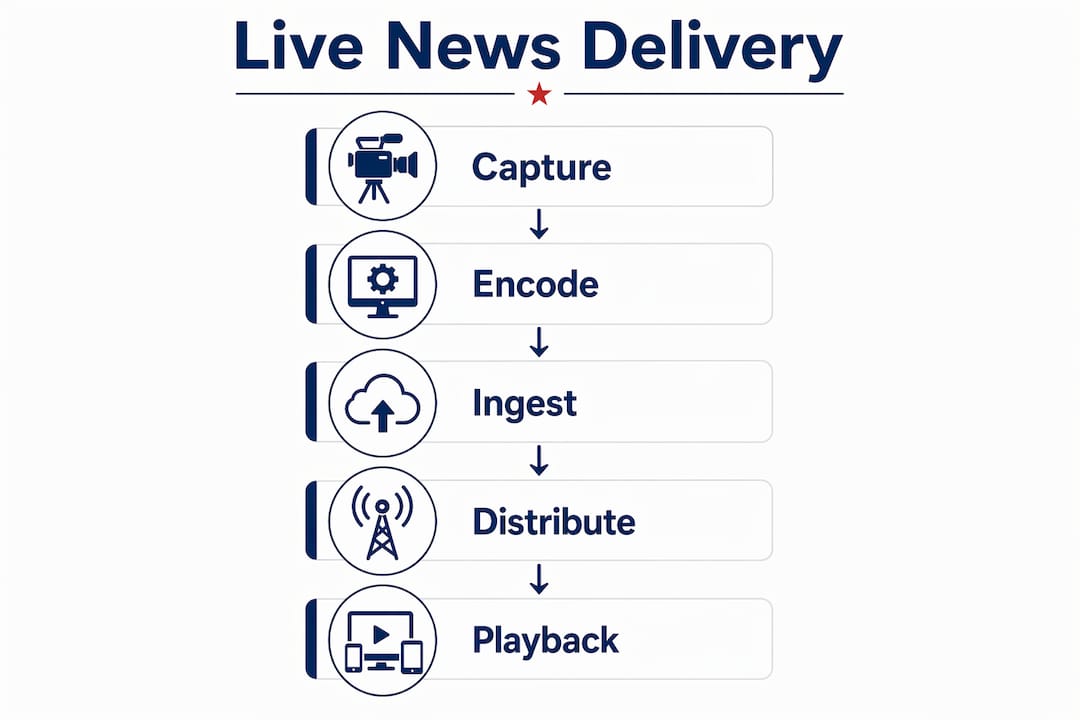
The technology behind live news reporting follows a five-stage pipeline that moves content from a camera to your screen in seconds. Adaptive bitrate streaming sits at the center of this process, automatically adjusting video quality to match your internet speed so the feed does not freeze.
The five stages work in sequence:
- Capture: A camera or microphone records the event in real time.
- Encode: Software compresses the raw video into a format suitable for transmission.
- Ingest and transcode: The signal is sent to a server, which converts it into multiple quality levels for different devices and connection speeds.
- Package and deliver: The content is formatted using protocols like HLS or DASH, then distributed through a Content Delivery Network (CDN).
- Playback: Your device receives the stream and plays it back, switching quality levels automatically as your connection changes.
Content Delivery Networks are the backbone of large-scale live news delivery. CDNs cache content on servers located around the world, so a viewer in Macon, Georgia, receives the stream from a nearby server rather than one across the country. That proximity reduces delay and prevents buffering.
An origin shield adds another layer of protection. Origin shields act as intermediate caches between the CDN and the main server, absorbing millions of simultaneous requests so the core server does not crash under load. During a major breaking news event, viewer numbers can spike within minutes. Without an origin shield, that spike can take a stream offline entirely.
Pro Tip: If a live stream freezes during a major local event, switch to the outlet’s live blog. Text updates require far less bandwidth and stay accessible even on congested networks.
Geographic routing and multi-CDN strategies also help news organizations comply with broadcast rights restrictions and serve regional audiences more efficiently. These are not visible to readers, but they directly affect whether the stream loads cleanly or stalls.
Why is live news coverage vital during crises?
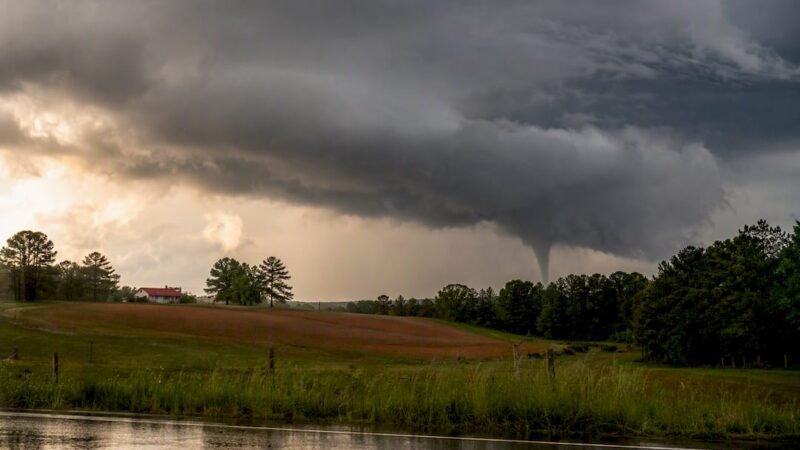
Live news coverage functions as a public utility during emergencies. When a tornado warning is issued, a chemical spill occurs, or a major road closes, real-time reporting gives families the information they need to make immediate decisions. Waiting for a scheduled broadcast is not an option when conditions change by the minute.
Live coverage during crises tracks unfolding situations with timestamped updates, corrects earlier reports as facts become clearer, and holds official statements accountable by placing them on the public record. During the July 2026 Strait of Hormuz conflict, live blogs and video streams tracked maritime movements in real time while official advisories conflicted with each other. Readers who followed live coverage had a more accurate picture than those who waited for summary reports.
Live news coverage does not just report what happened. It records what officials said, when they said it, and what the facts showed at each moment. That record matters when accounts change after the fact.
For Central Georgia families, this accountability function applies directly to local events. A public health advisory, a school lockdown, or a flood warning all require the kind of continuous, verified updates that local news alerts provide. Thecentralgeorgian covers these situations with real-time updates that reflect conditions on the ground, not hours-old summaries.
The benefits of live news during a crisis include:
- Immediate verified updates that replace rumor with confirmed facts
- Continuous timeline so families can track how a situation evolves
- Official accountability by placing statements on the public record in real time
- Practical guidance such as evacuation routes, shelter locations, and road closures
- Community coordination as neighbors and local organizations respond together
Understanding why local news matters becomes especially clear when a crisis hits close to home. National outlets cover large-scale events, but local reporters know the streets, the officials, and the community context that national coverage misses.
What are common misconceptions about live news coverage?
The most common misconception is that live news coverage means only breaking news alerts. Live news reporting is a coordinated media product that includes live blogs, video streams, and social media updates working together as a single system. Separating these elements causes engagement drops and leaves audiences with an incomplete picture.
Live coverage is a strategic media product, not a collection of random updates. Professional newsrooms plan their live coverage in advance, assign roles to reporters, and treat the live blog as the authoritative record of an event.
A second misconception is that speed always comes at the cost of accuracy. Professional newsrooms prioritize verified context alongside immediacy. Breaking news editorial principles require journalists to label unconfirmed information clearly and update reports as facts develop. Sensationalism is a failure of editorial standards, not an inherent feature of live reporting.
Readers also sometimes assume that live coverage ends when the immediate event does. In practice, live blogs serve as the authoritative record of events long after the stream goes offline. Journalists, researchers, and community members return to these records to understand the timeline of what happened.
A few other points worth understanding:
- Live coverage requires significant editorial coordination, not just a camera and a reporter
- Social media posts from official accounts are part of the live coverage system, not a replacement for it
- Readers who follow live blogs often have more context than those who watch only video streams
- Learning to identify media bias helps families evaluate live coverage more critically and accurately
Key Takeaways
Live news coverage is the most direct and accountable form of public information available during fast-moving events, and understanding its formats, technology, and purpose helps families use it more effectively.
| Point | Details |
|---|---|
| Three core formats | Live TV, live digital blogs, and internet streams each serve different audiences and devices. |
| Five-stage technology pipeline | Capture, encode, ingest, deliver, and playback work together to bring live video to your screen in seconds. |
| CDNs and origin shields | These technologies prevent stream outages by distributing load across global servers during high-traffic events. |
| Public utility during crises | Live coverage provides verified, timestamped updates that help families make decisions in real time. |
| Coordinated media product | Live news is planned and structured, not accidental, and the live blog serves as the lasting public record. |
Live news is more than a feed: what I’ve learned covering Central Georgia
After years of watching how communities respond to breaking events, one pattern stands out clearly. Families who follow live coverage during a crisis make better decisions than those who wait for a summary. They know the road is closed before they drive into it. They know the shelter opened before they need it.
The technology behind live news has improved faster than most readers realize. Adaptive bitrate streaming and CDN infrastructure now deliver reliable video to rural areas that would have had no access a decade ago. That matters in Central Georgia, where geography and infrastructure vary widely across counties.
What has not changed is the editorial responsibility that makes live coverage trustworthy. Speed without verification is noise. The newsrooms that earn long-term trust are the ones that label uncertainty clearly, correct errors publicly, and treat the live blog as a permanent record rather than a disposable feed.
My advice to families is direct: identify one or two trusted local sources before a crisis happens. Know where their live blog is. Sign up for alerts. When something happens in your community, you want a source you already trust, not one you are evaluating for the first time under pressure. Thecentralgeorgian exists precisely for that purpose in Central Georgia.
— Ernie
Thecentralgeorgian: real-time local news for Central Georgia
Thecentralgeorgian delivers continuous local news coverage for Macon, Middle Georgia, and surrounding areas, with real-time updates on breaking news, public safety, and community events.
When a storm approaches, a public safety alert goes out, or a local election result comes in, Thecentralgeorgian publishes live updates that reflect conditions on the ground. Readers can follow how local elections are covered in real time, or prepare ahead of emergencies with the natural disaster preparation guide for Central Georgia homes. Visit Thecentralgeorgian to stay connected to the news that affects your community directly.
FAQ
What is live news coverage in simple terms?
Live news coverage is the real-time reporting of events as they happen, delivered through television, radio, internet streams, or live text blogs without delay.
How does live streaming news reach my screen so fast?
Live streams pass through a five-stage pipeline: capture, encode, ingest, deliver via CDN, and playback. Adaptive bitrate streaming adjusts quality automatically to match your internet speed.
Why is live news coverage important during emergencies?
Live coverage provides verified, timestamped updates during fast-moving situations like storms or public safety events, helping families make informed decisions before conditions change further.
Is a live blog the same as a live video stream?
No. A live blog is a text-based feed updated every few minutes, while a live stream delivers video in real time. Both are part of the same coordinated coverage system and work best together.
How can families evaluate live news coverage critically?
Families can check whether reports label unconfirmed information clearly, watch for corrections as facts develop, and use resources on identifying media bias to assess the credibility of sources they follow.