How Local Media Influences Customers: 2026 Guide

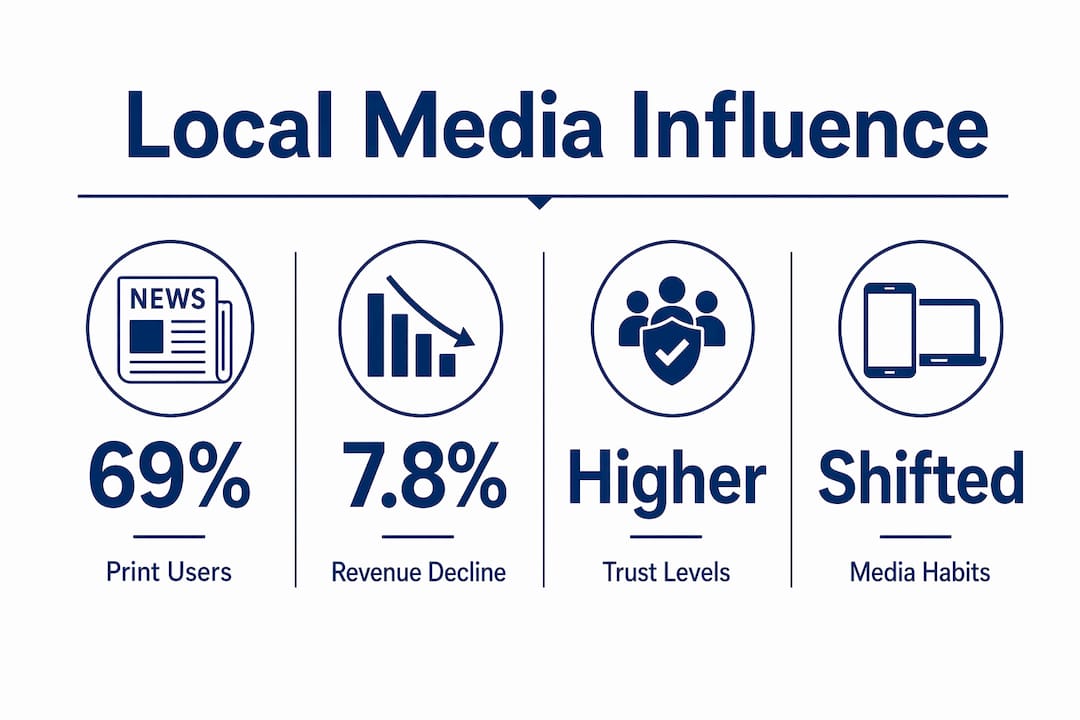
Local media influences customers by delivering community-specific information and advertising that directly shape purchase decisions and civic participation. This influence operates through trust, proximity, and relevance that national platforms cannot replicate. A 2026 Georgia State University study of 3,600 brands found that local newspaper closures cause an average 7.8% weekly revenue decline for local brands, with losses reaching 17% in counties with high concentrations of small businesses. That figure alone shows how deeply community journalism is woven into local commerce. Thecentralgeorgian covers Central Georgia with exactly this mission: keeping residents informed so they can make better decisions every day.
How local media influences customers’ purchasing behavior
Local media acts as a marketplace guide. It cuts through the noise of national advertising and points residents toward businesses, sales, and services that are actually available in their area. This function is more practical than it sounds. When a local paper runs a weekly insert for a hardware store two miles away, it connects a real buyer to a real seller in a way that a national ad campaign never does.
Print media still carries significant weight in this process. A february 2026 survey found that 69% of residents rely on weekly print and home-delivered newspaper inserts to plan their shopping. That number is striking because it runs counter to the assumption that print is irrelevant. Consumers use these inserts as structured shopping tools, not casual reading.

The economic consequences of losing that guide are measurable. The Georgia State University study estimated $17.9 million in annual lost sales across the brands it tracked after local papers closed. Digital platforms did not fill the gap. Broadband availability in affected counties made no difference to the revenue decline, which confirms that local media provides a specific type of visibility that general internet access cannot replicate.
Local media also shapes purchasing behavior through the following channels:
- Weekly print inserts and circulars that help readers plan grocery, hardware, and retail purchases before leaving home
- Local event listings that drive foot traffic to markets, festivals, and seasonal sales
- Community business spotlights that introduce readers to local shops they may not have found through search engines
- Public safety and health advisories that influence where residents shop and which services they seek out
Pro Tip: When evaluating a local media source for shopping guidance, check whether it publishes original reporting on local businesses rather than reprinting national wire content. Original coverage signals genuine community investment.
How have changes in media consumption shifted local news influence?
Consumer reliance on traditional local news sites for business recommendations has dropped sharply. Usage of local news sites as sources for business recommendations fell from 48% to 29% in early 2026, according to BrightLocal’s 2026 Local Consumer Review Survey. That is a 19-percentage-point drop in a short period. It reflects a real behavioral shift, not a gradual drift.
Readers are not abandoning research. They are changing where they do it. The same BrightLocal data shows that 97% of consumers read reviews before making purchase decisions, and video platforms and AI recommendation tools are growing rapidly as sources for local business guidance. Platforms built around short-form video and AI-generated local summaries now compete directly with the role local newspapers once held.
The shift creates a more fragmented picture of how community media affects consumers. Here is how the current landscape breaks down:
- Traditional local newspapers and TV stations still provide credibility and depth, especially for investigative and civic reporting.
- Local news websites retain loyal audiences but have lost ground as first-stop shopping research tools.
- Video platforms now serve as discovery engines for local restaurants, services, and events, particularly among younger residents.
- AI recommendation tools are emerging as fast, personalized alternatives for finding local businesses, though their accuracy varies.
- Grassroots media including local bloggers and podcasters generate early interest in new products and complement traditional outlets by reaching niche audiences.
Stat to know: Local news site usage for business recommendations dropped from 48% to 29% in early 2026. That gap is now filled by video content and AI tools, not by a single replacement source.
Pro Tip: Use local news sites for context and credibility, then cross-reference with recent video reviews and community forums. No single source gives you the full picture of a local business today.
For readers who want to use local news as a research tool, Thecentralgeorgian offers a practical starting point with its guide on using local news for market research.
Why do community media outlets earn higher trust from local readers?
Community-first media outlets build trust through three consistent practices: transparency about ownership and editorial decisions, direct engagement with readers, and independence from large corporate interests. Smaller audiences exhibit higher trust levels that translate into better advertising performance for local businesses. The audience is smaller, but the relationship is stronger.
That trust has a direct commercial value. Advertisers targeting community media environments see 98% engagement rates and stronger conversion results compared to broad-reach campaigns. The reason is proximity-driven trust. Readers who choose a community outlet feel represented by it. When that outlet endorses or advertises a local business, the recommendation carries weight.
“Ad campaigns anchored in trusted community media environments convert better because they engage audiences who choose to trust and see themselves represented.”
This dynamic explains why local advertising influence on buyers operates differently from national advertising. A full-page ad in a national publication reaches millions but speaks to no one specifically. A half-page ad in a community paper reaches thousands and speaks directly to the people who live near the business being advertised. For a deeper look at how this works in practice, the newsletter media strategy guide from Media Intercept outlines how trusted newsletter environments produce comparable results.
The factors behind community media’s trust advantage include:
- Editorial independence from corporate ownership structures that can dilute local focus
- Accountability to a defined geography, meaning errors have immediate, visible consequences
- Reader participation, including letters, community tips, and event submissions that make readers co-creators
- Consistent local identity, which builds habitual readership over time
Pro Tip: If you want to know whether a local outlet is genuinely community-focused, look at its corrections policy and whether it publishes reader letters. Both are signs of editorial accountability.
How does local media influence civic engagement?
Local media informs residents about the decisions that shape their daily lives. Zoning changes, school board votes, infrastructure projects, and public health alerts all reach residents primarily through local news outlets. Community media acts as an early indicator of public sentiment and fosters civic engagement in ways that national media cannot replicate at the neighborhood level.
The connection between informed citizens and healthy local business ecosystems is direct. When residents know about a new road project, they adjust their shopping routes. When they read about a local nonprofit’s fundraiser, they attend and spend locally. When they follow local election coverage, they vote for candidates whose policies affect local business regulation and zoning. The role of media in customer decisions extends well beyond the store shelf.
Local media supports civic participation through several specific functions:
- Election coverage that explains candidate positions on local issues such as tax rates, development, and public services
- Event promotion for community gatherings, farmers markets, and nonprofit fundraisers that drive local economic activity
- Public safety reporting that helps residents make informed decisions about where they go and what services they use
- Infrastructure and housing news that alerts residents to changes affecting property values and neighborhood access
Thecentralgeorgian covers all of these areas for Central Georgia. Readers can find detailed guidance on local election coverage and local nonprofit events through the site’s dedicated guides. The economic value of this coverage is not abstract. Communities with active local media sustain stronger local business networks because residents stay informed and engaged.
Key Takeaways
Local media’s influence on customers is measurable, direct, and not fully replaceable by digital platforms or national advertising.
| Point | Details |
|---|---|
| Print media still drives shopping decisions | 69% of residents use weekly print inserts to plan purchases, making print a primary consumer tool. |
| Newspaper closures cost local brands real revenue | Local brands lose an average 7.8% weekly revenue when their local paper closes, totaling $17.9 million in estimated annual lost sales. |
| Digital trust sources are shifting fast | Local news site usage for business recommendations dropped from 48% to 29% in early 2026, with video and AI tools filling the gap. |
| Community media converts better than broad reach | Advertisers in community media environments report 98% engagement rates, driven by proximity-based trust. |
| Civic engagement and commerce are linked | Informed residents participate more in local events and elections, which directly supports local business ecosystems. |
What I’ve learned watching local media’s real influence up close
I’ve spent years watching how communities respond when their local paper shrinks or disappears. The pattern is consistent. Residents don’t immediately notice. Then, slowly, they stop knowing which businesses are open, which events are happening, and which local issues need their attention. The economic data confirms what I observed: the damage is real and it compounds over time.
What surprises most people is how much of their purchasing behavior was quietly guided by local media they barely thought about. The weekly circular. The community calendar. The business profile buried on page six. None of it felt like advertising. It felt like information. That distinction matters because trust-based information changes behavior more reliably than overt advertising.
The shift toward video and AI tools is real, but I’d caution against treating it as a clean replacement. Those tools are good at discovery. They are poor at accountability. A local paper can be held responsible by the community it serves. An algorithm cannot. For consumers who want reliable guidance on local businesses and civic matters, the combination of a trusted local outlet and supplementary digital research is still the most reliable approach.
Supporting local media is not a sentimental act. It is a practical one. The communities that maintain strong local journalism sustain stronger local economies, better civic participation, and more informed consumer choices. That is not an opinion. The 2026 research backs it up.
— Ernie
Thecentralgeorgian: Central Georgia’s source for local news
Thecentralgeorgian covers Central Georgia with the depth and consistency that local consumers and residents need to make informed decisions. From breaking news and public safety alerts to community events and civic reporting, the platform delivers the kind of coverage that directly affects daily life in Macon and the surrounding region.

Readers looking to stay ahead of local issues can start with Thecentralgeorgian’s guide on local election coverage, which explains how local races are reported and why they matter to everyday residents. The site also covers local economic news and community events that shape how Central Georgians shop, vote, and participate. Visit Thecentralgeorgian for daily updates on the stories that matter most to your community.
FAQ
How does local media affect what people buy?
Local media shapes purchasing behavior by providing trusted, community-specific advertising and editorial coverage that connects residents to nearby businesses. Research shows that 69% of residents use weekly print inserts to plan their shopping.
What happens to local businesses when a newspaper closes?
Local brands experience an average 7.8% weekly revenue decline after a local newspaper closes, with losses reaching 17% in counties with dense small business populations. Digital platforms have not been shown to offset this decline.
Why do consumers trust community media more than national outlets?
Community media outlets build trust through editorial independence, direct reader engagement, and accountability to a specific geography. That trust translates into higher advertising engagement rates and stronger consumer loyalty to locally advertised businesses.
Are local news sites still useful for finding local businesses?
Local news sites remain credible sources for civic and investigative reporting, but their use for business recommendations dropped from 48% to 29% in early 2026. Consumers now combine local news with video platforms and AI tools for a fuller picture.
How does local media support civic engagement?
Local media informs residents about elections, public services, infrastructure changes, and community events. This information enables residents to participate in local governance and community life, which in turn supports local business activity and neighborhood health.