Atlanta Prepares for Global Spotlight as FIFA World Cup 2026 Approaches
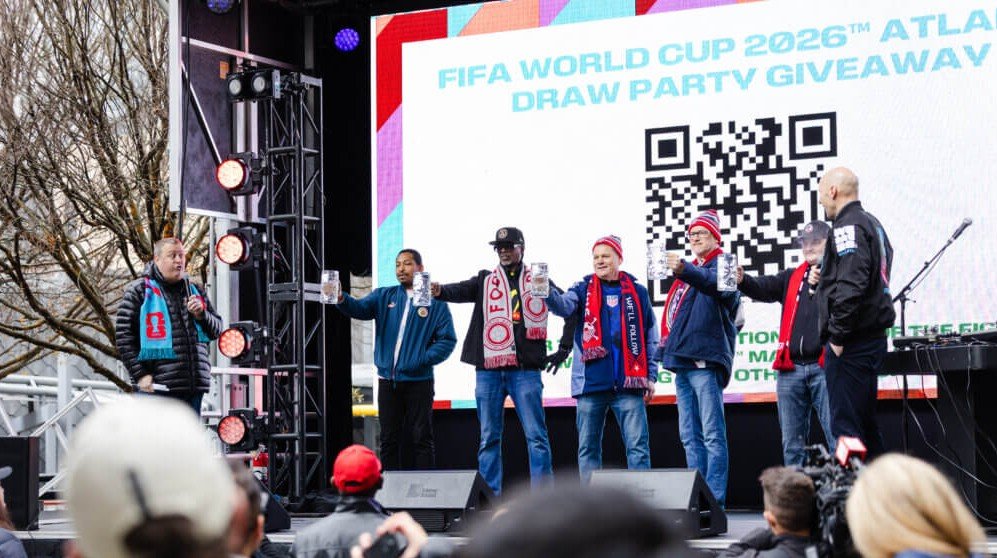
With just months remaining before kickoff, Atlanta is preparing to welcome the world once again as a host city for the FIFA World Cup 2026, positioning itself at the center of one of the largest sporting events on the planet.
More than three decades after hosting the 1996 Summer Olympics, Atlanta is set to step back onto the global stage. City leaders and regional partners view the World Cup not only as a series of soccer matches, but as an opportunity to showcase Atlanta’s economic growth, cultural diversity, and expanding international influence.
The 1996 Olympics reshaped Atlanta’s identity and infrastructure. Now, the World Cup offers an even broader platform. With billions of viewers expected worldwide, the tournament provides a chance to attract international investment, strengthen trade partnerships, and highlight the city’s role as a global business and transportation hub.
A Growing Soccer Capital
Atlanta’s rise as a soccer powerhouse mirrors the momentum surrounding the tournament. The city’s passion for the sport surged following Atlanta United’s 2018 MLS Cup victory, achieved in only the club’s second season and widely considered a defining moment for professional soccer in the region.
That momentum continues in 2026 as the U.S. Soccer Federation opens its new headquarters and national training center in Fayette County, near Hartsfield-Jackson Atlanta International Airport. The facility is expected to serve as a national hub for player development and elevate the sport across all levels in the United States.
Looking ahead, Atlanta will also welcome the National Women’s Soccer League’s 17th franchise in 2028, further cementing the city’s growing influence within American soccer.
World Cup Matches in Atlanta
From June 15 through July 15, 2026, Mercedes-Benz Stadium, officially designated “Atlanta Stadium” during the tournament, will host eight matches, including a highly anticipated semifinal round.
Match Schedule:
- June 15: Spain vs. Cabo Verde
- June 18: Czechia/Denmark/North Macedonia/Republic of Ireland vs. South Africa
- June 21: Spain vs. Saudi Arabia
- June 24: Haiti vs. Morocco
- June 27: DR Congo/Jamaica/New Caledonia vs. Uzbekistan
- July 1: Round of 32
- July 7: Round of 16
- July 15: Semifinal
Teams and fans from across multiple continents will converge in Atlanta, transforming the city into a global gathering point for sport and culture.
Deep Global Connections
Several participating nations share historic ties with Atlanta. Cabo Verde and Uzbekistan both made their Olympic debuts during the 1996 Atlanta Games, creating symbolic links between past and present international milestones.
South Africa’s connection runs even deeper. In June 1990, Nelson Mandela addressed more than 50,000 people at Georgia Tech’s Bobby Dodd Stadium shortly after his release from prison, a moment remembered as a powerful symbol of global unity and democratic progress.
The World Cup also highlights Atlanta’s expanding economic relationships. Spain remains a key international partner, welcoming nearly 20,000 visitors annually and accounting for approximately $1.7 billion in trade with Georgia in 2024. Daily nonstop Delta Air Lines flights from Madrid and Barcelona help sustain strong business and tourism ties.
Morocco has also strengthened its connection with Georgia-based companies such as AGCO, The Coca-Cola Company, Georgia-Pacific, and Newell Rubbermaid. In October 2025, Delta launched weekly nonstop service between Marrakech and Atlanta, marking the first direct air link between Morocco and the southeastern United States.
Future partnerships continue to grow. Saudi Arabia and Atlanta share emerging collaborations in artificial intelligence, fintech, and digital innovation, with a nonstop Riyadh flight scheduled to begin in October 2026. Meanwhile, Atlanta’s Haitian community has expanded its global footprint through the launch of the Federation of Haitian Chambers of Commerce, connecting more than 800 local business owners.
A Lasting Legacy
While the tournament will last just one month, civic leaders expect its impact to endure far longer. Beyond packed stadiums and international attention, the World Cup is poised to reinforce Atlanta’s identity as a connected, forward-looking global city.
From Olympic history to expanding trade partnerships and a rapidly growing soccer culture, FIFA World Cup 2026 represents more than competition on the field. It marks another defining chapter in Atlanta’s evolution, one that will shape the city’s global presence long after the final whistle sounds.