Georgia AG Pushes FCC to Block Contraband Cell Phones in Prisons
ATLANTA, GA – Georgia Attorney General Chris Carr and Arkansas Attorney General Tim Griffin are leading a 23-state coalition urging the Federal Communications Commission to allow states to use jamming technology to block contraband cell phones inside prisons and jails.
In a letter sent to the FCC, the attorneys general argue that current federal policy prevents states from addressing a growing public safety threat: inmates using illegal cell phones to direct violent crimes from behind bars.
“Inmates are using contraband cell phones to direct violent crimes, and innocent Georgians are losing their lives,” Carr said. He added that Georgia has spent years pressing the issue and prosecuting gangs operating from inside prisons, and said the state is encouraged by what he described as a new willingness at the federal level to work with states on the problem.
Why States Say Current Policy Falls Short
Under existing FCC rules, jamming equipment is prohibited, even in controlled environments like correctional facilities. State officials say the restriction is based on decades-old law that predates the widespread use of cell phones and fails to reflect today’s security realities.
According to the coalition, inmates routinely use smuggled phones to carry out serious crimes, including murder, child sexual exploitation, drug trafficking, kidnapping, fraud, and identity theft. Officials also say these phones endanger correctional staff and other inmates.
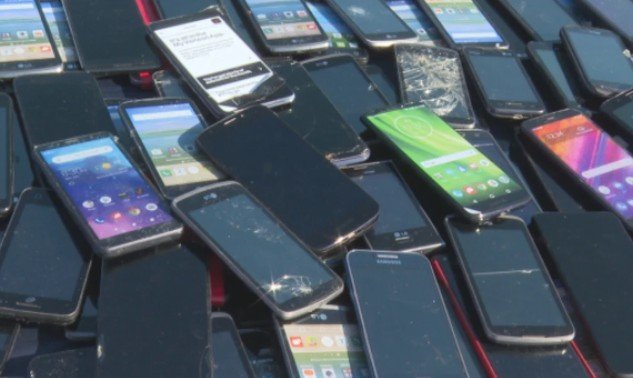
In Georgia alone, the Department of Corrections seized more than 15,500 contraband cell phones and over 150 drones in 2024.
Crimes Linked to Prison Cell Phones
The letter highlights several high-profile cases tied to contraband phones:
- In Tattnall County, an incarcerated gang leader used a smuggled phone to order a hit that led to the death of an 88-year-old Georgia veteran.
- In Atlanta, two 13-year-old boys were killed in a drive-by shooting ordered by a gang leader housed in a Georgia prison.
- In Macon, inmates used contraband phones to dial 911 repeatedly, overwhelming and temporarily shutting down a major regional 911 center serving 13 counties.
State officials say incidents like these show how far-reaching the impact of prison contraband phones can be.
What the FCC Proposal Would Change
The FCC proposal, filed on September 30, clarifies that while jamming lawful radio transmissions remains prohibited, signals from illegal devices smuggled into prisons are not authorized and could be blocked using FCC-approved technology.
Supporters argue this approach would allow states to target contraband phones without interfering with lawful communications outside prison walls.
Broad, Bipartisan Support
In addition to Georgia and Arkansas, attorneys general from Alabama, Alaska, Florida, Iowa, Kansas, Kentucky, Louisiana, Mississippi, Montana, Nebraska, North Dakota, Ohio, Oklahoma, Pennsylvania, South Carolina, South Dakota, Tennessee, Texas, Utah, Virginia, and West Virginia signed onto the letter.
Carr’s Longstanding Effort on the Issue
Carr has pushed the issue for years. In June 2024, he urged the FCC to allow state use of jamming devices, noting that the U.S. Bureau of Prisons had already approved such technology at some federal facilities, including at least one in Georgia. That request was denied by the Biden administration.
Since then, Carr has filed FOIA requests, met with FCC leadership, backed multiple pieces of federal legislation, and led bipartisan coalitions pressing Congress to act. In September 2025, he formally supported the FCC’s notice of proposed rulemaking on the issue.
State officials say allowing targeted jamming technology would be a major step toward cutting off criminal networks that continue to operate from inside prison walls.